
The EU Protein Plan sets a binding target for animal feed but none for plant-based food, drawing backlash as a €111bn opportunity hangs in limbo.
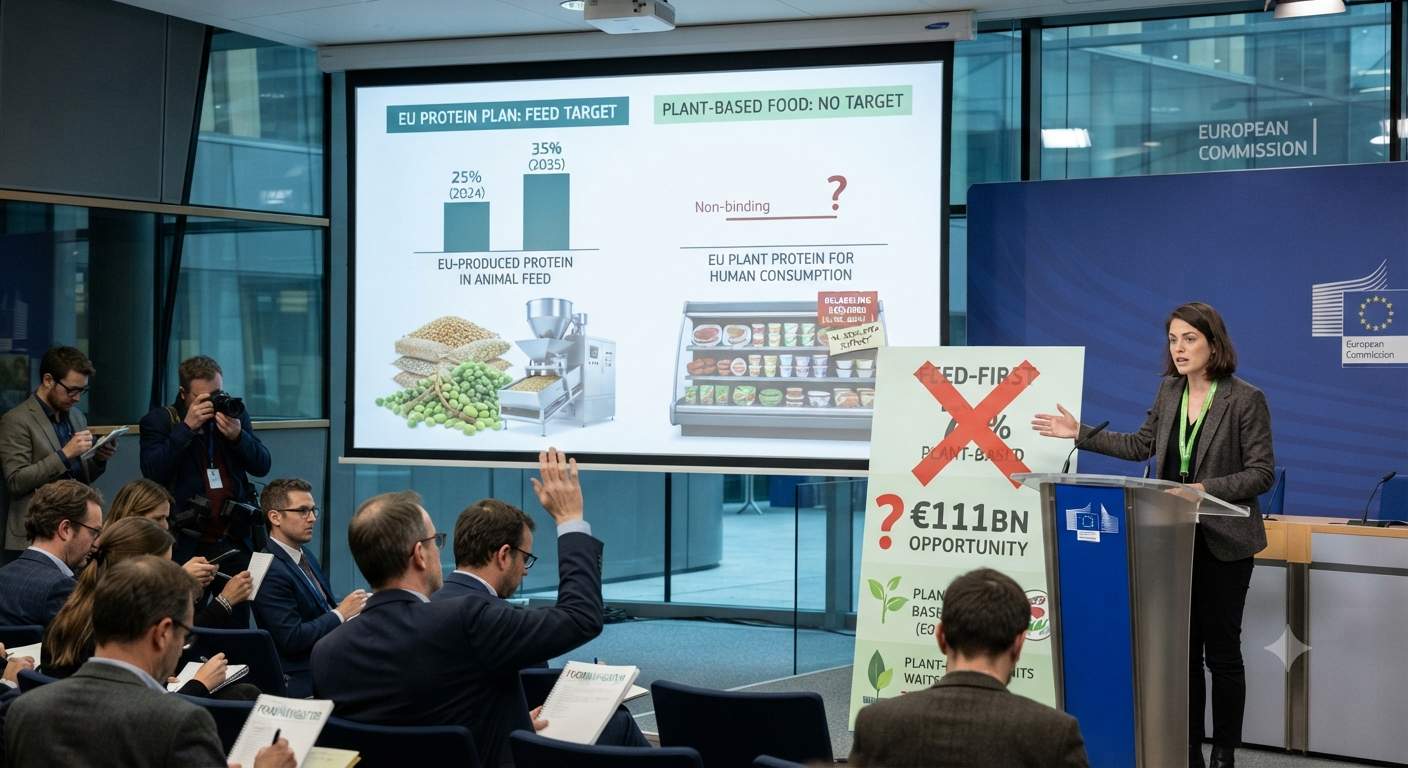
Europe has finally published its long-awaited protein strategy — and promptly ignited a fight over what it left out. The EU Protein Plan, released by the European Commission alongside a separate EU Livestock Strategy, sets a concrete target to raise the share of EU-produced protein used in animal feed from 25% to 35% by 2035. What it does not set is any equivalent target for plant protein grown for direct human consumption. For a sector that new analysis says could contribute €111 billion annually to the EU economy by 2040, the omission has landed like a slap — and the criticism is still building across the industry a week on.
What the EU Protein Plan Actually Contains
The plan’s stated goal is resilience: reducing Europe’s heavy dependence on imported protein — above all soy for livestock — to make the food system less exposed to supply disruptions and global market volatility. To get there, it proposes support for protein crops, farmer incentives, public procurement reforms and possible tax incentives.
The scale of the imbalance it addresses is real. The EU livestock sector consumes 74 million tonnes of protein as animal feed every year, and most plant protein grown or imported into the bloc ends up in feed troughs rather than on plates. The plan’s only measurable target, however, is the feed-share increase to 35% by 2035 — food-protein measures remain voluntary.
Why Plant-Based Groups Are Pushing Back
Plant-based organizations broadly welcome the plan’s farmer-support measures but argue it entrenches the very imbalance it claims to fix. The European Vegetarian Union calls it an important milestone that still falls short of concrete measures to solve the EU’s protein imbalance, pointing to the absence of any target balancing plant and animal protein production or dedicated funding to support one. ProVeg International has renewed its call for a standalone EU plant-based food action plan.
The dietary data strengthens their case. Nearly two-thirds — 64% — of protein consumed by Europeans comes from animal sources, higher than China at 41% and South Korea at 57%, and the gap is widening: daily per capita animal protein intake rose 5.7% between 2010 and 2023 while plant protein intake dipped. A plan built around feed, critics argue, locks that trajectory in.
A €111 Billion Opportunity Meets Policy Headwinds
The backlash lands just as fresh analysis from the Good Food Institute Europe quantifies what is at stake: alternative proteins could contribute €111 billion annually to the EU by 2040 and create 414,000 jobs. Plant-based products captured 44% of all alternative-protein public funding between 2020 and 2025, and fermentation is attracting growing private investment.
But the policy environment is cutting both ways. The EU’s recent decision to restrict the use of “meat” and 31 other meat-related terms for plant-based products saddles brands with relabeling costs on top of ongoing pressure to improve taste, nutrition and affordability. Meanwhile, both Europe and North America lack the fermentation infrastructure needed to scale next-generation proteins — an investment gap the Protein Plan does little to close.
Implications for Buyers and Procurement Teams
- Ingredient suppliers should read the plan as bullish for EU-grown protein crops — peas, fava beans, lupins and soy alternatives — with farmer incentives likely to expand raw material availability and improve origin security over the next decade.
- Manufacturers of plant-based foods face a two-front cost squeeze: relabeling to comply with the meat-terms restriction, plus no dedicated EU support for food-grade protein sourcing. Budget for both in 2027 planning.
- The feed-first framing benefits animal protein supply chains: cheaper, more secure EU feed protein supports European meat, dairy and aquaculture competitiveness — relevant for anyone benchmarking EU versus imported animal proteins.
- Watch the Danish EU presidency, which has flagged an EU Protein Strategy and a plant-based action plan among its priorities; a dedicated food-protein framework could still emerge, reshaping incentives again.
- Investors and corporates should treat fermentation infrastructure as the bottleneck asset. Whoever funds capacity fills a gap the public sector has just declined to address.
FAQ
What is the EU Protein Plan?
The EU Protein Plan is the European Commission’s action plan for the resilience, strategic autonomy and sustainability of the EU protein system, published alongside an EU Livestock Strategy. Its headline target is raising the share of EU-produced protein in animal feed from 25% to 35% by 2035.
Why is the EU Protein Plan controversial?
Because its only binding target covers animal feed, with no equivalent target or dedicated funding for plant protein grown for human consumption — despite Europeans deriving 64% of their protein from animal sources and alternative proteins representing a potential €111 billion annual opportunity by 2040.
What does the EU Protein Plan mean for food businesses?
It signals expanding EU-grown protein crop supply and cheaper feed protein for animal agriculture, while plant-based food manufacturers face relabeling costs from new naming restrictions and no dedicated support — making private investment in fermentation capacity and food-grade sourcing the sector’s key battleground.
Sources
- FoodIngredientsFirst — EU Protein Plan backlash coverage and EVU commentary
- FoodNavigator — Good Food Institute Europe sector analysis
- Vegconomist — Protein Plan targets and Livestock Strategy details
- Green Queen — protein consumption data and expert criticism
- European Commission — Protein Action Plan and EU protein supply data