
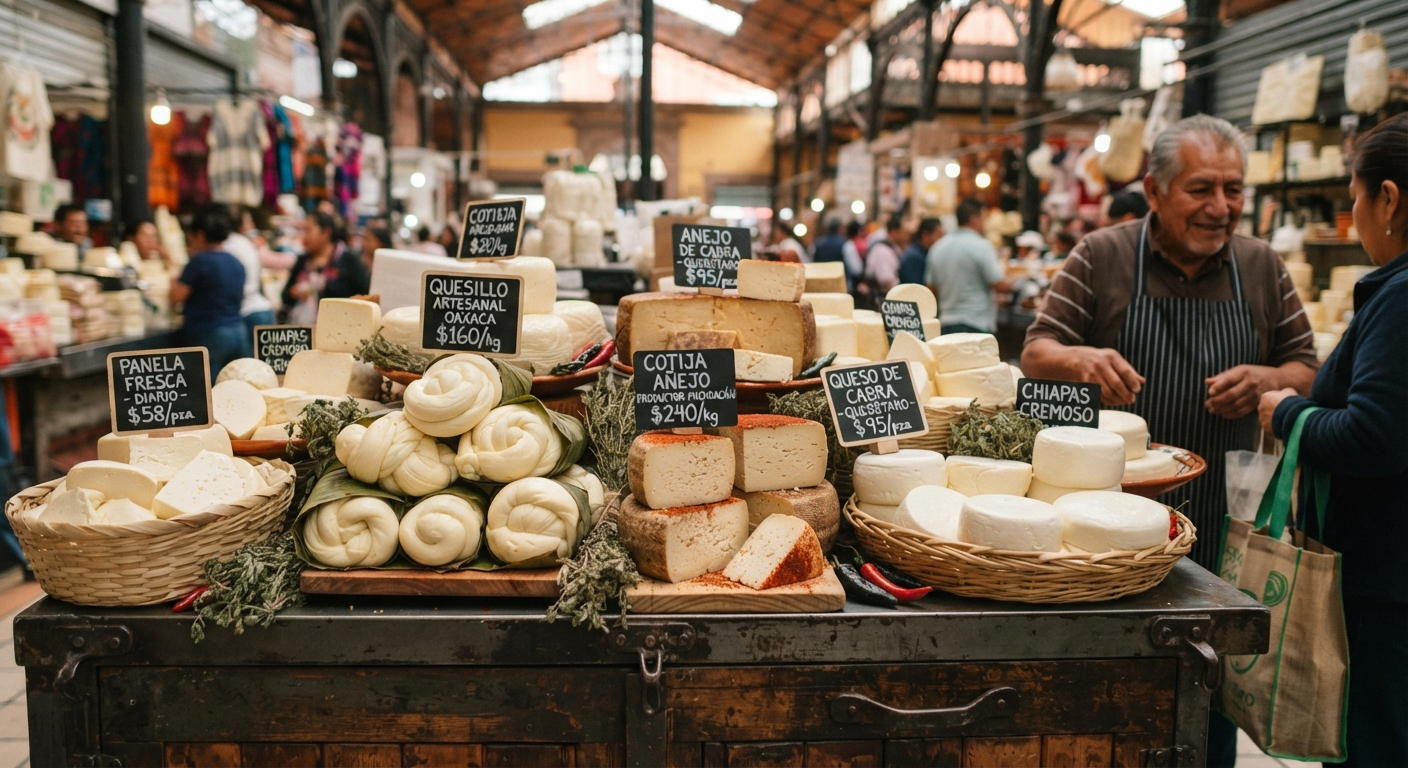

Mexico’s new trade agreement with the EU is blocking US cheese producers from using names like parmesan and feta, triggering a major diplomatic and trade crisis.
How Mexico’s Trade Deal with the EU Just Weaponized Cheese Names Against U.S. Producers
A seemingly obscure dispute over what cheeses can be called “parmesan” or “feta” has become a major flashpoint in U.S.-Mexico trade negotiations, threatening a $1 billion annual U.S. cheese export market and exposing deep rifts in how different nations view agricultural trade. The source of the conflict: Mexico signed a trade deal with the European Union in May 2026 that extends special protections to hundreds of European products whose names are tied to specific geographic regions—a system known as Geographical Indications (GI) protection. The EU now has legal recourse against any cheese producer—including American companies—selling products under protected European names in Mexico.
The U.S. response has been swift and forceful. Washington is objecting strenuously to the Mexico-EU deal, arguing that it would restrict future U.S. producers from selling cheeses in Mexico under names such as parmesan and feta. The U.S. maintains those names are generic descriptors—not protected regional designations—and that American producers have every right to use them. The EU, by contrast, insists that “parmesan” should be reserved exclusively for Parmigiano Reggiano from northern Italy and “feta” reserved for cheese from select regions of Greece.
This isn’t a minor semantic dispute. It’s a direct challenge to how U.S. cheese producers compete globally. And with high-stakes U.S.-Mexico bilateral trade negotiations ongoing to secure an interim trade deal this year, the cheese dispute has become leverage in much larger negotiations surrounding the renewal of the U.S.-Mexico-Canada Agreement—a linchpin of Mexico’s economy. The U.S. is using its economic leverage to pressure Mexico to reverse course on the EU deal before Mexican lawmakers ratify it.
The Global Battle Over Cheese Names: EU’s Geographical Indication System vs. U.S. Generic Claims
The dispute over cheese names reflects a fundamental philosophical divide about agricultural trade and regional protections. The European Union operates a Geographical Indication (GI) protection system that reserves certain product names for items produced in specific regions. Under this system, only cheese made in Parmigiano Reggiano’s protected region in northern Italy can legally be called “Parmigiano Reggiano.” Similarly, only feta cheese from protected regions of Greece can be sold as “feta.”
The U.S. Trade Representative’s office has repeatedly attacked this GI system, calling it “harmful” and arguing it’s artificially restricting market access for American producers. In an April 2026 report, the USTR stated: “The EU continues to seek to expand its harmful GI system within its territory and beyond,” and noted that forcing dairy producers to use descriptors like “imitation feta” or “asiago-style” is “costly and unnecessary.”
The U.S. argues this system contributes to a $1.2 billion U.S. cheese trade deficit with the EU bloc. American producers say they’re being unfairly barred from using generic names while being forced to pay compliance costs to use alternative descriptors—costs that make their products less competitive in price-sensitive markets.
However, the EU and its supporters argue the GI system protects regional traditions, small-scale producers, and product authenticity. Antonio Martinez, head of an organization protecting manchego’s regional designation, explained the cultural perspective: “The U.S. has always been a nation of high-volume consumption, which is precisely the opposite of what designations of origin represent.” Manchego producers, he noted, are smaller-scale operations whose “charm and unique identity” depend on protected regional designation.
Mexico’s Strategic Play: The May 2026 EU Trade Deal Shifts Leverage in Cheese Markets
Mexico’s decision to sign the EU trade deal in May 2026 was strategically significant—and now strategically vulnerable. The agreement, which is signed but not yet ratified by Mexican lawmakers, extends EU GI protections into the Mexican market. This means hundreds of European product names are now protected under the agreement, with the EU having legal recourse against violations.
For Mexican cheese importers and consumers, the EU deal offers lower tariffs on European-imported cheeses—a benefit that Rodolfo Navarro, head of a family-owned cheese distributor, explicitly supports. European cheese, he noted, “will serve different markets” and “will be sold in a higher niche.” For higher-end consumers and restaurants seeking premium cheese, the EU deal improves market access and pricing.
However, the agreement also carries political and economic complexity. Mexico must complete ratification procedures before the pact takes effect—and that ratification now faces U.S. pressure. The European Commission has told Reuters it will not change the agreement’s terms and has “taken note of the U.S. actions” opposing the protections. But Mexico faces genuine pressure from its primary trade partner (the U.S.) to either reject the deal or negotiate carve-outs allowing continued American cheese sales under protected names.
The U.S. Cheese Market in Mexico: Massive Scale, Vulnerable to Trade Disruption
Understanding why the U.S. is fighting so aggressively over cheese names requires examining the economic stakes. The U.S. exports approximately $1 billion worth of cheese to Mexico annually—a market that has exploded since the 1980s. Cheese imports from the U.S. now constitute nearly 30% of total Mexican cheese consumption, driven by products like Kraft’s Grated Parmesan and Walmart’s Great Value Manchego, plus the rapid growth of pizzerias throughout Mexico.
In contrast, the EU’s total dairy exports to Mexico amount to only $200 million—a fraction of U.S. cheese exports. This massive disparity explains both the U.S. confidence in its market position and its aggressive response to the Mexico-EU trade deal. The U.S. has built a dominant market share in Mexican cheese, and the EU deal represents a direct threat to that dominance by extending special protections to European products and lowering tariffs on EU cheese imports.
For U.S. cheese exporters like Kraft and Great Value, maintaining access to the Mexican market under generic names is essential to their business model. These companies sell volume-based products at accessible price points—products that would become uncompetitive if forced to use descriptors like “imitation parmesan” or pay compliance costs to differentiate their products from protected EU names.
The Quality Question: U.S. Processed Cheese vs. European Regional Traditions
The cheese dispute also highlights divergent quality perceptions and product strategies. U.S. cheese has a complicated reputation in Mexico. While U.S. producers point out that their cheeses have won international competitions, the market reputation is complicated by the prevalence of American processed cheese—emulsified salts and dairy leftovers that are technically not cheese at all—along with canned, sprayable cheese products.
Mexican cheesemakers and higher-end cheese sellers acknowledge this quality perception gap. Georgina Yescas Trujano, co-founder of Mexican cheesemonger Lactography, noted: “The U.S. is flooding the Mexican market with its cheeses because they can sell them very cheap.” She expressed support for lower EU cheese tariffs, adding “I’m glad tariffs on European cheese are being lowered, because Mexicans can learn to eat better cheese.”
This perception gap reflects the philosophical divide noted by European cheese producers. U.S. agricultural strategy emphasizes high-volume production, mass distribution, and price competition. EU regional producers emphasize terroir, small-scale production, and protected regional identity. These aren’t compatible strategies—they reflect fundamentally different agricultural cultures.
For Mexican consumers, this means choice. Kraft’s Great Value Manchego serves cost-conscious consumers who value accessibility and price. EU protected manchego serves premium consumers who value regional authenticity and smaller-scale production. The Mexico-EU deal essentially says: we’re opening the market to premium EU products and protecting them so American mass-market competitors can’t use the same names.
The Leverage Game: Why the U.S. Can’t Simply Accept the Deal
The U.S. response to Mexico’s EU cheese deal is driven by leverage considerations and broader trade negotiations. Jaime Castaneda, executive vice president of the U.S. Dairy Export Council, stated unambiguously: “It’s absolutely wrong what Mexico did. The Mexican government has to make it absolutely certain that the United States and the Mexican manufacturers of common cheese names will continue to be able to be in the market.”
The U.S. can exert genuine pressure on Mexico because high-stakes bilateral trade negotiations are currently underway. The U.S. and Mexico are in “thorny bilateral talks to secure an interim trade deal this year” while “parallel discussions are ongoing to renew the U.S.-Mexico-Canada Agreement”—an agreement that is described as “a linchpin of Mexico’s economy.” For Mexico, maintaining U.S. trade relationship stability is essential. For the U.S., the cheese dispute gives leverage to secure concessions in broader trade negotiations.
This leverage dynamic explains why the U.S. is pushing so aggressively on what might seem like a minor issue. The cheese names dispute isn’t really about cheese—it’s about whether the U.S. can maintain market access and prevent EU GI systems from being extended into critical American export markets. If Mexico successfully implements EU GI protections without U.S. carve-outs, it could set a precedent for other countries to implement similar restrictions on American cheese products.
What This Cheese War Means for Global Agricultural Trade
The Mexico-EU cheese dispute has implications far beyond bilateral negotiations. It represents a broader conflict between two models of agricultural trade:
The U.S. Model: Emphasizes efficiency, scale, price competition, and market-driven production. Generic names are allowed; competition is encouraged; consumers benefit from price competition.
The EU Model: Emphasizes regional protection, artisanal production, terroir-based differentiation, and legal enforcement of product origins. Geographic Indications protect small-scale producers and regional traditions. Premium pricing is maintained through name protection.
As the EU increasingly extends its GI system internationally through trade agreements, U.S. producers face growing restrictions on market access in countries that adopt EU-style protections. Mexico’s deal with the EU—if ratified—becomes a template that other countries might follow, progressively restricting U.S. cheese market access in key trading partners.
For U.S. dairy producers and exporters, the cheese names dispute signals that maintaining market access in key regions will require either:
- Negotiating carve-outs allowing continued use of generic names
- Accepting premium branding and higher price positioning (emulating EU strategy)
- Developing new product names and marketing strategies that don’t rely on protected EU names
The outcome of the Mexico negotiations will likely set the tone for how other countries structure cheese and agricultural trade protections going forward.
FAQ: Your Questions About the US-Mexico Cheese Trade Dispute
Q: What is the Mexico-EU trade deal about cheese? A: In May 2026, Mexico signed a trade agreement with the European Union that extends special protections to hundreds of European products whose names are tied to specific regions. The deal gives the EU legal recourse against violations and protects names like Parmigiano Reggiano, feta, and manchego. Mexico must still ratify the agreement through its lawmakers for it to take effect.
Q: Why is the U.S. objecting to the Mexico-EU cheese deal? A: The U.S. objects because the deal would restrict American producers from selling cheeses in Mexico under generic names like “parmesan” and “feta.” The U.S. maintains these names are generic descriptors, while the EU reserves them exclusively for cheeses from specific European regions.
Q: How much cheese does the U.S. export to Mexico? A: The U.S. exports approximately $1 billion worth of cheese to Mexico annually, driven by products like Kraft’s Grated Parmesan and Walmart’s Great Value Manchego. Cheese imports from the U.S. now constitute nearly 30% of total Mexican cheese consumption.
Q: How much does the EU export to Mexico compared to the U.S.? A: The EU’s total dairy exports to Mexico amount to only $200 million annually—a fraction of U.S. cheese exports. This disparity explains why the U.S. can exert significant market leverage against the Mexico-EU deal.
Q: What is a Geographical Indication (GI) and why does the EU use it? A: A Geographical Indication (GI) is a system that reserves certain product names for items produced in specific regions. The EU uses GI protections to reserve names like “Parmigiano Reggiano” (from Italy) and “feta” (from Greece) exclusively for cheese produced in those regions, protecting small-scale regional producers and artisanal traditions.
Q: What does the U.S. Trade Representative say about EU GI protections? A: The USTR office calls the EU’s GI system “harmful” and argues that forcing dairy producers to use descriptors like “imitation feta” or “asiago-style” is “costly and unnecessary.” The USTR estimates the system contributes to a $1.2 billion U.S. cheese trade deficit with the EU.
Q: Why can the U.S. exert pressure on Mexico to reject or modify the EU cheese deal? A: The U.S. is currently negotiating a bilateral interim trade deal with Mexico and parallel discussions are ongoing to renew the U.S.-Mexico-Canada Agreement. The U.S. can use these high-stakes negotiations as leverage to pressure Mexico to either reject the EU deal or negotiate carve-outs protecting U.S. cheese market access.
Q: How do Mexican consumers view the EU cheese deal? A: Mexican cheese importers and higher-end cheese sellers support lower tariffs on European cheese because it allows access to premium regional products. However, Mexican cheesemakers accuse U.S. producers of “flooding the market” with cheap cheese, and some Mexican consumers view EU cheese as higher quality than U.S. processed products.
Q: What is American processed cheese and why does it have a poor reputation? A: American processed cheese (including American cheese slices) is made from emulsified salts and dairy leftovers and is technically not cheese at all. While popular for price and shelf-life benefits, it has a poor quality reputation compared to regional European cheeses made through traditional methods.
Q: What happens if Mexico ratifies the EU cheese deal without U.S. carve-outs? A: If Mexico ratifies the deal without modifications, U.S. cheese producers would be restricted from using protected European names like “parmesan” and “feta” in the Mexican market. This would threaten access to the $1 billion annual U.S. cheese export market and could set a precedent for other countries to implement similar restrictions.
Source Materials:
- Reuters Reporting on US-Mexico Cheese Trade Dispute (August 28, 2026)
- Mexico-EU Trade Agreement Text and Protections (May 2026)
- Jaime Castaneda, U.S. Dairy Export Council EVP, Statement on Cheese Market Access
- U.S. Trade Representative Office April 2026 Report on EU Geographical Indication System
- European Commission Statement on Cheese Name Protections
- Mexican Cheese Producer and Importer Statements on Market Competition and Quality