
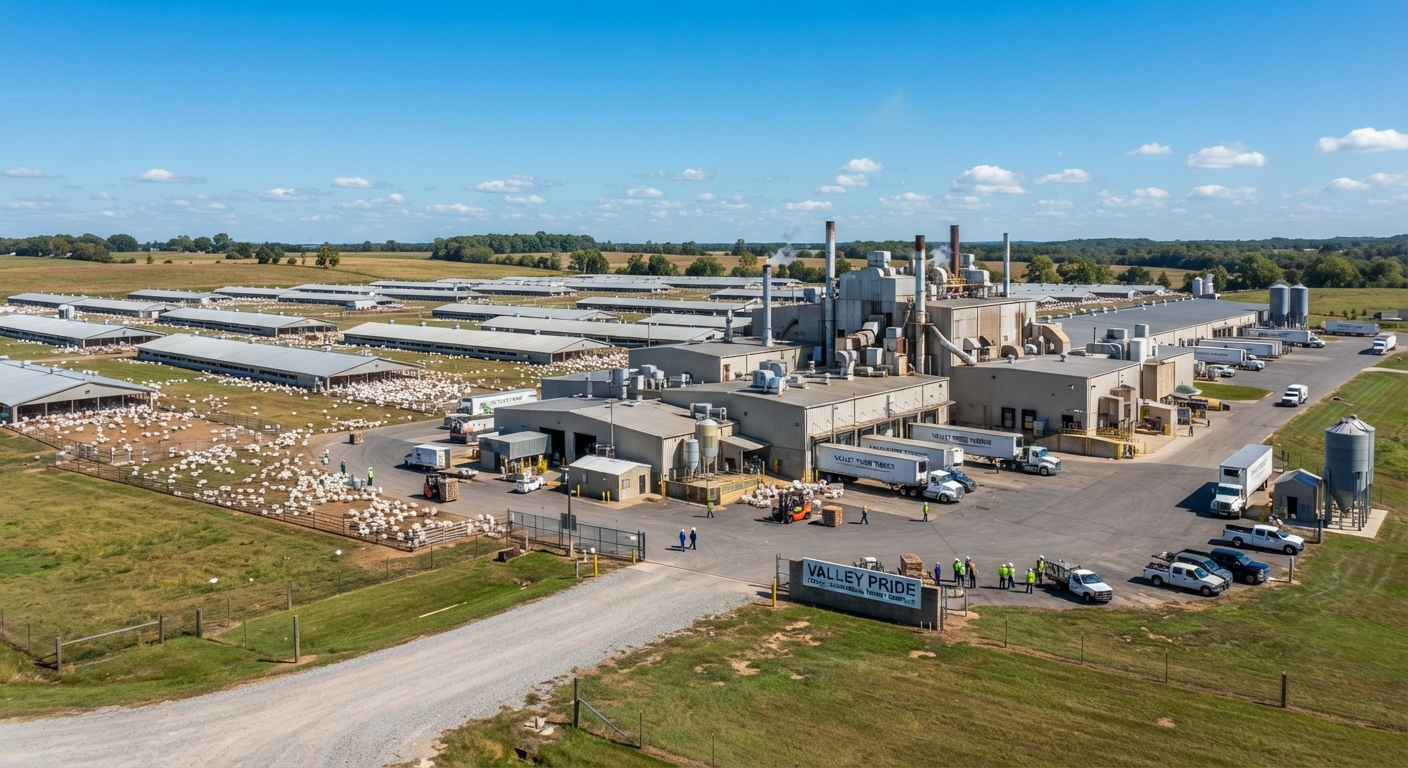

The largest U.S. turkey producer agreed to pay $34 million to settle antitrust claims dating back seven years.
Butterball’s $34M Settlement Ends a Decade-Long Antitrust Battle Over Turkey Price-Fixing
Butterball, America’s largest turkey producer, has agreed to pay $34 million to settle antitrust allegations that it conspired with other major turkey producers to artificially manipulate prices. The settlement, filed in the U.S. District Court for the Northern District of Illinois, marks the final chapter in a legal saga that began in 2019 and exposes years of alleged coordination among the nation’s top poultry processors.
The settlement makes Butterball the last of the major defendant turkey producers to offer a resolution, though the company carefully structured the agreement to explicitly deny any wrongdoing. This legal maneuver is typical in antitrust settlements—defendants settle to resolve litigation risk without admitting to conduct that could be used against them in other jurisdictions or private lawsuits. Nevertheless, the $34 million price tag signals that Butterball’s legal team calculated the cost of continued litigation and trial risk far exceeded the settlement figure.
The case has profound implications for turkey producers, consumers, and the broader poultry industry. It exposes systemic pricing practices that allegedly cost American consumers millions of dollars in inflated turkey prices over multiple years, raising questions about whether similar coordination exists in other poultry segments.
The Seven-Year Antitrust Battle: How One Lawsuit Took Down an Industry
The antitrust lawsuit against Butterball and other major turkey producers originated in 2019, making this a remarkably long legal proceeding by commercial standards. The claims alleged that the defendants participated in a scheme to artificially suppress the supply of turkeys and manipulate prices in the broader U.S. market. The lawsuit named multiple defendants including Perdue Farms, Foster Farms, Jennie-O Turkey Store (owned by Hormel Foods), Prestage Farms, Cargill, Cooper Farms, Farbest Foods, House of Raeford Farms, and Tyson Foods.
Over the past seven years, the case has progressively weakened the defendants’ litigation positions. One by one, major turkey producers have either settled or proposed settlements, leaving Butterball as the holdout. The domino effect of settlements typically works against remaining defendants—each new settlement removes potential exculpatory witnesses and strengthens the remaining plaintiffs’ narrative by making defendants appear to be admitting guilt through settlement.
Earlier Settlements Signal Industry-Wide Coordination Concerns
Before Butterball’s agreement, multiple major turkey producers had already offered or received preliminary approval for settlements. Early this month, a federal judge granted preliminary approval to settlement agreements involving House of Raeford Farms, Prestage Farms, Foster Farms, and Perdue Farms. Simultaneously, Jennie-O Turkey Store and its parent company Hormel Foods proposed their own settlement.
The cascade of settlements across nearly every major turkey producer in the United States raises a critical question: if coordination was limited to isolated actors or aberrant behavior, why have virtually all major producers settled? The pattern suggests systemic coordination across the turkey production industry rather than isolated violations by one or two companies.
For consumers, the implication is sobering. If this pricing coordination occurred across the industry, then nearly every turkey purchased by American households from 2019 backward may have been subject to artificially inflated prices. The actual consumer harm from this alleged conspiracy likely dwarfs the settlement amounts being paid by individual producers.
Why the Judge Said the Evidence Was “Far From Overwhelming”—And What That Means
The antitrust litigation took an unexpected turn when a federal judge presiding over the case reportedly stated that evidence against three remaining defendants (Butterball, Jennie-O, and Prestage Farms at that time) was “far from overwhelming.” This judicial comment is highly significant because it suggests the plaintiffs’ case faced substantial weakness in proving the price-fixing conspiracy beyond a reasonable doubt.
In antitrust cases, “far from overwhelming” evidence typically means the defendants had viable legal defenses and jury trial represented genuine risk to the plaintiffs. This judicial assessment likely motivated the remaining defendants to settle—not because they were guilty, but because litigation risk remained material despite weakness in the plaintiffs’ case.
What the Weak Evidence Reveals About Antitrust Enforcement
The judicial comment about weak evidence raises broader questions about antitrust enforcement strategy. Antitrust cases involving price-fixing allegations typically require substantial documentary evidence (emails, phone records, witness testimony) proving defendants explicitly agreed to coordinate pricing. The judge’s assessment that evidence was “far from overwhelming” suggests the plaintiffs may have relied heavily on circumstantial evidence—similar pricing patterns, shared customer lists, industry meeting attendance—without definitive proof of explicit coordination.
This evidentiary reality affects how Butterball and other defendants likely calculated settlement decisions. Even with weak evidence, antitrust litigation generates enormous legal costs (likely millions for each defendant), business disruption, and reputational damage. From a business perspective, paying $34 million to eliminate seven years of litigation, legal fees, and negative publicity may represent rational cost-benefit analysis even if the plaintiffs’ case faced evidentiary challenges.
Butterball’s Market Position: Why Its Settlement Matters Most
Butterball’s significance in this case extends beyond legal positioning—the company is the dominant player in the U.S. turkey market. According to industry databases, Butterball processes approximately 1 billion pounds of turkey annually, making it by far the largest turkey producer in the United States. The company is jointly owned by Seaboard Corp. and Goldsboro Milling Co., giving it capital resources and strategic importance that eclipse competitors.
Because Butterball commands such outsized market share, allegations of its participation in pricing coordination carry greater weight than similar allegations against smaller competitors. If the largest market participant engaged in pricing coordination, the impact on overall market pricing would be significant. Conversely, Butterball’s settlement removes the industry’s dominant player from continued litigation, likely accelerating final resolution of the overall case.
The Butterball Settlement as Industry Resolution Catalyst
With Butterball now settled, the remaining unresolved defendants (if any) face substantially weakened litigation positions. Butterball’s size and market importance meant its defense strategy carried weight for the entire defendant group. With the largest defendant removed from litigation through settlement, remaining defendants lose the collective defense positioning and face increased pressure to settle on potentially less favorable terms.
The settlement also carries symbolic importance. Butterball settling “without admitting wrongdoing” actually suggests the opposite to market participants and regulators—settlements without admission frequently signal defendants’ assessment that continued litigation becomes indefensible. The $34 million price tag, while substantial, represents Butterball’s calculation that this cost is preferable to trial risk.
What Butterball’s $34M Settlement Means for Consumer Turkey Prices
For American consumers purchasing turkey products, Butterball’s settlement raises critical questions about current pricing. If coordination artificially inflated prices from 2019 backward, does the settlement suggest pricing coordination has ended? Not necessarily. Settlement and admission of wrongdoing are explicitly separated in these agreements, allowing the company to settle current litigation while leaving open whether pricing practices have fundamentally changed.
The resolution of this antitrust case may actually simplify the market. Without lingering litigation uncertainty, turkey producers can focus on competitive pricing rather than legal defense strategies. However, the case exposes how concentrated the turkey production industry remains—a handful of major producers control most U.S. supply, giving them theoretical capacity to coordinate pricing regardless of whether they explicitly did so.
FAQ: Your Questions About Butterball’s Antitrust Settlement and Turkey Industry Implications
Q: How much is Butterball paying to settle the antitrust lawsuit? A: Butterball agreed to pay $34 million to settle antitrust claims alleging participation in a turkey price-fixing scheme. The settlement was filed in the U.S. District Court for the Northern District of Illinois and makes Butterball the last major defendant to offer a settlement.
Q: When did the antitrust lawsuit against turkey producers begin? A: The lawsuit dates back to 2019, making this a seven-year legal proceeding. The case alleged that major turkey producers participated in a scheme to artificially suppress supply and manipulate turkey prices.
Q: Which turkey producers have already settled? A: Multiple major defendants have either received preliminary approval or proposed settlements, including Perdue Farms, Foster Farms, Jennie-O Turkey Store/Hormel Foods, House of Raeford Farms, and Prestage Farms. Butterball is the last major defendant to settle.
Q: Does Butterball’s settlement mean it admitted guilt? A: No. Butterball’s settlement explicitly does not constitute an admission of wrongdoing. The company denies the allegations while agreeing to pay $34 million to resolve the litigation. This is standard in antitrust settlements.
Q: What did the federal judge say about the evidence against Butterball? A: A federal judge stated that evidence against the remaining defendants at that time (Butterball, Jennie-O, and Prestage Farms) was “far from overwhelming,” suggesting the plaintiffs’ case faced substantial evidentiary weaknesses in proving price-fixing conspiracy.
Q: How large is Butterball in the U.S. turkey market? A: Butterball is the largest turkey producer in the United States, processing approximately 1 billion pounds of turkey annually. The company is jointly owned by Seaboard Corp. and Goldsboro Milling Co.
Q: Why would Butterball settle if the evidence was weak? A: Antitrust litigation generates enormous legal costs, business disruption, and reputational damage. Paying $34 million likely represented a lower cost than continued litigation, legal fees, and trial risk, even if the plaintiffs’ case faced evidentiary challenges.
Q: Who else was initially named in the antitrust lawsuit? A: The initial lawsuit also named Cargill, Cooper Farms, Farbest Foods, House of Raeford Farms, and Tyson Foods as defendants. However, not all remain active in live turkey production or in the litigation.
Q: What does this settlement mean for consumer turkey prices? A: The settlement raises questions about whether pricing coordination inflated turkey prices from 2019 onward. Settlement resolution may allow turkey producers to focus on competitive pricing rather than litigation defense strategies, potentially benefiting consumers through better price competition.
Q: Will this antitrust case end now that Butterball has settled? A: Butterball’s settlement represents a critical milestone likely to accelerate final resolution, but the case won’t formally conclude until all remaining defendants have settled or the court issues final judgment on unresolved parties.
Source Materials:
- Butterball Antitrust Settlement Filing, U.S. District Court for the Northern District of Illinois (August 2026)
- Federal Judge Statements on Evidentiary Strength in Turkey Price-Fixing Case
- Settlement Agreements: Perdue Farms, Foster Farms, House of Raeford Farms, Jennie-O/Hormel Foods (August 2026)
- Butterball Company Profile and Market Share Data (WATTPoultry Top Companies Database)
- Antitrust Lawsuit Timeline and Defendant Summary (2019-2026)