
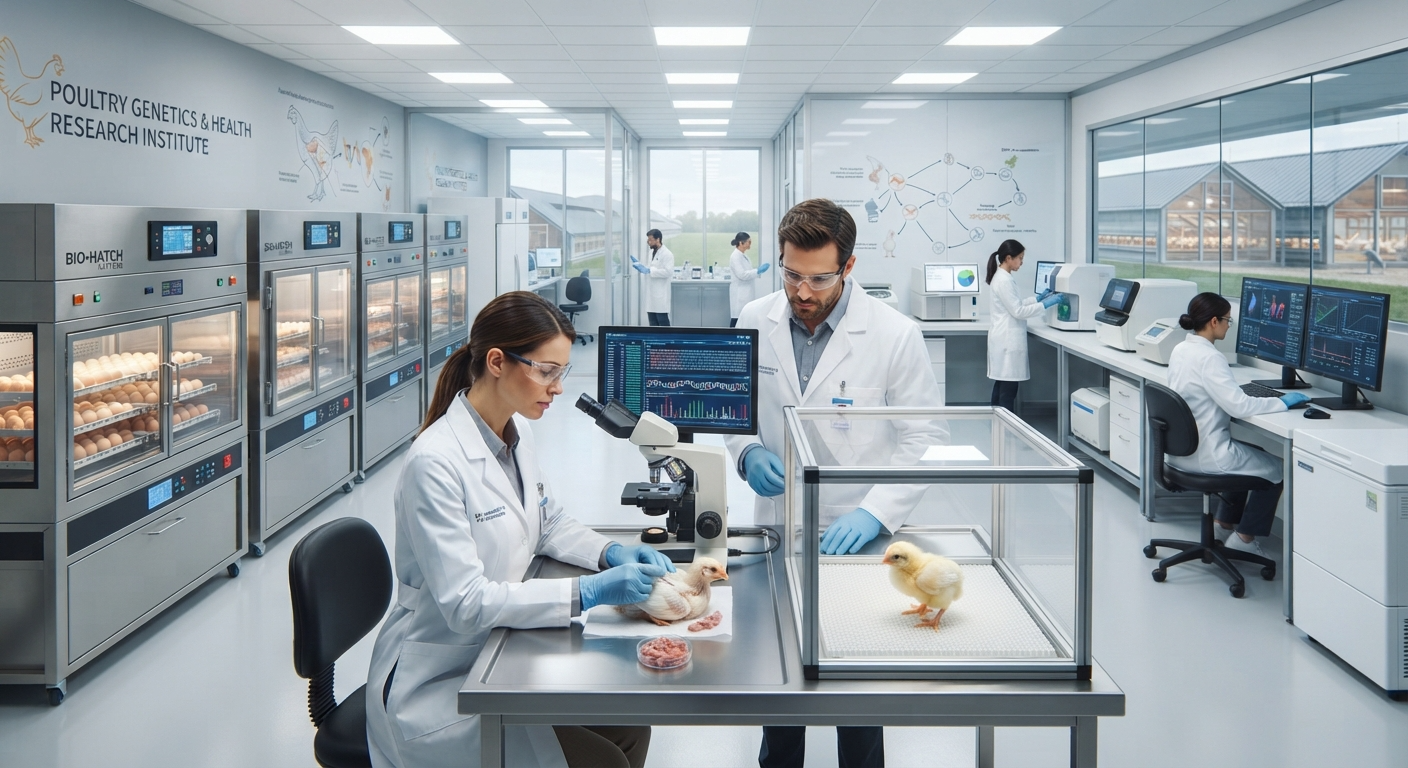

USPOULTRY Foundation approves four new research topics including colibacillosis prevention, fertility optimization, PFAS mitigation, and depopulation protocols; genetics supply constraints drive research investment priorities.
USPOULTRY Foundation Invests in Critical Poultry Research Solutions
The poultry industry faces a complex constellation of technical challenges that no single producer or processor can address independently. Disease prevention, genetic optimization, environmental compliance, and operational efficiency require collaborative research and industry-wide solutions. The USPOULTRY Foundation’s approval of four new research topics signals the industry’s commitment to addressing these systemic challenges through coordinated, science-based investigation.
These research initiatives represent strategic responses to real operational pressures facing modern poultry production. They address problems that affect profitability, food safety, regulatory compliance, and long-term industry sustainability. Understanding what these research topics mean and why they matter provides insight into the practical challenges and opportunities shaping the contemporary poultry sector.
Colibacillosis Prevention: Addressing a Major Flock Health Threat
Colibacillosis, infection caused by pathogenic strains of Escherichia coli bacteria, represents one of the most economically significant diseases in modern poultry production. Unlike highly infectious viral diseases that receive significant attention, colibacillosis operates as an endemic challenge affecting nearly every flock at some level.
The disease manifests through multiple pathways: respiratory disease in broilers, peritonitis and septicemia in layers, and air-sac disease in breeding flocks. Economic impacts accumulate through increased mortality, reduced growth performance, elevated treatment costs, and secondary complications that compromise flock productivity.
Current colibacillosis management relies heavily on antimicrobial treatment and vaccination strategies. However, rising antimicrobial resistance increasingly limits treatment effectiveness. Additionally, vaccination protocols provide variable protection depending on environmental management and flock health status.
The USPOULTRY Foundation’s research investment into colibacillosis prevention signals industry recognition that current approaches require enhancement. Potential research directions include:
Genetic Selection for Disease Resistance: Identifying and selecting breeding stock with natural resistance to colibacillosis infection could reduce disease pressure across production systems without requiring antimicrobial intervention.
Environmental and Management Protocols: Investigating specific management practices that reduce colibacillosis risk—including air quality optimization, housing design improvements, and biosecurity protocols.
Probiotic and Feed-Based Interventions: Exploring nutritional and microbial approaches that enhance gut health and disease resistance without antimicrobial chemicals.
Vaccine Development: Advancing vaccine technology to provide more consistent and reliable protection against colibacillosis.
Success in any of these research directions would yield significant industry benefits through reduced disease losses, decreased antimicrobial dependency, and improved flock health and productivity.
Fertility Optimization: Maximizing Genetic Potential
Modern poultry genetics represent extraordinary technological achievements. Contemporary broiler chickens reach market weight in less than half the time required fifty years ago, while maintaining feed efficiency and meat quality. Laying hens produce eggs at historically unprecedented rates.
However, this genetic progress comes with challenges. Selective breeding for production traits—growth rate in broilers, egg production in layers—sometimes creates unintended consequences for reproductive and metabolic traits. Modern breeding flocks increasingly face fertility challenges that weren’t prominent issues decades ago.
High-production laying hens sometimes struggle with reproductive tract health and fertility. Broiler breeding flocks, despite exceptional genetics for growth performance, sometimes exhibit suboptimal fertility metrics. These challenges directly impact hatchery output, chick quality, and flock productivity.
The USPOULTRY Foundation’s research focus on fertility optimization addresses a critical constraint on genetic progress. The research likely explores:
Genetic Selection Strategies: Identifying selection approaches that maintain production trait improvements while simultaneously improving fertility metrics.
Nutritional Optimization: Investigating specific nutrient requirements and ratios that support reproductive health and fertility in modern genetics.
Environmental Management: Exploring management protocols that support reproductive performance in modern breeding flocks.
Physiological Understanding: Advancing understanding of metabolic and physiological relationships between production traits and fertility.
Successfully optimizing fertility without compromising production gains could accelerate genetic progress and improve overall flock sustainability. It represents exactly the type of technical challenge that requires organized research coordination.
PFAS Mitigation: Addressing Emerging Environmental Concerns
Per- and polyfluoroalkyl substances (PFAS) have recently emerged as significant environmental and public health concerns. These synthetic chemicals accumulate in soil and water and resist degradation. They appear in unexpected places, including poultry litter and processing environments.
PFAS sources in poultry production include water used in facilities, some feed additives, certain processing chemicals, and environmental contamination. The presence of PFAS in poultry facilities creates potential pathways for contamination of birds, eggs, and poultry products—raising food safety and regulatory compliance concerns.
Regulatory agencies worldwide are increasingly scrutinizing PFAS levels. The U.S. Environmental Protection Agency has established drinking water standards for certain PFAS compounds, and additional regulations appear likely. Countries in Europe and Asia have implemented or are considering stricter PFAS controls.
For the poultry industry, PFAS mitigation research carries multiple implications:
Source Identification: Understanding where PFAS enter production systems and how to eliminate or reduce those sources.
Water Treatment: Developing effective water treatment protocols that remove PFAS from facility water supplies.
Litter Management: Investigating litter processing and management approaches that minimize PFAS accumulation.
Feed Ingredients: Identifying feed ingredients and additives that may introduce PFAS and developing alternatives.
Regulatory Compliance: Ensuring production systems meet emerging regulatory standards for PFAS levels.
Success in PFAS mitigation research would position the industry proactively ahead of regulatory requirements while protecting product safety and brand reputation.
On-Farm Depopulation Protocols: Addressing Difficult Operational Realities
Depopulation—the humane culling of flocks—represents one of the most difficult and emotionally challenging aspects of poultry production. Yet it’s an inescapable operational reality. Disease outbreaks, facility closures, market disruptions, and other crises sometimes require depopulation of entire flocks.
The devastating bird flu outbreaks of recent years have made depopulation protocols urgently relevant. When highly pathogenic avian influenza spreads through facilities, entire flocks sometimes require depopulation to prevent disease transmission to neighboring operations.
Current depopulation methods vary widely. Traditional approaches include gas asphyxiation or mechanical means. Newer technologies are emerging, but comprehensive guidance on most humane, efficient, and practical approaches remains limited.
USPOULTRY Foundation research into depopulation protocols likely explores:
Technology Development: Advancing depopulation technologies that improve efficiency and reduce stress and suffering.
Protocol Standardization: Developing industry-standard protocols that ensure consistent, humane depopulation practices.
Worker Safety and Training: Establishing protocols that protect worker safety and psychological well-being during difficult operations.
Environmental Management: Addressing disposal, biosecurity, and environmental considerations in depopulation scenarios.
Regulatory Alignment: Ensuring protocols meet regulatory requirements and industry welfare standards.
This research represents commitment to handling crisis situations—when they occur—with maximum humanity and efficiency.
Genetics Supply Constraints: The Underlying Pressure
All four research topics connect to a fundamental challenge: genetics supply constraints affecting modern poultry production.
The global poultry genetics industry operates through a small number of multinational companies. Supply disruptions—whether from disease, facility issues, or trade complications—can ripple through the entire global industry. Recent avian influenza outbreaks have created genetics supply bottlenecks that producers haven’t experienced in decades.
When genetics supply tightens, producers cannot simply order replacement breeding birds or increased hatching egg supplies. Production expansion slows. Existing genetics continue producing longer than originally planned, potentially creating unintended consequences for health, fertility, or welfare.
Research addressing colibacillosis, fertility, and depopulation protocols all carry potential to optimize productivity within existing genetics constraints. Rather than waiting for genetics supply to normalize, focused research can help producers maximize performance with available genetic resources.
Strategic Implications of Research Investment
The USPOULTRY Foundation’s research investment signals industry leadership recognizing several strategic realities:
Collaborative Solutions: Complex technical challenges require industry-wide research collaboration rather than individual company efforts. Public research funding addresses market failures where individual companies cannot capture sufficient returns to justify investment.
Regulatory Readiness: Proactive research positions the industry ahead of emerging regulatory requirements (particularly PFAS). This reduces regulatory surprise and enables smoother compliance transitions.
Sustainability and Welfare: Research addressing health, fertility, and humane practices contributes to industry social license—increasingly important as consumers and regulators scrutinize animal agriculture.
Operational Efficiency: Optimizing production within constraint environments (tight genetics, disease pressure) protects profitability and competitiveness.
Research Timeline and Industry Impact
Foundation-funded research typically requires 2-5 years to produce actionable results. The four approved topics will likely generate preliminary findings within 18-24 months, with comprehensive recommendations emerging over longer timeframes.
However, the impact of research approval extends beyond eventual results. The research process itself creates industry engagement, facilitates knowledge sharing among participating institutions and producers, and builds shared understanding of technical challenges.
As results emerge, adoption rates depend on practical applicability, economic viability, and regulatory alignment. Successfully adopted research can improve productivity, reduce disease losses, enhance compliance, and strengthen long-term industry viability.
FAQ
Q: Why does the poultry industry need research funding for these topics?
A: Individual companies cannot fully capture returns from basic research addressing industry-wide challenges. Collaborative, foundation-funded research addresses this market failure.
Q: How long before research results produce practical applications?
A: Research typically requires 2-5 years to produce actionable results. Preliminary findings often emerge within 18-24 months.
Q: Will research results be available to all producers or only large companies?
A: Foundation-funded research typically produces publicly available results accessible to all industry participants.
Q: How does colibacillosis prevention research differ from current disease management?
A: Current management relies primarily on treatment and vaccination. Research explores genetic resistance, environmental optimization, and alternative interventions.
Q: What makes fertility optimization challenging in modern poultry genetics?
A: Intensive selection for production traits sometimes created unintended consequences for reproductive performance. Resolving this requires balanced selection approaches.
Q: Why is PFAS mitigation research urgent now?
A: Regulatory agencies are implementing increasingly strict PFAS standards. Proactive industry research positions producers ahead of regulatory requirements.
Q: Will depopulation research change current industry practices?
A: Potentially yes. Research could identify more humane, efficient, or practical approaches to an inevitable but difficult operation.
Q: How does genetics supply constraint influence research priorities?
A: Tight genetics supply creates pressure to optimize productivity within existing genetics. Research addressing health, fertility, and efficiency helps producers maximize production with available resources.
Sources & Additional References
| Source Type | Title/Organization | Relevance |
|---|---|---|
| Industry Organization | USPOULTRY Foundation | Official source for research funding decisions and initiatives |
| Research Institution | University Poultry Science Departments | Academic institutions conducting poultry health and genetics research |
| Disease Research | Colibacillosis in Poultry Production | Scientific literature on bacterial disease in modern flocks |
| Genetics Research | Poultry Breeding and Genetic Selection | Technical research on poultry genetics and reproductive traits |
| Environmental Science | PFAS in Agricultural Systems | Research on per- and polyfluoroalkyl substance contamination pathways |
| Regulatory Guidance | EPA PFAS Standards and Guidelines | Government regulatory framework for PFAS management |
| Animal Welfare Research | Humane Depopulation Protocols | Industry guidance on welfare-focused depopulation practices |
| Industry Analysis | Poultry Genetics Supply and Market Dynamics | Analysis of genetics availability and supply chain disruptions |