
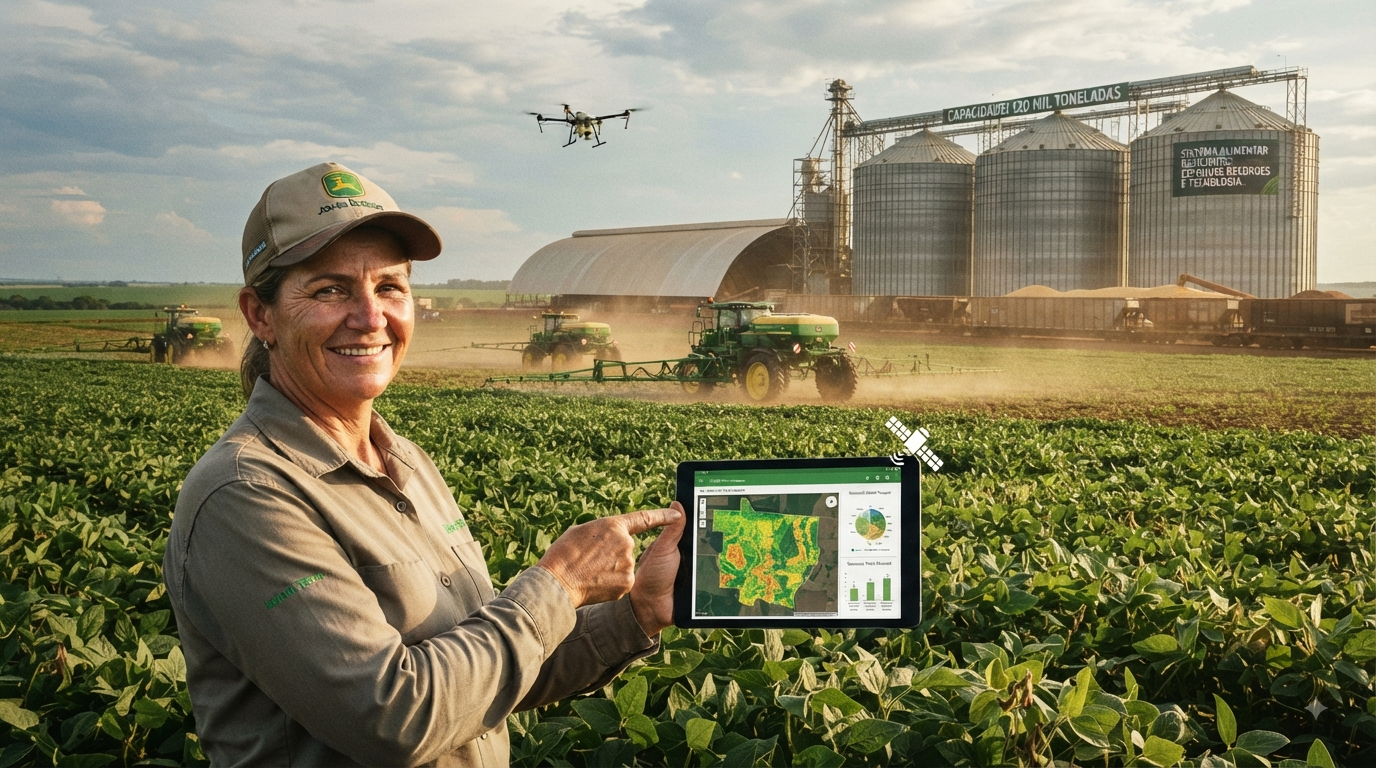

Decades of yield gains and near-record grain inventories are positioning the global food system to absorb this year’s “super” El Nino far more smoothly than similar events in the past, even as the pattern gathers strength.
A Stronger Food System Than 1997 Or 2015
World farm production has consistently outpaced both consumption and population growth since the 1980s, according to the UN Food and Agriculture Organization, driven by higher-yielding crop varieties, expanded fertilizer use, and improved irrigation and crop protection across staples like rice, wheat, corn, and soybeans. Andrew Whitelaw of Australian agricultural consultancy Episode 3 frames the shift as a change in resilience rather than immunity: even during drought conditions, better irrigation management and crop science now allow marketable yields where past events caused outright shortfalls.
The comparison to history is stark. During the severe El Nino episodes of 1997-98 and 2015-16, crop losses fed directly into food shortages, inflation, and slower economic growth — sugar and palm oil prices spiked after drought hit Brazil, India, Indonesia, Malaysia, and Thailand, Southeast Asian rice exporters curbed shipments as supplies tightened, and Australian wheat export losses forced southern African countries to import more corn. FAO Chief Economist Maximo Torero credits improved forecasting and market transparency with giving governments more lead time to prepare than they had in past cycles.
This El Nino Is Already Building
The World Meteorological Organization confirmed this El Nino developed in early July, and NOAA forecasts it will intensify through the October-to-December window before persisting into April 2027. Chris Hyde, a meteorologist at satellite data firm SkyFi, said expectations point to one of the strongest El Nino events on record, if not the strongest ever observed — meaning the bulk of the dryness impact is still ahead rather than behind.
The early damage is already visible. India is contending with a deficient monsoon, drier conditions are forecast across Australia’s key wheat regions, and crops in Indonesia and Thailand are showing moisture stress. S&P Global’s commodity research arm projects meaningful wheat production declines in both Australia and the US, a slight dip in India’s wheat output, and reduced soybean production in Brazil and Argentina, while Malaysian palm oil output is expected to fall even as Indonesia’s holds roughly steady. Separate Bloomberg analysis flags Southeast Asian palm oil — source of about 90% of global supply — as particularly exposed to El Nino-driven dryness, with downstream effects already factoring into inflation forecasts in markets like Brazil, where food costs are contributing to year-end inflation projections as high as 5.03%, well above the central bank’s target.
Inventories Are Doing The Heavy Lifting
The core buffer against this event is sheer volume of stored grain. India, which accounts for 40% of global rice exports, is holding so much rice that it’s running short of storage capacity for stockpiles exceeding a full year of total global rice exports. China holds nearly half of the world’s wheat stocks, a reserve that should limit import demand even if Australian drought cuts into supply. Global palm oil stocks sit near historic highs, though Indonesia’s aggressive biodiesel program is expected to draw those inventories down somewhat in coming months.
Independent analysis from ING reinforces the same read: while grain reserves currently provide a comfortable cushion against supply shocks, a scenario where those reserves get drawn down heavily during the event would leave markets meaningfully tighter once El Nino passes — a risk worth monitoring rather than dismissing, even if the base-case outlook stays contained.
New Export Powerhouses Have Reshaped Supply
Structural shifts in global agricultural trade over the past three decades have added supply sources that simply didn’t exist at scale during the 1997-98 event. Brazil has become the world’s largest soybean exporter, with shipments up more than 13-fold since 1997/98, while Russian wheat exports have surged to 48 million tons from roughly 1 million tons over the same period. Those two exporters alone represent a meaningfully larger and more diversified global supply base than existed during the last comparably severe El Nino.
Plant science has compounded that structural shift. Drought-tolerant corn hybrids, widely adopted across Africa and the Americas since 2015, are helping farmers maintain yields through erratic rainfall, while heat- and drought-tolerant wheat varieties have gained traction in India and Australia. Short-duration rice varieties are helping South and Southeast Asian farmers manage increasingly unpredictable monsoon timing. Digital tools unavailable in 1997 — satellite crop monitoring, seasonal climate forecasting, high-resolution soil moisture mapping, and GPS-guided fertilizer application — are giving today’s farmers a level of input precision that wasn’t possible during past events, with AI-powered advisory platforms increasingly integrating all of that data into planting and pest-management recommendations.
Geopolitics Remains The Wildcard
Even with a structurally stronger food system, experts caution the optimism has limits. Torero specifically flagged reduced agricultural input use tied to the Strait of Hormuz crisis and elevated fertilizer prices as factors that could still worsen conditions through the back half of 2026. The Strait, which carried roughly a fifth of global crude oil and LNG supply before the Iran conflict disrupted it in February, has driven up fuel and fertilizer costs in a way that compounds El Nino’s direct agricultural impact rather than operating separately from it. Separate research from ORF Middle East frames this convergence of conflict-driven trade restriction and looming super El Nino as a genuinely novel compounding risk, noting container shipping rates already running roughly 40% above pre-crisis levels and constrained urea and phosphorus fertilizer exports layering directly on top of the weather risk.
Buyer And Procurement Implications
For F&B procurement teams, the dominant signal here is that a strong El Nino is not automatically a repeat of 1997 or 2015 — record inventories in rice, wheat, and palm oil provide real insulation, and buyers shouldn’t assume the kind of sharp shortage-driven price spikes seen in past comparable events are the base case this time. That said, the fertilizer and fuel cost pressure tied to the Strait of Hormuz disruption is a separate, compounding risk layered on top of the weather story, and buyers should treat those two factors independently when assessing exposure rather than assuming grain reserves alone will offset elevated input costs.
Buyers sourcing wheat should watch Australian and US production forecasts closely given the projected declines in both markets, while diversifying toward or confirming supply continuity from Russia, whose wheat export capacity has grown enormously since the last comparable El Nino. Palm oil buyers should monitor Malaysian output specifically, since Indonesia’s production is expected to hold steadier, and should factor in Indonesia’s biodiesel program as a separate demand pull on inventories independent of the weather pattern itself. Given that the strongest phase of this El Nino isn’t expected until Q4 2026 into early 2027, procurement teams have a meaningful forward-planning window before the most significant disruption risk materializes.
FAQ
How does this El Nino compare to the severe events of 1997-98 and 2015-16?
Meteorologists expect this to be one of the strongest El Nino events on record, potentially the strongest ever observed, with the most significant dryness impact still ahead in the fourth quarter of 2026 and early 2027. However, near-record grain inventories, drought-tolerant crop varieties, and new major exporters like Brazil and Russia mean the global food system is structurally better positioned to absorb the shock than during past comparable events.
Which crops and regions are most at risk from this El Nino?
Wheat production in Australia and the US is expected to decline, along with soybean output in Brazil and Argentina and palm oil production in Malaysia. India, Indonesia, Thailand, and Australia are already experiencing dryness affecting planting and crop development.
What other factors could worsen the food supply outlook beyond El Nino itself?
The Strait of Hormuz crisis, tied to the ongoing Iran conflict, has disrupted fuel and fertilizer supplies and pushed up input costs independently of the weather pattern, and experts warn this compounding effect could weigh on production more than El Nino alone would.
Sources
- Reuters, “Decades of farm gains, inventories strengthen food system against ‘super’ El Nino,” Aug. 11, 2026
- S&P Global, “INFOGRAPHIC: El Niño may lead to global food supply volatility in 2026-27”
- ING Think, “El Niño casts a shadow over agri markets, but global food fears may be overblown”
- Bloomberg, “Super El Niño Risks Emerging Markets in Asia, Africa and Latin America”
- ORF Middle East, “Impacts of an Impending ‘Super’ El-Niño on Global Supply Chains”