
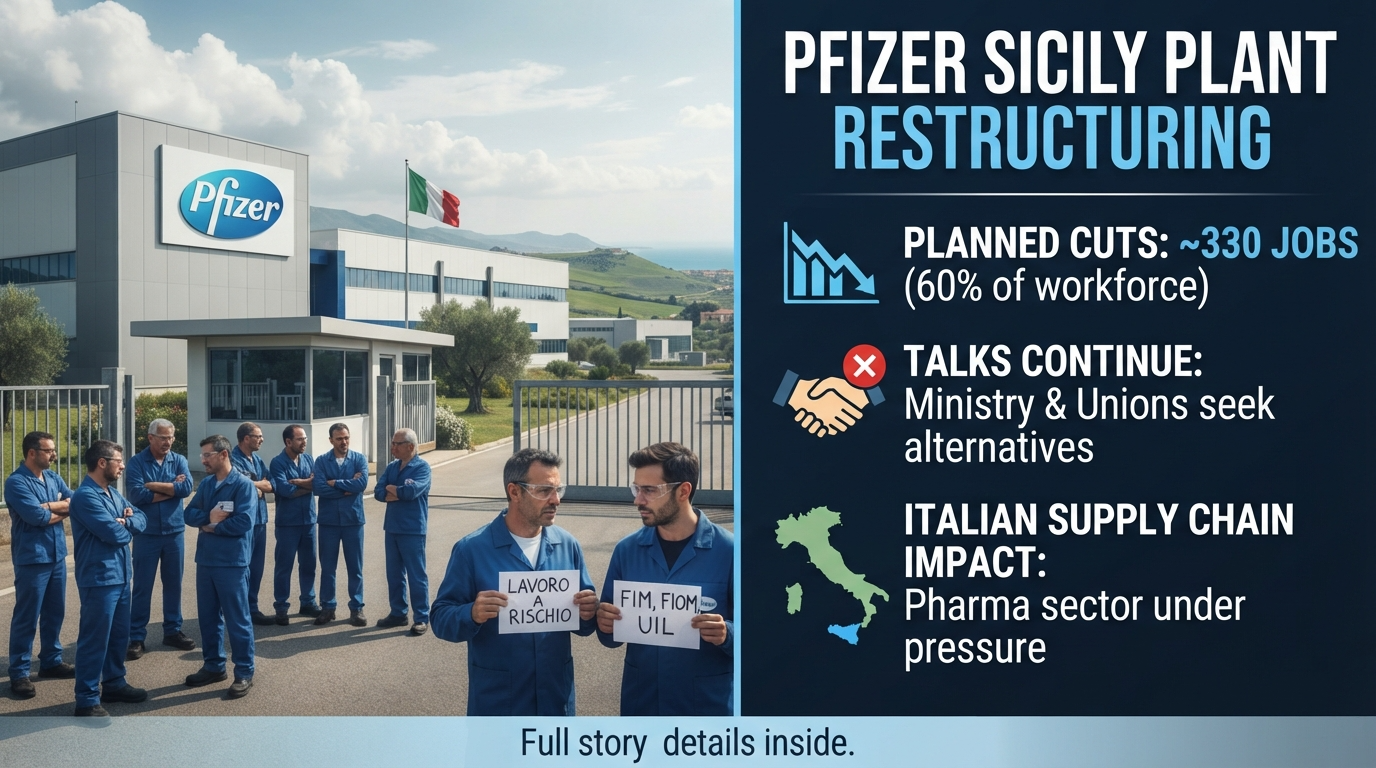

Pfizer plans to cut around 330 of the 550 jobs at its plant in Sicily, unions say, as another global drugmaker shrinks its Italian manufacturing base.
The proposed cuts would remove roughly 60% of the workforce at the site. Talks between Pfizer and Italy’s industry ministry on Tuesday night ended without agreement, according to the CGIL, CISL and UIL unions. That leaves one of Italy’s larger pharmaceutical employers in the south facing a sharp reduction, and puts the government under pressure to find an alternative.
Where the talks stand
The negotiations are not over. Pfizer said it remains open to evaluating alternative proposals, and the ministry described Wednesday’s discussions as “a starting point for strengthening the dialogue.” Industry minister Adolfo Urso is due to visit the plant on 23 October, and a further round of talks is scheduled for 10 November.
Pfizer has not publicly set out the reasons behind the planned reduction. It is the latest international company to scale back its operations in Italy.
Why it matters beyond Sicily
A job cut at a single plant can look like a local labour story. For the pharmaceutical supply chain, it is part of a broader pattern worth watching.
- Europe’s manufacturing footprint is being reshaped. Large drugmakers are reviewing where they make medicines, with significant new investment flowing into the United States. Older European sites are under closer scrutiny.
- Capacity decisions take years to reverse. Once skilled teams and production lines are wound down, rebuilding them is slow and costly.
- Governments are pushing back. Italy’s direct involvement shows that plant restructuring is now a political issue, not only a corporate one. Outcomes can include phased reductions, sale of the site, or retained production in a smaller form.
What buyers and partners should watch
For procurement teams, hospital buyers and contract manufacturers, the key questions are practical:
- Which products are made at the site, and whether production will move elsewhere or end.
- Whether Pfizer seeks a buyer for all or part of the plant, which could create opportunities for contract manufacturers.
- The outcome of the 10 November talks, which should show whether the full reduction goes ahead.
The bottom line
Pfizer’s Sicily cuts are not yet final, but they add to the evidence that big pharma is consolidating its European manufacturing base. Anyone sourcing from or supplying Italian pharmaceutical sites should track the talks closely over the coming weeks.
Frequently Asked Questions
How many jobs is Pfizer planning to cut in Sicily? Unions say around 330 of the 550 people employed at the plant.
Is the decision final? No. Talks with Italy’s industry ministry have not reached agreement. Pfizer says it is open to alternative proposals, and more talks are set for 10 November.
Will the minister visit the site? Yes. Industry minister Adolfo Urso is due to visit the plant on 23 October.
Why is Pfizer cutting jobs at the plant? Pfizer has not publicly detailed its reasons. It is one of several international companies reducing their operations in Italy.
Sources
| Source | Used for |
|---|---|
| Reuters | Job numbers, union statements, talks with the industry ministry, visit and meeting dates |
| CGIL, CISL and UIL union statements (as reported) | Workforce figures and outcome of the talks |
Additional Resources
| Resource | What you’ll find |
|---|---|
| Italian Ministry of Enterprises and Made in Italy | Industrial crisis negotiations and official statements |
| Farmindustria | Italian pharmaceutical industry employment and production data |
| European Federation of Pharmaceutical Industries and Associations (EFPIA) | European pharmaceutical manufacturing and investment trends |
| Pfizer investor relations | Company announcements and manufacturing strategy updates |
Data note: The products made at the Sicily plant and Pfizer’s stated reasons for the cuts were not confirmed in available reporting, so they are not included. Job figures come from union statements.