
Gen Z drinking rates have surged to match the entire adult population, completely overturning the “generation of moderation” narrative that shaped beverage strategy for the past three years—and IWSR data shows the shift creates new opportunities for ready-to-drink and category expansion.
Gen Z Drinking Rates Hit a Turning Point: The Data Shift
The beverage alcohol industry spent years betting that Gen Z drinking rates would remain depressed. That narrative just collapsed.
IWSR’s latest Bevtrac study reveals Gen Z drinking rates at 74%, up from 66% just three years ago. That’s now statistically aligned with the 76% drinking rate across the entire adult population. The conventional wisdom—that younger consumers were opting out of alcohol—has been definitively overturned.
What’s driving the shift? Gen Z drinking rates aren’t climbing because younger consumers suddenly abandoned health consciousness. Instead, they’re adopting alcohol at the same rate as older generations while maintaining distinct consumption patterns: more cocktails, smaller occasions, greater social integration with peers.
For beverage brands, this reframing matters enormously. Gen Z drinking rates are no longer a headwind. They’re an emerging market segment behaving like every other demographic cohort.
The Gen Z Drinking Rate Contradiction: Same Volume, Different Behavior
Here’s the critical nuance: Gen Z drinking rates matching overall population rates doesn’t mean Gen Z drinks like Boomers. The generation has fundamentally different consumption patterns.
Gen Z drinking rate metrics:
- 74% participate in alcohol consumption (up from 66% in 2023)
- 49% consciously follow government health guidance on alcohol
- 18% drink in groups of 5+ people on typical occasions
- 84% consumed cocktails in the past six months
Compare that to Baby Boomers, where Gen Z drinking rates are now higher. Boomers dropped to 71% participation, a steeper decline than expected. Millennials and Gen X remain the highest-drinking generations at 81% and 77%, respectively.
The paradox: Gen Z drinking rates are rising, yet the overall population drinks less per occasion (3.9 drinks average vs. 4.4 in 2024–2025). Gen Z is choosing to drink more frequently but in smaller quantities, and primarily through ready-to-drink formats and cocktails rather than traditional beer or spirits.
Why Gen Z Drinking Rates Matter for Beverage Strategy
Gen Z currently represents 17% of the total drinking population. While that’s smaller than Millennial and Gen X cohorts, it’s a fast-growing segment. IWSR’s data shows Gen Z drinking rates accelerating year-over-year, suggesting the cohort will command larger share as it ages into peak consumption years.
Brands that built portfolios around Gen Z’s perceived moderation now need to recalibrate. The category isn’t shrinking; it’s fragmenting. Gen Z drinking rates are climbing, but consumption is splitting across more occasions, smaller volumes, and different formats.
Ready-to-drink (RTD) cocktails are the clearest example. Gen Z leads all generations in RTD cocktail adoption, with 84% having consumed one in the past six months. That’s higher than Millennials and older cohorts. RTD adoption by Gen Z directly contradicts the “no-drink” narrative—instead, it shows younger consumers choosing convenient, pre-made cocktails over full-strength spirits or traditional beer formats.
The “Generation of Moderation” Narrative Is Dead
Marten Lodewijks, IWSR president and managing director, made it explicit: “The narrative that Gen Z is the generation of moderation is now conclusively debunked.”
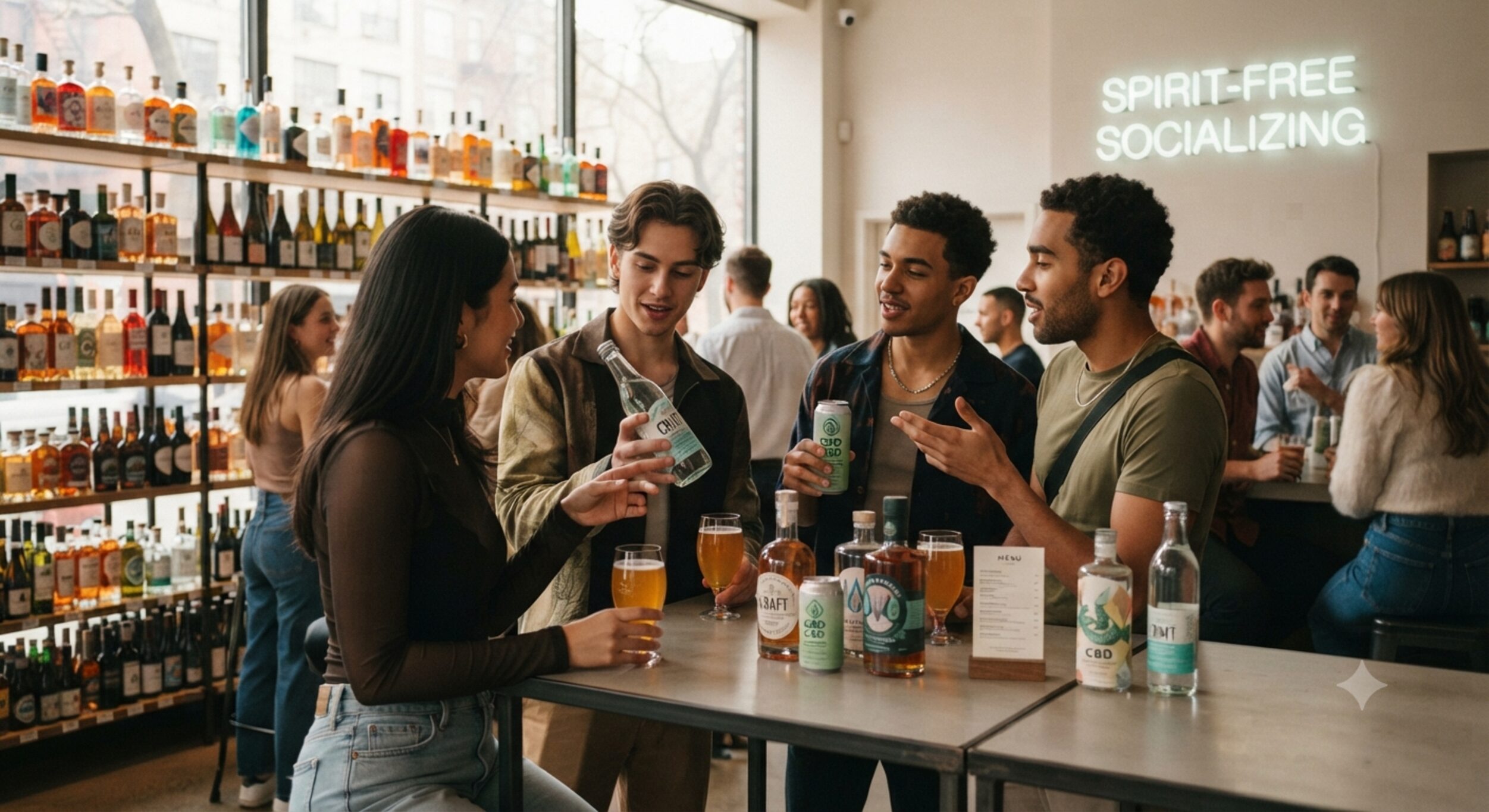
Industry leaders spent three years positioning Gen Z as health-obsessed abstainers. Beverage companies diversified into non-alcoholic and low-alcohol offerings, positioned as essential to capturing younger demographics. Cannabis beverages, CBD-infused products, and zero-alcohol “mocktails” were greenlighted based on the premise that Gen Z drinking rates would stay suppressed.
IWSR’s data doesn’t invalidate those diversification moves—Gen Z does show higher health consciousness, with 49% heeding government alcohol guidelines. But it does mean Gen Z drinking rates, not health values, are the business driver. The generation is choosing alcohol at nearly the same rate as the overall population. Health consciousness and moderate consumption are orthogonal to drinking participation.
For beverage brands and retailers, this distinction reshapes portfolio strategy: Gen Z isn’t avoiding alcohol; Gen Z is consuming alcohol differently.
Generation X and Millennials Still Drive Volume—For Now
While Gen Z drinking rates are rising and Baby Boomers declining, Millennials and Generation X remain the highest-consumption cohorts at 81% and 77% respectively. These generations still account for the largest share of alcohol volume purchased.
However, the trajectory matters. Gen Z drinking rates climbing while Boomer rates decline suggests a structural market shift. Over the next five to ten years, as Gen Z ages into peak consumption years (ages 25–40) and Baby Boomers age further into retirement, Gen Z drinking rates will represent an increasingly significant portion of total category volume.
Brands betting on Gen Z neglect risk losing future share. Brands recognizing Gen Z drinking rates as a recovery signal can position early in RTD, cocktail, and premium formats before competitive intensity increases.
What Moderation Actually Means Now
IWSR found that across all generations, moderation has become the norm. The average drinker now consumes 3.9 drinks per occasion, down from 4.4 in prior years. This isn’t a Gen Z phenomenon—it’s a structural change affecting all age groups.
Lodewijks noted: “The number of people drinking remains consistent, but the frequency with which we drink and the amount we drink per occasion is dropping. The moderation trend increasingly appears to be driven by lifestyle choices, resulting in a structural, rather than cyclical, change.”
This is the real story. Gen Z drinking rates are normalizing toward population averages, but everyone is drinking smaller quantities per session. The beverage category isn’t growing; it’s becoming more frequent but lighter-consumption occasions.
For procurement and marketing teams, this means:
- Occasion-based marketing (work, social, solo, fitness recovery) matters more than volume-based selling
- Smaller pack sizes and portion-controlled formats appeal across generations
- Premium and craft positioning (quality over quantity) aligns with moderation
- RTD and convenience formats capture the “more occasions, smaller pours” trend
Implications for Beverage Retail and Foodservice
Gen Z drinking rates entering population-average territory reshapes retail and foodservice strategy:
Retail:
- Gen Z is 18% more likely to consume in large social groups (18% on 5+ person occasions). This suggests on-premise and group-occasion positioning for RTD and cocktail formats.
- RTD cocktails should be prominently positioned; Gen Z leads adoption at 84% penetration.
- Smaller pack sizes (individual RTD, mini bottles) align with per-occasion moderation.
Foodservice:
- Gen Z dining occasions increasingly integrate alcohol; RTD and cocktail menus are direct revenue drivers.
- Smaller pours and premium cocktails (vs. high-volume promotions) match Gen Z consumption patterns.
- Social/group dining occasions are disproportionately Gen Z; beverage bundling and shareable formats merit testing.
Related
Frequently Asked Questions
If Gen Z drinking rates are rising, why is overall alcohol consumption at a record low?
Overall alcohol consumption is declining because older generations (especially Baby Boomers) are drinking less faster than Gen Z is ramping up. Baby Boomer drinking rates fell to 71%, a bigger decline than expected. However, Gen Z represents only 17% of the drinking population currently, while Boomers are still a significant cohort. As Gen Z ages and expands, it will increasingly offset Boomer decline. The “record low” reflects a temporary generational transition, not a permanent demand collapse.
Does Gen Z drinking at population rates mean they’re not health-conscious?
No. Gen Z drinking rates matching population averages while 49% of Gen Z actively follow government alcohol guidance shows that health consciousness and drinking participation are separate variables. Gen Z is drinking at the same rate as other generations but within stricter personal health parameters—smaller volumes, fewer heavy-consumption occasions, and formats (RTDs, cocktails) where they control intake. This is moderation, not abstinence.
Why are RTD cocktails so important to Gen Z drinking trends?
RTD cocktails are a “gateway format” that lets Gen Z participate in alcohol consumption while maintaining control. An RTD cocktail is pre-dosed, convenient, and requires no mixing skill or over-pouring risk. Gen Z’s 84% RTD cocktail penetration (highest of any generation) shows the generation chose accessible, controlled formats over traditional high-strength spirits or beer. RTD adoption is evidence Gen Z wants to drink, not evidence of continued moderation resistance.
Should beverage companies still market non-alcoholic drinks to Gen Z?
Yes, but reframe the positioning. Non-alcoholic and low-alcohol beverages aren’t the future of Gen Z consumption; they’re the “functional alternative” in the occasional moment Gen Z chooses not to drink. The market opportunity is smaller than the three-year “moderation narrative” suggested, but it’s real. Position non-alcoholic as premium, health-forward, or social-integration options rather than the default Gen Z choice. Gen Z drinking rates show this cohort chooses alcohol; non-alcoholic should be the exception, not the category thesis.
Sources
| Source | URL | Details |
|---|---|---|
| IWSR | https://www.theiwsr.com | Bevtrac twice-annual consumer behavior study; Gen Z drinking rate 74%, up from 66%; population-wide moderation trends |
| IWSR Press Release | https://www.theiwsr.com/insight/press-release/increased-gen-z-drinking-sustained-boomers-drinking-moderates/ | Official statement; Marten Lodewijks quote; generation-by-generation drinking rates |
| Food Dive | https://www.fooddive.com | Laurel Deppen reporting; July 21, 2026; beverage alcohol industry analysis |
| Gallup | https://news.gallup.com/poll/693362/drinking-rate-new-low-alcohol-concerns-surge.aspx | Historical drinking rate data; record low context; consumer concern tracking |
| Food Dive Article Licensing | https://www.fooddive.com/selfservice/article-licensing/ | Content attribution and licensing reference |