
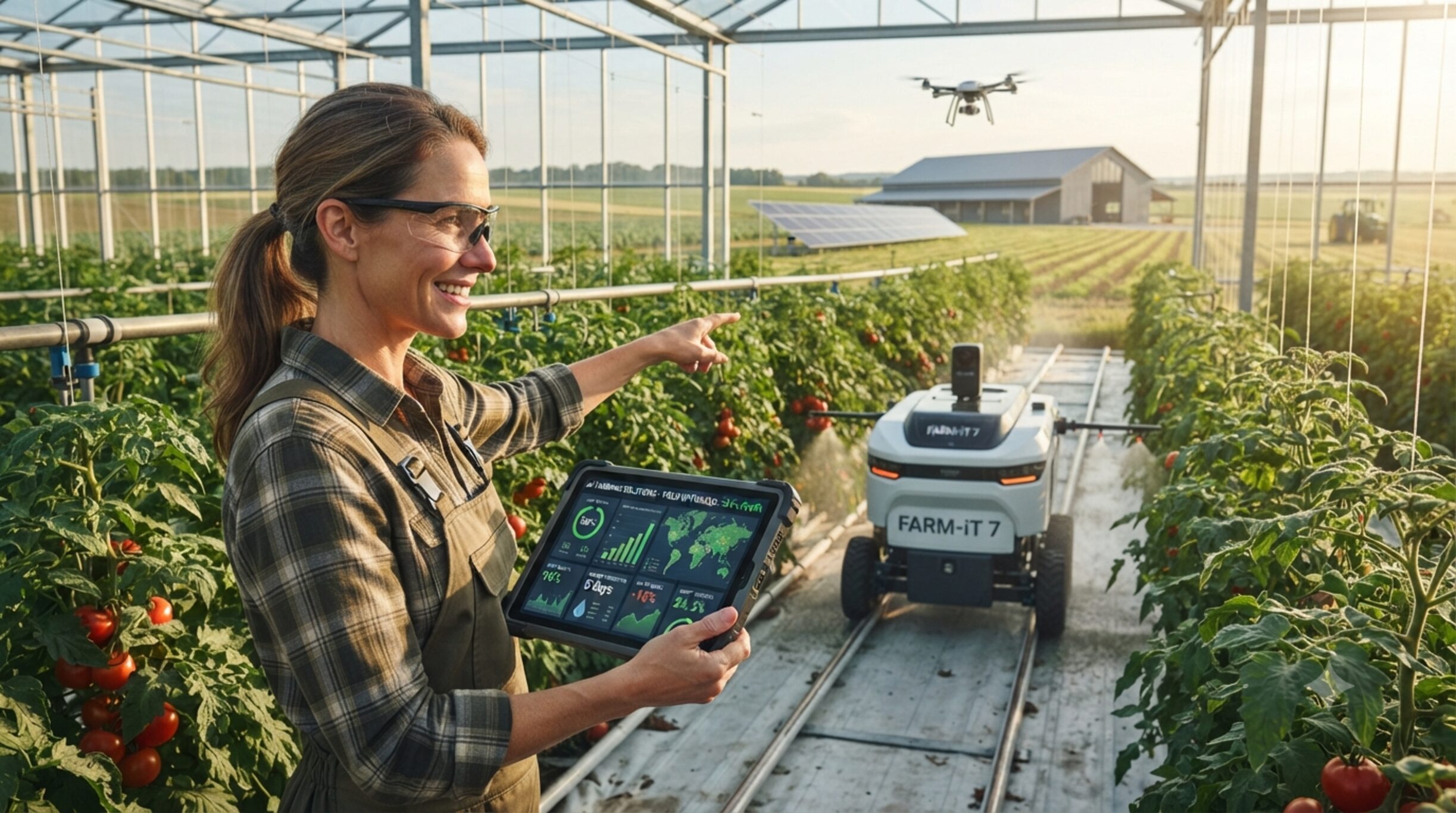

Farmers across the Midsouth are using artificial intelligence to unlock millions in hidden profits—and your farm might be missing out. University of Tennessee experts revealed exactly how AI in farming is transforming production planning, compliance, and input costs at the Southern Cotton Ginners Association meeting this week.
The AI Revolution Quietly Reshaping American Agriculture
Artificial intelligence in farming isn’t science fiction anymore. It’s operational reality on thousands of fields right now. From precision seeding analysis to real-time pest detection, AI technology is fundamentally changing how modern farmers make decisions—and how much money they keep at the end of the season.
The question isn’t whether AI in farming works. It’s whether you’re ready to implement it before your neighbors do.
How Farmers Are Using AI in Farming to Boost Production Planning
One of the most striking examples of AI in farming comes from a Kentucky operation analyzing a full decade of precision data. This farmer fed 10 years of John Deere Operation Center records into an AI system and discovered actionable insights that would have taken months of manual analysis.
The results? Specific recommendations on delayed planting costs, optimal seeding windows, and predicted profitability outcomes. That’s the real power of AI in farming: turning raw data into decisions that move the needle on your bottom line.
“How do you take this and turn it into an actionable decision is where I really see that benefit?” explained Aaron Smith, professor of agricultural and resource economics at the University of Tennessee. “It can help you in terms of saving money or giving you an indication of what the probability of a more profitable outcome is.”
For a farmer managing hundreds or thousands of acres, even small gains in timing—planting a few days earlier, adjusting seeding rates by percentage points—compound into significant revenue shifts.
Compliance Made Effortless: AI in Farming Takes the Guesswork Out
Regulatory compliance drains time and creates risk. One unexpected herbicide application outside label guidelines, and you’re facing fines or crop liability.
AI in farming addresses this directly. Farmers can now upload herbicide labels and ask specific compliance questions. The system pulls in real-time weather data and returns recommendations based on temperature, wind, rainfall, and weed maturity.
Example question: “Based on the attached label requirements and current weather conditions and time of year, can I spray Liberty on cotton?”
AI response: “Yes, you can likely spray today, but I would target an application from now through late morning rather than waiting until the afternoon.”
The system cited temperature, sunlight, and wind conditions as the reasoning. This removes guesswork and creates an audit trail.
Critical caveat: AI in farming can be led astray by leading questions. Always verify recommendations against the original label. Ask the AI to cite its source before applying any input. Think of AI as your first pass at compliance—never your final authority.
Input Costs: Where AI in Farming Delivers Immediate ROI
One farmer implemented AI in farming specifically to optimize input purchasing. Instead of buying fertilizer, seed, and chemicals on a fixed calendar, he built an AI model that tracks retailer inventory, pricing cycles, and direct supplier offers to identify optimal booking windows throughout the year.
The approach worked well enough that national nutrient suppliers reached out asking what he was doing—they wanted to understand his purchasing logic.
This application of AI in farming highlights an underrated opportunity: vendors and retailers operate on predictable seasonal pricing patterns. AI in farming can spot those patterns automatically and flag the best times to commit to purchases. The cost savings come from timing and negotiation leverage, not discount hunting.
Remote Sensing: AI in Farming Detects Stress Before You Do
Sathish Samiappan, associate professor of biosystems engineering at the University of Tennessee, presented breakthrough remote sensing applications. Using satellite, drone, and ground robot imagery combined with AI, farms can now detect problems weeks before they’re visible to the naked eye.
One case study: AI in farming analyzed spectral data from cotton leaves and detected root knot nematode infestation less than two weeks before visible symptoms appeared.
At that early detection point, the farmer could decide whether continued investment in that field made economic sense. Early exit from an infested field saves thousands in unnecessary inputs.
The same AI-powered remote sensing technology flags wildlife damage automatically, maps the extent of loss, and recommends mitigation strategies. Again, AI in farming turns imagery into actionable intelligence.
Key Considerations Before Adopting AI in Farming
AI in farming is powerful, but it’s not a black box solution. Both experts emphasized critical safeguards:
- Data security matters. Consumer-grade AI platforms (ChatGPT, etc.) may not protect proprietary farm data. Enterprise systems exist for farms serious about privacy.
- Verification is non-negotiable. AI in farming can hallucinate or misinterpret data. Always cross-check recommendations against source documents.
- Operationalization is still evolving. Many AI farming applications exist as proof-of-concept. Production-ready tools continue rolling out through 2026 and beyond.
The Real Opportunity
AI in farming isn’t about replacing farmers with robots. It’s about compressing months of analysis into hours, catching problems before they become expensive, and making purchasing decisions with better data.
Early adopters already have years of competitive advantage built into their operations. If your farm doesn’t yet use AI in farming for production planning, compliance, or input optimization, the question isn’t if you should start—it’s how fast you can catch up.
Related
Frequently Asked Questions
What’s the difference between using ChatGPT and an enterprise AI farming system?
Consumer AI platforms like ChatGPT are powerful but treat every conversation as independent data. Enterprise systems designed for agriculture log queries, protect proprietary farm data with encryption, and integrate with farm management software (John Deere Operations, AGCO Fuse, etc.). If you’re uploading years of planting records or pesticide decisions, use an enterprise system. ChatGPT works for quick compliance checks, but not for storing sensitive farm economics.
Can AI in farming really detect pests before they’re visible?
Yes—the research is solid. AI analyzes spectral data from leaves (captured by drones or satellites) that reflects plant stress invisible to human eyes. Root knot nematodes, Fusarium, and nutrient deficiencies all create measurable changes in leaf reflectance 10–21 days before symptoms appear. Early detection lets you make exit/remediation decisions with weeks of lead time instead of days.
How much does AI in farming cost to implement?
It varies by application. Compliance checking via ChatGPT Plus is $20/month. Production planning analysis using John Deere data typically costs $500–$2,000 per farm per year through commercial services. Remote sensing via drone/satellite subscription runs $2,000–$8,000 annually depending on field size and frequency. Input optimization can be built in-house or accessed through retailer platforms at no additional cost. Start small, measure ROI, then scale.
Sources
| Source | URL | Details |
|---|---|---|
| Farm Press | https://www.farmprogress.com | Brent Murphree reporting; Southern Cotton Ginners Association meeting coverage, July 22, 2026 |
| University of Tennessee Agricultural & Resource Economics | https://ag.tennessee.edu | Aaron Smith, Professor of Agricultural and Resource Economics; farm bill policy expertise |
| University of Tennessee Biosystems Engineering | https://ag.tennessee.edu | Sathish Samiappan, Associate Professor of Biosystems Engineering and Soil Science; remote sensing research |
| Southern Cotton Ginners Association | https://www.scga.org | Summer meeting, Florence, AL; AI in agriculture panel discussion |
| John Deere Operations Center | https://www.deere.com | Precision seeding and harvest data platform; case study source |