
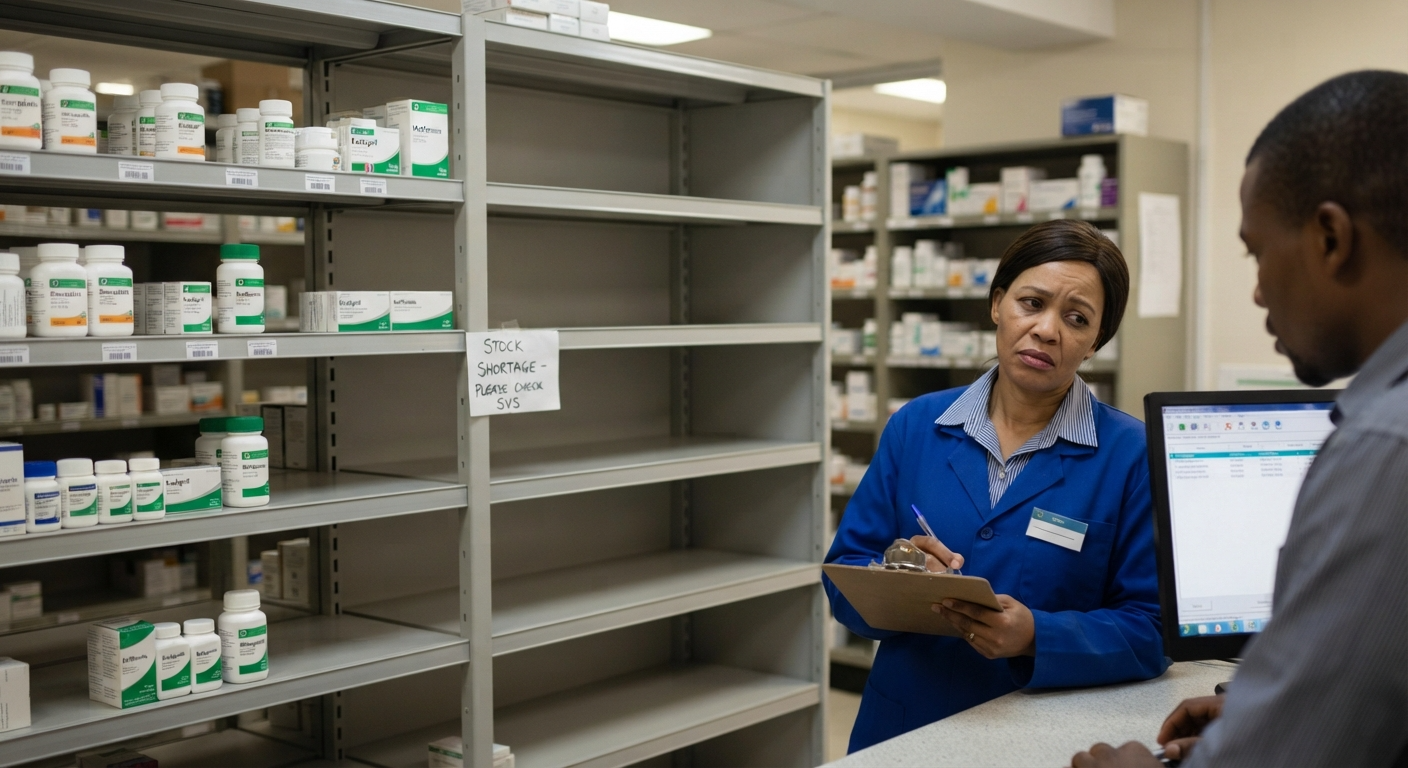

Gauteng’s health department has admitted supply problems with some medicines at public hospitals and clinics, blaming contract changes and supplier delays.
The confirmation came on 7 October, a day after the Democratic Alliance (DA) raised the alarm about patients going without chronic medication at several of the province’s facilities.
What the department says
The Gauteng Department of Health confirmed “supply challenges affecting the availability of some medicines at public health facilities across the province.” It did not say which medicines, how many patients or which facilities were affected.
The department pointed to:
- Changes in medicine contracts
- Supplier delays
- Procurement lead times
- Limited supplier participation in tenders
- Broader pharmaceutical supply chain pressures
It said patients are given substitutes where possible, stock is moved between facilities and districts, and medicines can be bought from other approved suppliers when needed. It tracks stock through its Stock Visibility System. The department also argued that a missing brand or pack size is not the same as “the complete absence of treatment for a patient.”
What the opposition alleges
The DA says shortages have affected medicines for high blood pressure, blood clots, epilepsy, bipolar disorder and other mental health conditions. It named Steve Biko Academic Hospital, Charlotte Maxeke Johannesburg Academic Hospital, Nigel Clinic and Northmead Clinic, and described patients going weeks or months without specific medicines. These accounts have not been independently verified.
“Going without medication for conditions such as epilepsy, hypertension, blood clots, and serious mental health conditions can put lives at risk,” said the DA’s Madeleine Hicklin.
Why it matters
- Chronic medicines are hard to interrupt. Patients with epilepsy, heart conditions and mental illness can deteriorate quickly without consistent treatment.
- Contract transitions are a known risk point. When tenders change hands, gaps can open between the old and new supplier.
- Thin supplier bases add fragility. Limited participation in tenders means fewer fallback options when one supplier struggles.
What it means for the supply chain
For suppliers to South Africa’s public sector, the episode is a reminder that tender transitions need careful planning, with buffer stock and clear handover timelines. For hospital pharmacists, substitution and stock rotation are the main short-term tools, but they depend on accurate stock visibility across facilities.
The bottom line
Gauteng’s admission confirms real pressure on public-sector medicine supply. The key questions now are which medicines are affected and how quickly new contracts restore normal stock.
Frequently Asked Questions
What has Gauteng Health admitted? That some medicines are in short supply at public health facilities across the province.
What caused the problems? The department cites contract changes, supplier delays, procurement lead times, limited supplier participation and wider supply chain pressures.
Which medicines are affected? The department did not say. The DA alleges shortages of medicines for high blood pressure, blood clots, epilepsy and mental health conditions.
What is the department doing about it? Providing substitutes, moving stock between facilities, and buying from other approved suppliers when needed.
Sources
| Source | Used for |
|---|---|
| The Citizen | Department statement, causes, DA allegations, named facilities and quotes |
Additional Resources
| Resource | What you’ll find |
|---|---|
| Gauteng Department of Health | Official statements and facility information |
| National Department of Health (South Africa) | Medicine tenders and the Stock Visibility System |
| South African Health Products Regulatory Authority (SAHPRA) | Medicine registration and supply notices |
| Pharmaceutical Society of South Africa | Pharmacy practice and patient guidance |
Data note: The department did not name affected medicines or facilities. Specific patient cases and facility names come from the DA and have not been independently verified.