
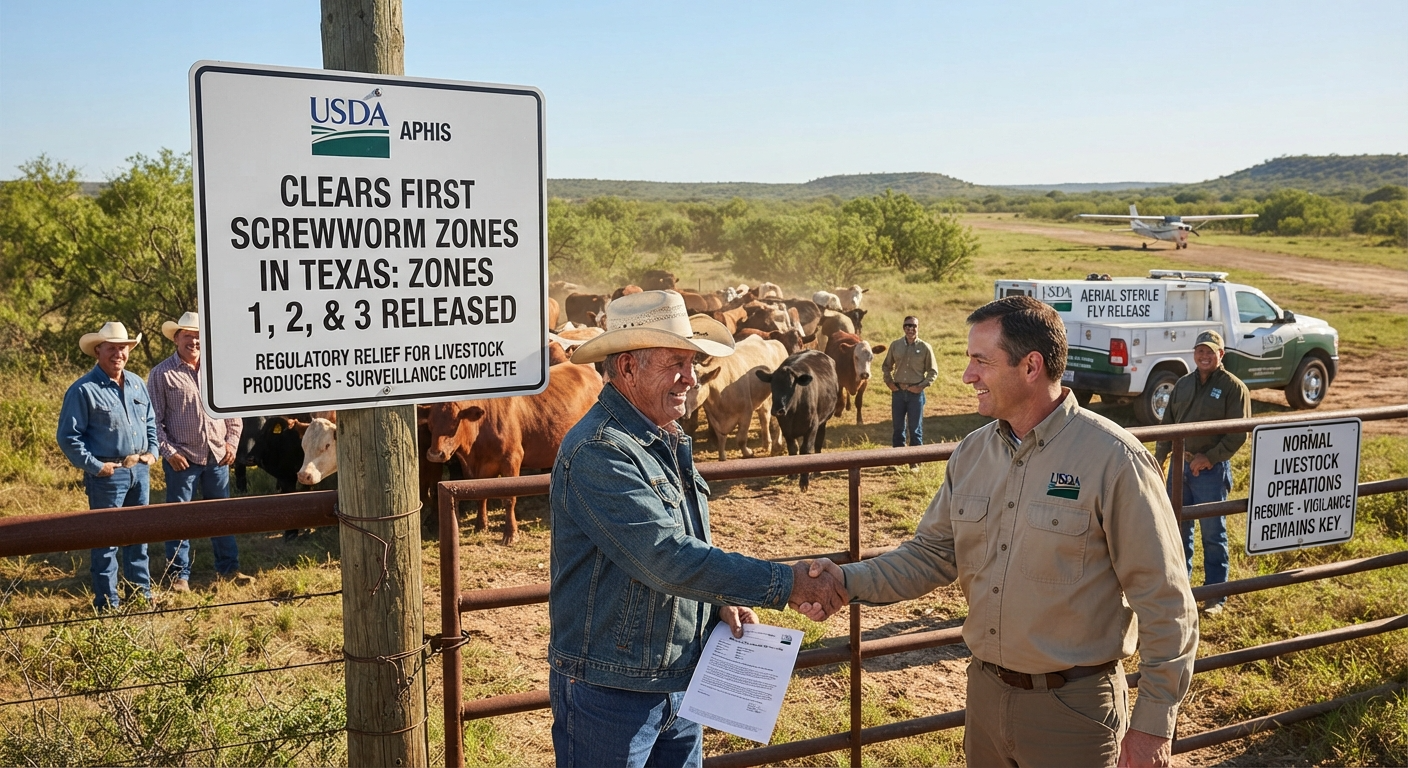

The USDA has approved the first releases of three New World screwworm-infested zones in Texas, providing regulatory relief for livestock producers after months of intensive surveillance and sterile fly releases.
Breaking: Screwworm Restrictions Lifted in Texas
Major news for Texas ranchers: the USDA has cleared three livestock zones that were previously restricted due to New World screwworm (NWS) infestation.
This is the first time zones have been released since the screwworm outbreak began. The clearance means ranchers can resume normal livestock operations without the strict movement and inspection requirements that were in place.
What Is the New World Screwworm?
If you’re not familiar with screwworms, here’s what you need to know:
The Pest
The New World screwworm is a parasitic fly that infests open wounds on livestock. The fly lays eggs in wounds, and larvae feed on living tissue.
The Problem
Screwworm infestations can be devastating for livestock. Affected animals suffer pain, infection, and potentially death if not treated. Ranchers face treatment costs, lost production, and animal welfare concerns.
Why It Matters
This isn’t a minor pest. The screwworm was eradicated from the continental US decades ago. Its reemergence in Texas in 2024 was a major industry crisis.
The Texas Outbreak: Background
The screwworm reappeared in Texas after being absent from the US for more than 50 years. The detection triggered immediate action:
Initial Response
USDA established quarantine zones to prevent spread. Movement of livestock was restricted. Ranchers had to implement intensive surveillance and treatment protocols.
Surveillance and Control
The federal government deployed sterile screwworm flies across affected areas. These sterile flies mate with wild populations, preventing reproduction and reducing the screwworm population.
Coordination Effort
Ranchers, veterinarians, state agencies, and federal officials worked together to contain and eliminate the threat.
The Zone Releases Explained
The USDA approval means three zones have been cleared. Here’s what that means:
Intensive Monitoring Complete
These zones underwent months of surveillance. Federal agents and local ranchers monitored for screwworm cases. The absence of new cases indicated successful elimination.
Sterile Fly Releases Succeeded
Releasing millions of sterile screwworm flies reduced the wild population to undetectable levels in these zones.
Restrictions Lifted
Ranchers in cleared zones no longer face movement restrictions or mandatory inspections for screwworm.
Normal Operations Resume
Livestock can be moved normally. Ranching operations return to pre-outbreak protocols.
What This Means for Texas Ranchers
The zone releases provide immediate relief.
Movement Freedom
Ranchers can move cattle between properties without additional screwworm-related restrictions.
Inspection Requirements Ease
Livestock no longer requires special inspections for screwworm before crossing zone boundaries.
Cost Reduction
Treatment, monitoring, and inspection costs decline as restrictions ease.
Peace of Mind
Ranchers in cleared zones can operate without constant screwworm threat concerns.
Time and Labor Savings
Operations no longer need intensive daily monitoring protocols for screwworm cases.
The Broader Screwworm Situation
While three zones are cleared, the screwworm threat hasn’t completely disappeared.
Other Zones Remain
Additional Texas zones remain under restriction while surveillance and sterile fly releases continue.
Ongoing Monitoring
USDA continues surveillance throughout affected areas. Detection of any new cases triggers renewed control efforts.
Preventive Measures
Ranchers maintain awareness and report any suspicious wounds or animal health issues to veterinarians.
Treatment Options Available
Approved dewormers and wound treatments remain available for prevention and treatment.
How the Screwworm Control Program Works
Understanding the control strategy helps explain why the zones were cleared.
Sterile Insect Technique (SIT)
The primary tool is releasing millions of sterile male screwworms. When these mate with wild females, no offspring are produced. Over time, the population collapses.
Coordination Required
This works only with coordinated releases across wide areas. Individual efforts can’t succeed; the entire infested region must be treated simultaneously.
Time-Intensive
The process takes months because the fly population must be reduced to undetectable levels before zones can be cleared.
Proven Method
SIT successfully eliminated screwworms from the continental US in the 1950s-1960s. It’s being used again now.
Regulatory Relief: What Changed
The zone releases mean several regulatory changes for affected ranchers.
Before Zone Release
- Livestock movement restricted within and between zones
- Mandatory inspections before animal movement
- Enhanced monitoring requirements
- Quarantine protocols in place
After Zone Release
- Normal livestock movement allowed
- Standard inspection protocols only
- Monitoring reduces to baseline levels
- Quarantine restrictions lifted
Prevention: What Ranchers Should Still Do
Even in cleared zones, ranchers should maintain screwworm awareness.
Wound Management
Keep livestock wounds clean and treated promptly. Any open wound is vulnerable to screwworm infestation.
Regular Inspection
Check livestock regularly for signs of infestation, especially during warm months when screwworms are most active.
Veterinary Partnership
Work with veterinarians who understand screwworm risks and can advise on prevention and treatment.
Report Suspected Cases
If you suspect screwworm infestation, report it immediately to state or federal animal health officials.
Maintain Treatment Supplies
Keep approved screwworm treatments on hand for rapid response if cases occur.
Market Impact: What This Means for Cattle Prices
The zone releases have indirect market implications.
Supply Normalization
Cleared zones mean normal livestock production can resume without disease-related losses.
Operational Costs Lower
Ranchers face reduced monitoring and treatment costs, improving operational margins.
Market Confidence
Buyers feel more confident about Texas livestock without screwworm concerns.
Regional Recovery
Texas ranching operations can plan expansion or investment with reduced disease risk.
The Bigger Picture: USDA Screwworm Eradication Goals
The zone releases represent progress toward complete eradication.
Multi-Year Campaign
The USDA is committed to eliminating screwworms from Texas completely, not just managing affected zones.
Significant Investment
Federal, state, and private resources are committed to the eradication effort.
International Cooperation
Mexico works with the US on screwworm control, as the pest affects both countries.
Timeline Uncertain
While progress is clear, complete eradication will take additional time and sustained effort.
Treatment and Prevention: What’s Available
Ranchers have tools to manage screwworm risk.
Injectable Dewormers
FDA-approved dewormers like Ivermectin and Doramectin kill screwworm larvae and prevent infestation.
Topical Treatments
Wound treatments and ointments provide local protection for open wounds.
Vaccination Efforts
Researchers continue exploring vaccination approaches to prevent screwworm susceptibility.
Generic Options
Recent FDA approvals of generic screwworm dewormer options have reduced treatment costs.
Looking Ahead: What’s Next
The zone releases are just one step in the broader eradication campaign.
Continued Surveillance
USDA will maintain monitoring in cleared zones to detect any screwworm recurrence.
Ongoing Releases
Sterile fly releases continue in zones still under restriction.
Research and Development
Researchers work on improved control methods and treatment options.
Rancher Education
Ongoing communication helps ranchers understand risks and prevention strategies.
Key Takeaway
The USDA’s approval of the first screwworm zone releases in Texas represents real progress in containing and eliminating this dangerous livestock pest. For ranchers in cleared zones, life returns closer to normal, with reduced restrictions and regulatory burden.
However, awareness and vigilance remain important. Screwworm threat hasn’t completely disappeared—it’s been successfully contained and reduced. Continued cooperation between ranchers, veterinarians, state agencies, and federal officials will determine how quickly complete eradication is achieved.
FAQ: Screwworms, Zone Releases, and Livestock Health
Q: What exactly is a New World screwworm?
A: It’s a parasitic fly larva that infests open wounds on livestock. The larvae feed on living tissue, causing pain, infection, and potentially death if untreated.
Q: When did screwworms return to Texas?
A: The first detection occurred in 2024, marking the screwworm’s return after being absent from the continental US for more than 50 years.
Q: How many zones have been cleared so far?
A: Three Texas zones have been approved for release by the USDA, marking the first zone clearances since the outbreak began.
Q: Are there still screwworm-restricted zones in Texas?
A: Yes, additional zones remain under restriction while USDA continues surveillance and sterile fly releases.
Q: What does “zone release” mean?
A: It means the USDA has determined the screwworm population in that zone has been reduced to undetectable levels, allowing normal livestock operations to resume.
Q: How did the USDA clear the zones?
A: Primarily through releasing millions of sterile male screwworms. These mate with wild females, preventing reproduction until the population is eliminated.
Q: Do I still need to treat my livestock for screwworm in cleared zones?
A: Preventive treatment is optional in cleared zones, but ranchers should maintain wound care protocols and remain vigilant for any potential cases.
Q: What screwworm treatments are available?
A: FDA-approved injectable dewormers (Ivermectin, Doramectin) and topical wound treatments are available. Generic dewormer options have recently been approved.
Q: How much do screwworm treatments cost?
A: Costs vary, but generic dewormer options have made treatment more affordable than brand-name products.
Q: Can screwworms spread to other states from Texas?
A: Potentially, if livestock movement isn’t carefully monitored. This is why the USDA maintains surveillance and movement restrictions.
Q: How long will the sterile fly releases continue?
A: Releases will continue in restricted zones until screwworm populations are eliminated there as well.
Q: What should I do if I suspect screwworm infestation?
A: Report it immediately to your veterinarian or state animal health officials. Early treatment is critical for livestock survival.
Q: Will screwworm eradication ever be complete?
A: The USDA is committed to complete eradication, but the timeline remains uncertain. It depends on continued control efforts and resources.
Q: How do screwworms enter wounds?
A: Adult females lay eggs in open wounds on livestock. The eggs hatch, and larvae feed on tissue until they mature and exit to pupate in soil.
Q: What livestock are most susceptible to screwworm?
A: Cattle are the primary host, though screwworms can affect sheep, goats, horses, and wildlife.
Q: Can humans get screwworms?
A: New World screwworms don’t typically infest humans, though rare cases have been documented. They’re primarily a livestock pest.
Q: How can ranchers prevent screwworm infestation?
A: Maintain wound care, use preventive dewormers when appropriate, perform regular livestock inspections, and report suspected cases immediately.
This article covers current USDA screwworm control efforts in Texas. The screwworm situation evolves regularly; consult USDA-APHIS and state animal health officials for the most current information on affected zones and treatment protocols.