
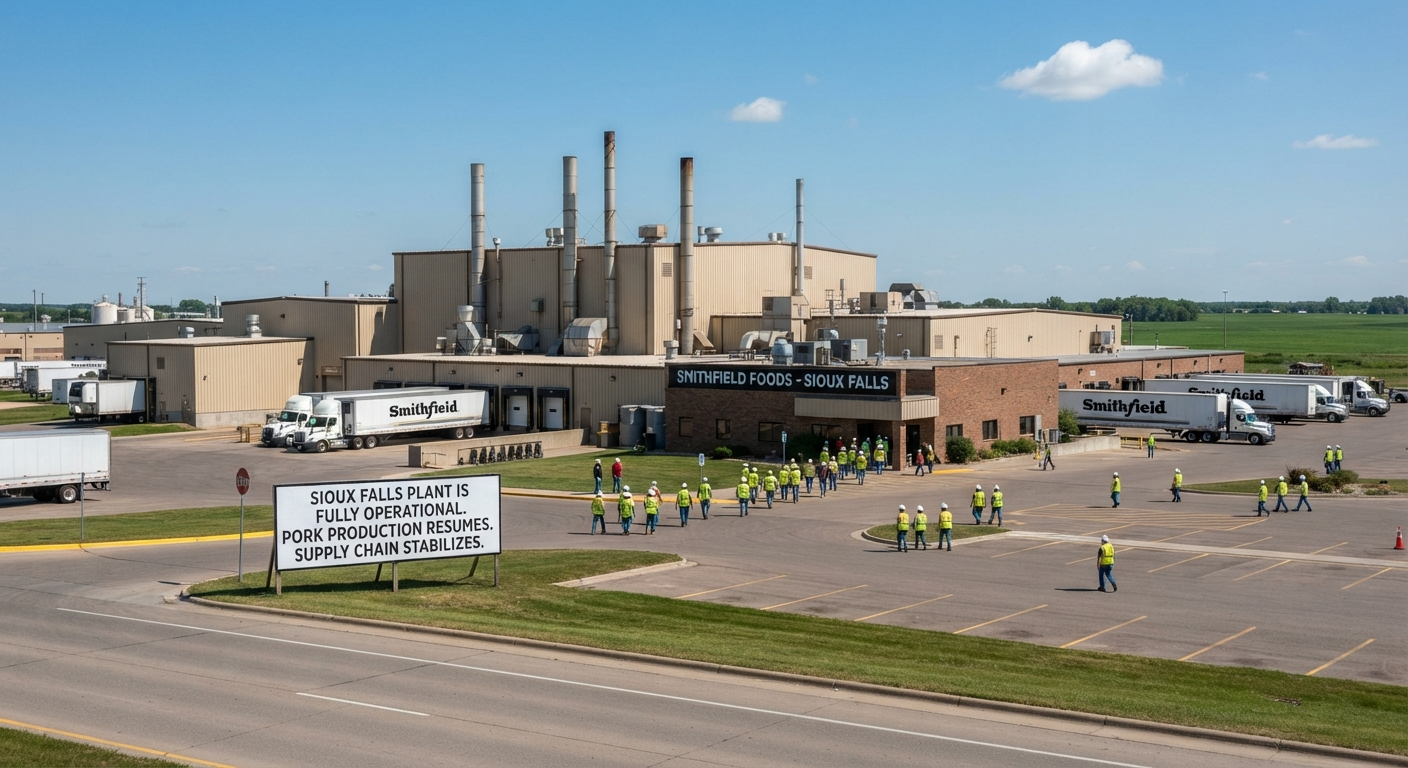

Smithfield Foods’ major Sioux Falls pork processing facility has returned to full production after a recent fire, relieving supply chain pressure that briefly constrained pork availability across the US market.
Major Pork Processor Returns to Normal Operations
One of America’s largest pork processing facilities is running at full capacity again. The Smithfield Foods plant in Sioux Falls, South Dakota—which processes millions of pounds of pork annually—has resumed normal operations following a fire incident that temporarily disrupted production.
For the pork industry, this recovery matters significantly. When major processing facilities go offline, the entire supply chain feels the impact: hog prices weaken, retail pork availability tightens, and foodservice operators scramble for alternative sourcing.
Why the Sioux Falls Plant Matters to Pork Markets
The Smithfield Sioux Falls facility isn’t just another processing plant—it’s a critical infrastructure node for the US pork industry.
Scale of Operations
This single facility processes hundreds of thousands of pounds of pork daily at full capacity. It ranks among the largest pork processing plants in the country and serves as a primary outlet for hog farmers across the Upper Midwest and Northern Plains.
Supply Chain Position
The facility connects hog producers upstream with retail grocers and foodservice companies downstream. When it operates below capacity, bottlenecks form throughout the supply chain, from farm-gate hog prices to retail pork cuts.
Employment Base
The plant directly employs hundreds of workers, with hundreds more in connected logistics, transportation, and distribution roles. Full operational status protects this employment base.
The Fire Incident and Recovery Timeline
A fire forced temporary operational adjustments at the Smithfield Sioux Falls facility. The recovery involved multiple steps before resuming full pork production.
Assessment and Repairs
Smithfield conducted damage assessment, completed necessary repairs, and verified structural integrity and equipment functionality.
Safety and Sanitation Verification
Before resuming pork processing, the facility underwent rigorous cleaning and sanitation protocols to ensure food safety compliance. Regulatory agencies typically require verification before operations restart.
Workforce Redeployment
Workers were notified of the timeline for return to normal shifts and production schedules.
Full Production Resumption
The facility returned to normal capacity, allowing normal pork product flow to resume.
The relatively rapid return to operations indicates the fire damage was contained and recovery systems worked effectively.
Market Impact: Pork Supply and Pricing
Processing disruptions at major facilities create ripple effects across pork markets.
Hog Price Pressure
When processing capacity shrinks, hog farmers face limited outlet options. This typically puts downward pressure on hog prices as supply accumulates waiting for processing slots. The Sioux Falls recovery relieves this pressure.
Pork Product Availability
Disruption at a facility this large can create temporary shortages of pork products in retail channels. Normal operations restore expected pork availability.
Foodservice Sourcing
Restaurants and institutional food services that depend on consistent pork supply can resume normal procurement patterns.
Processing Margins
Processors typically see margin improvements when they can operate at planned capacity levels versus constrained production runs.
Pork Processing Industry Context
The Smithfield Sioux Falls situation highlights broader industry dynamics.
Concentration Risk
The US pork processing industry is concentrated among a small number of large operators. When major facilities experience disruption, national supply is meaningfully affected. The industry has limited redundancy if multiple facilities go offline simultaneously.
Capacity Utilization
Major pork processors typically run at high utilization rates. Any downtime represents lost production that’s difficult to make up quickly.
Geographic Importance
Sioux Falls’ location in the heart of US hog production country makes the facility critical for regional producers. Farmers in the Upper Midwest depend on this processing capacity.
What Happens When Processing Resumes
As the Smithfield Sioux Falls facility ramps back to full capacity, several market adjustments occur:
Supply Normalization
Pork products flow back into retail channels at expected volumes, reducing any supply-driven price premiums.
Hog Market Relief
Producers with market-ready hogs can access normal processing capacity, supporting more normal price discovery in hog markets.
Retail Planning
Grocery retailers return to normal pork product ordering and promotional planning.
Pricing Stabilization
Pork prices at wholesale and retail levels should stabilize as supply constraints ease.
Looking Forward: Pork Industry Supply Planning
With normal capacity restored at a critical facility, the pork industry can operate from stable assumptions:
Production Forecasts
Industry analysts can incorporate normal Sioux Falls capacity into pork production estimates.
Price Projections
Pork price outlooks can assume normal supply availability from this major processor.
Hog Farmer Planning
Producers can plan marketing strategies assuming normal processing outlet availability.
Foodservice Budgeting
Restaurants and institutions can budget pork costs based on normalized supply conditions.
Key Takeaway
The return of Smithfield Foods’ Sioux Falls pork facility to full production removes a significant supply chain constraint. For hog farmers, pork processors, retailers, and foodservice operators, this means normalized supply conditions and more predictable pricing going forward.
The incident underscores the critical importance of major processing facilities to America’s pork supply chain and the industry’s ability to recover quickly from operational disruptions.
FAQ: Smithfield Sioux Falls Pork Plant Recovery
Q: How large is the Smithfield Sioux Falls pork processing facility?
A: It’s one of the largest pork processing plants in the United States, handling millions of pounds of pork daily at full capacity.
Q: What caused the fire at Smithfield Sioux Falls?
A: Details on specific causes vary by source. Smithfield conducts internal investigations to understand incidents and prevent recurrence.
Q: How long was the facility offline?
A: The facility returned to normal operations relatively quickly, indicating the incident was contained and repairs completed efficiently.
Q: How many people work at the Sioux Falls facility?
A: The plant employs hundreds of workers directly, plus supports additional jobs in logistics and distribution networks.
Q: Did the fire disrupt pork supplies nationwide?
A: Major processing facility disruptions can affect pork availability, though impact depends on duration and whether other facilities can absorb volume.
Q: Will pork prices change now that the facility is back online?
A: The return to normal processing capacity should help normalize pork supply and prices if demand remains stable.
Q: How does processing capacity affect hog prices?
A: When processing capacity is limited, hog farmers face fewer outlet options, which typically pressures hog prices downward. Restored capacity alleviates this pressure.
Q: What food safety checks occur before a facility resumes after a fire?
A: Facilities must verify sanitation systems, equipment functionality, and compliance with food safety regulations. Regulatory agencies often require verification before operations resume.
Q: Is Smithfield Foods the only major pork processor?
A: No, Smithfield is one of several large pork processors in the US, but it ranks among the largest. Other processors include JBS, Tyson, and independent regional operators.
Q: How does this facility’s capacity compare to other US pork plants?
A: Sioux Falls is among the top pork processing facilities in the country by volume.
Q: Can other Smithfield facilities handle overflow from Sioux Falls?
A: Yes, Smithfield operates multiple facilities that can absorb some volume, but redirecting production increases costs and logistics complexity.
Q: How quickly does pork reach retail after processing?
A: Once processed, pork typically reaches retail distribution within days, so market availability normalizes relatively quickly when processing resumes.
Q: What happens to hogs waiting for processing during a facility shutdown?
A: Hog farmers must find alternative processing outlets or delay marketing, both of which create economic pressure and may affect hog prices.
Q: Could a major pork processor going offline permanently affect pork prices long-term?
A: Yes, permanent loss of major processing capacity would reduce total national pork processing capability, likely putting sustained upward pressure on pork prices.
Q: Are there backup systems in pork processing plants to prevent extended downtime?
A: Modern facilities include backup systems for critical functions like refrigeration, electrical, and emergency procedures to minimize disruption duration.
Q: How does the pork industry prepare for future processing facility disruptions?
A: Industry participants maintain relationships with multiple processors, keep inventory buffers, and invest in facility redundancy and backup systems.
This article covers current industry developments at Smithfield Foods facilities. Pork processing capacity and market conditions change regularly; consult current industry reports and USDA data for the most recent information on pork supply and pricing.