
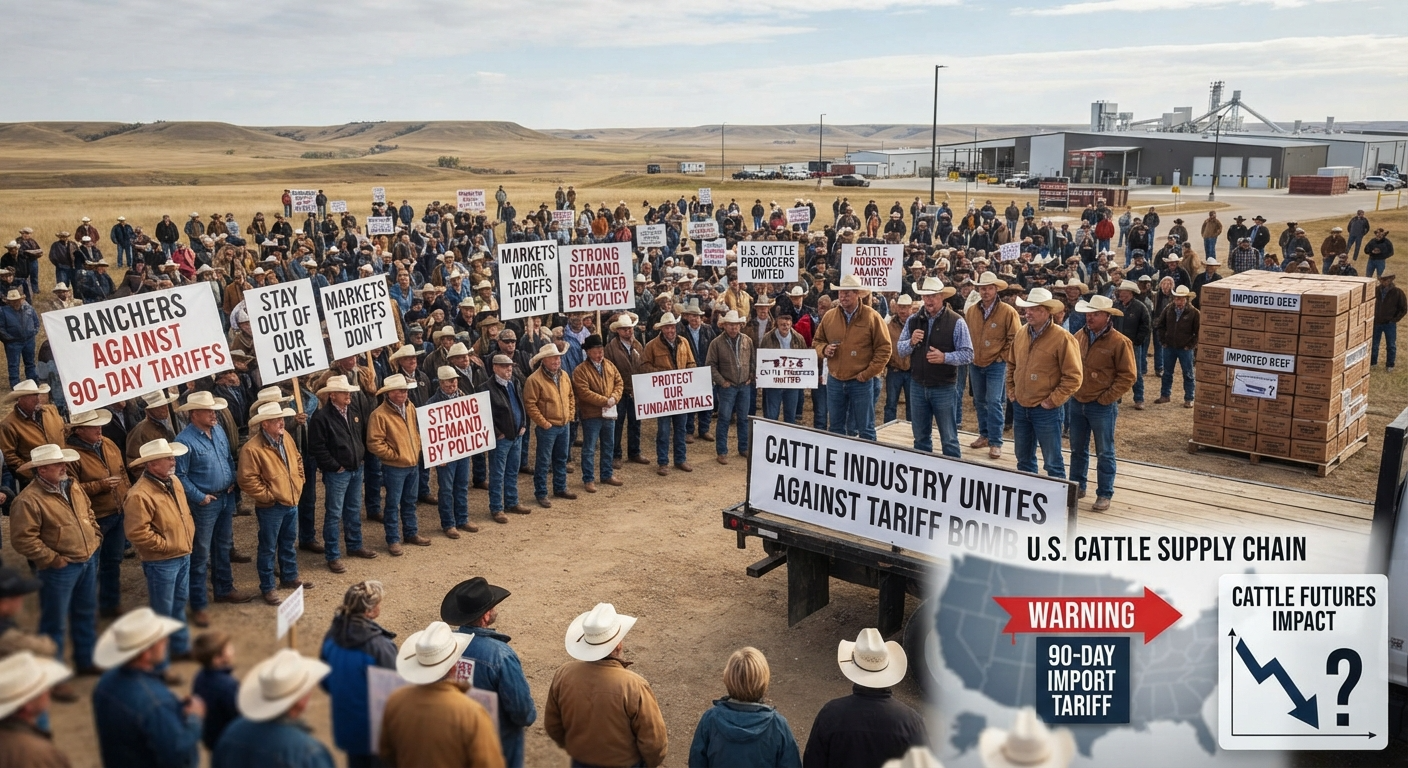

Cattle producers are uniting to oppose a new beef import tariff proposal, warning that the 90-day plan could destabilize market fundamentals and hurt domestic ranchers despite strong ground beef demand.
The Tariff Backlash: Why America’s Cattle Industry Is Fighting Back
The beef industry isn’t staying silent. When a new tariff proposal hit the agenda recently, producers across America’s cattle supply chain made their position crystal clear: policymakers need to step back and let market dynamics work.
The proposal in question? A 90-day tariff plan on imported beef that officials hoped would protect domestic producers. Instead, the cattle industry is warning that intervention could do more harm than good.
Understanding the Beef Import Tariff Controversy
The beef market operates on razor-thin margins. Cattle prices, ground beef pricing, and consumer demand are interconnected in complex ways that don’t always respond well to sudden policy shifts. When the Trump administration proposed expanding beef import restrictions for a 90-day period, major cattle producer organizations quickly mobilized.
Their central argument is straightforward: the beef market doesn’t have a price problem—it has a fundamentals problem. Ground beef demand remains robust among American consumers. What’s actually pressuring the industry isn’t foreign competition for shelf space; it’s broader economic factors and production costs.
How Beef Prices Reacted to the Import Plan
The market response was immediate. Cattle futures dropped sharply following the tariff announcement. This wasn’t a slow decline—live cattle prices and feeder cattle futures experienced significant downward pressure within days of the proposal’s announcement.
For cattle producers already managing tight margins, falling cattle prices create a cascading problem:
- Feeder cattle costs remain high due to recent supply constraints
- Beef cattle futures are declining, reducing expected revenues
- Operating margins squeeze as input costs stay elevated while prices fall
- Producer confidence shakes when policy uncertainty increases volatility
Ironically, the tariff proposal designed to help cattle producers may have accelerated price declines by creating uncertainty about market access and import competition.
Why Cattle Producers Say “Stay Out of Our Lane”
The unified industry response centered on a simple message: cattle producers understand their market better than policy officials do. Here’s why their pushback matters:
Market Fundamentals Are Strong
Ground beef demand hasn’t collapsed. Consumers are still buying beef products at competitive prices. The issue isn’t that Americans don’t want beef—it’s that cattle producers are facing cost pressures that tariffs won’t solve.
Tariffs Create Uncertainty
Import tariffs introduce unpredictability into the beef supply chain. When processors don’t know whether beef imports will be restricted, they adjust their purchasing strategies, which ripples backward to affect cattle prices at auction.
Foreign Competition Isn’t the Real Problem
Cattle producers argue that imported beef competes at the commodity level, particularly ground beef and beef trimmings. But the real cost pressures come from:
- Feed and grain prices
- Labor availability and wages
- Transportation and logistics costs
- Processing facility capacity constraints
A 90-day tariff doesn’t address any of these issues.
The Ground Beef Demand Story
Despite price volatility, ground beef demand tells a different story than tariff advocates suggest. Foodservice operators, retail grocers, and consumers continue purchasing ground beef products at levels that suggest underlying demand remains intact.
This creates a fundamental disconnect: if ground beef demand is strong, why would cattle prices be under pressure? The answer involves the broader beef supply chain, not import competition.
When cattle prices fall while ground beef demand stays high, it typically indicates:
- Processing spreads are expanding (processors benefit)
- Producer margins are compressing (ranchers suffer)
- Market structure issues exist that tariffs won’t resolve
Cattle Producer Organizations Unite Against the Plan
The unified response from major cattle organizations signals serious concern. When groups representing different segments of the cattle industry—from cow-calf operators to feedlot managers to cattle processors—align on opposition, policymakers should listen.
These organizations have decades of experience navigating cattle markets through boom and bust cycles. Their collective warning about tariffs suggests they see this as a threat to market stability, not a solution.
What This Means for the Beef Market Going Forward
If the 90-day beef import tariff proceeds as proposed, expect:
Short-term volatility in cattle prices as market participants adjust to policy uncertainty
Potential supply chain disruptions as beef processors adjust sourcing strategies and importing patterns
Possible retaliatory measures from trading partners, which could affect US beef export markets (a critical revenue source for many ranchers)
Margin compression for cattle producers if prices don’t recover but input costs remain elevated
Market structure changes as operations strategically position themselves around the tariff rules
The Bigger Picture: Policy and Markets
This conflict highlights a larger debate about government intervention in commodity markets. Cattle producers and industry economists argue that markets are more efficient at allocating resources than policy restrictions.
When tariffs or import quotas are imposed, they change the incentives throughout the beef supply chain. Sometimes these changes benefit producers; sometimes they hurt them. In this case, producers believe the 90-day beef import tariff would hurt more than help.
The cattle industry’s position reflects a fundamental belief: stable, predictable market rules are more valuable than temporary protectionist measures that create uncertainty.
Cattle Prices and Market Fundamentals: What Investors Should Know
For investors tracking the beef industry, cattle prices serve as a leading indicator. When cattle futures decline despite steady ground beef demand, it suggests:
- Producer pessimism about future profitability
- Expectations of further margin compression
- Concerns about policy or economic headwinds
The recent decline in cattle prices following the tariff announcement fits this pattern perfectly.
Ground Beef Supply and Price Dynamics
Ground beef pricing operates differently than retail cuts or steaks. It’s a commodity product sold at lower margins with higher volume. The market for ground beef responds to:
- Cattle supply volumes (more cattle = more beef supply)
- Trim prices (commodity-grade beef used in grinding)
- Retail demand (which has remained stable despite economic uncertainty)
- Processing capacity (which affects how quickly cattle can be turned into finished products)
Import tariffs don’t meaningfully address any of these supply-side factors.
What’s Next for the Beef Industry?
As this debate continues, cattle producers will likely maintain pressure on policymakers. The industry’s unified stance suggests this isn’t a one-sided political issue—ranchers across different regions and operation sizes share concerns about tariff-based policy.
The outcome could affect:
- Cattle producer confidence and investment decisions
- Beef export markets (critical for US producers)
- Processing industry strategy and capacity investments
- Consumer prices for ground beef and other products
- Market volatility for cattle futures traders
Key Takeaway
The cattle industry’s opposition to a 90-day beef import tariff plan represents a rare moment of unified industry pushback against policy intervention. Cattle producers argue that market fundamentals remain sound, ground beef demand is intact, and tariffs would create more problems than they solve.
Whether policymakers listen to this collective industry wisdom will determine how the beef market evolves over the coming months.
FAQ: Cattle Prices, Beef Imports, and Market Fundamentals
Q: Why did cattle prices fall after the tariff announcement?
A: Cattle futures dropped due to market uncertainty about how import restrictions would affect beef supply chains and processing decisions. The price decline reflected producer concerns about policy implementation and potential supply chain disruptions.
Q: Is ground beef demand actually strong?
A: Yes, according to industry reports, ground beef continues to show solid demand from both retail and foodservice channels despite recent price volatility and economic uncertainty.
Q: What’s the difference between tariffs and quotas on beef imports?
A: Tariffs add a tax to imported products, while quotas limit the volume of imports allowed. Tariffs can be worked around through higher prices; quotas create hard limits on supply.
Q: How do cattle prices relate to ground beef prices?
A: Cattle prices determine the cost basis for beef production. When cattle prices fall but ground beef demand stays strong, it typically means processing margins are expanding while producer margins compress.
Q: Why do cattle producers oppose tariffs if they’re meant to protect them?
A: Producers argue that tariffs create market uncertainty that can drive prices down, and they address symptoms (import competition) rather than root causes (production costs, supply chain efficiency).
Q: What’s the beef market’s real problem, according to producers?
A: According to industry statements, the real challenges are feed costs, labor availability, transportation expenses, and processing capacity—not foreign import competition.
Q: Could retaliatory tariffs affect US beef exports?
A: Yes, trading partners may restrict US beef imports in response to new tariffs, which could significantly impact export-dependent cattle producers.
Q: How long does it take for tariff impacts to show up in cattle prices?
A: Market impacts can be almost immediate as traders price in anticipated policy changes. Physical supply impacts take longer but can cascade through the market within weeks.
Q: What do cattle producer organizations recommend instead of tariffs?
A: Industry groups generally advocate for market-based solutions, removing regulatory barriers to competition, and addressing structural issues like processing capacity constraints.
Q: Where can I track cattle futures and beef market data?
A: Commodity exchanges publish daily cattle futures prices, and industry organizations regularly publish market reports tracking beef prices, supply volumes, and demand indicators.
This article covers current industry developments and policy discussions affecting the beef market. Market conditions and policy proposals change rapidly; consult current market data and industry sources for the most recent information on cattle prices and beef trade policy.