
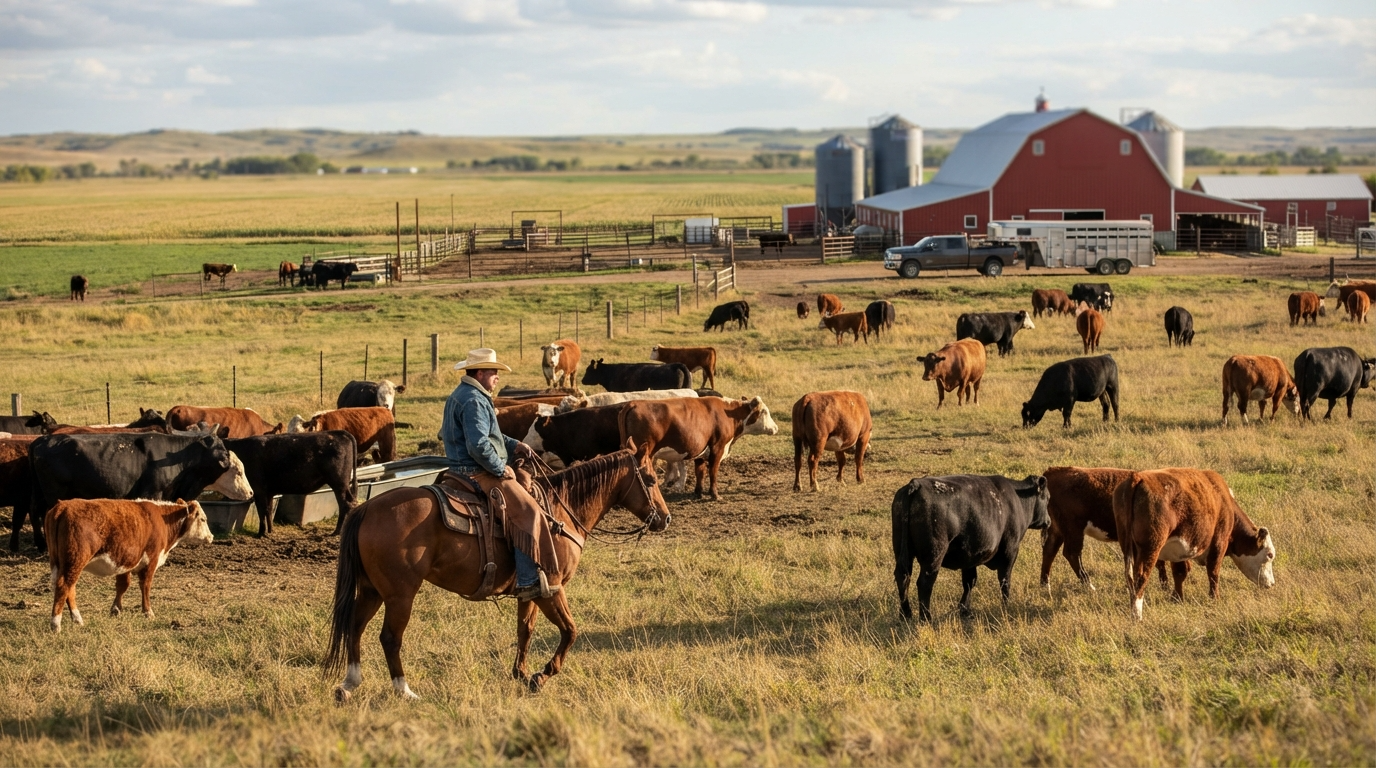
Global beef production is facing significant headwinds in 2026, with major markets bracing for supply tightening and price volatility.
The Perfect Storm: Why Global Beef Production Is Falling in 2026
The world’s beef supply is under pressure. Rabobank’s latest market analysis reveals that global beef production is expected to decline by 2% in the third quarter of 2026, marking a pivotal shift in livestock market dynamics. This contraction isn’t limited to one region—it’s a coordinated collapse affecting every major beef-producing nation simultaneously.
Production Declines Across All Key Markets
When examining global beef production trends, the most telling indicator comes from supply-side pressure. Production pullbacks in Europe, the United States, Brazil, and China are creating a perfect convergence of scarcity that will reshape international beef markets through the remainder of 2026.
The U.S. cattle market, which historically sets global price benchmarks, is feeling the strain most acutely. Beef prices for the highest quality cuts reached unprecedented peaks during the second quarter, with all-fresh beef retail prices touching $10 per pound in April. This wasn’t a temporary spike—it reflected genuine supply constraints that continue to influence buyer behavior and trading patterns today.
U.S. Beef Imports Surge as Domestic Supply Tightens
One of the most revealing indicators of tight domestic beef production is the explosion in import volumes. U.S. beef imports surged 11% in the first half of 2026, reaching a record 3.3 billion pounds and signaling that domestic cattle supplies are insufficient to meet market demand.
Where America’s Beef Is Coming From
The geographic sources of imported beef tell an important story about global supply redistribution:
Australia shipped 99 million pounds to the United States, maintaining its position as a consistent supplier despite export restrictions in other markets. Mexico contributed 91 million pounds, with volumes set to increase following the USDA’s August 24, 2026 announcement to resume live cattle imports through Douglas, Arizona. Argentina added 71 million pounds to the total, leveraging its position as a traditional beef exporter during this supply-tight environment.
These import volumes aren’t anomalies—they represent structural changes in how the U.S. sources beef protein as domestic cattle inventories remain constrained.
Record Cattle Prices Are Now Reversing—But Damage Is Done
Beef cattle futures reached record highs in Q2 2026, with monthly average steer prices climbing to historically unprecedented levels. Five-hundred-pound feeder steers averaged $5.17 per pound, while 800-pound steers hit $3.68 per pound—both all-time records that shocked producers and buyers alike.
Since those peaks, cattle prices have pulled back between 8% and 16%, cutting per-head ranch revenues by $200 to $500 depending on market segment. For U.S. beef producers operating on thin margins, these swings represent material income disruption that will likely influence breeding decisions and herd management for months to come.
The Australia-China Trade Shock: How Politics Reshapes Beef Flows
Global beef production patterns are increasingly shaped by trade policy, not just supply fundamentals. The most dramatic example emerged in Australia’s relationship with China, the world’s largest beef importer.
Between May and June 2026, Australian beef exports to China collapsed 71%—a decline so severe it forced exporters to redirect inventory to alternative markets. By July, volumes remained at similarly depressed levels, suggesting the restrictions are structural rather than temporary.
Where Australian Beef Is Going Instead
Unable to move product through China, Australian exporters redirected significant volumes to:
- Japan
- South Korea
- The United States
- Middle Eastern markets
This geographic redistribution of beef supplies has quietly reshaped competitive dynamics across Asian and Western markets, creating winners and losers among competing export nations and affecting local cattle prices wherever these volumes land.
What This Means for Beef Market Fundamentals in Q3 and Q4 2026
The convergence of falling global beef production, record-high earlier prices, and now-reversing cattle valuations creates an unusual market environment. Here’s the bottom line:
Supply tightening will persist. A 2% global production decline doesn’t sound dramatic, but it’s significant enough to support elevated retail prices even as wholesale prices retreat from their peaks. Consumers should expect beef prices to remain elevated through the end of 2026, with retail prices staying above typical seasonal patterns.
Feeder cattle markets will remain volatile. Live cattle imports from Mexico and increased export competition for beef supplies mean U.S. cattle feeders will face aggressive pricing from both domestic suppliers and international exporters. Price discovery will remain choppy.
International trade policy will matter more than ever. The Australia-China disruption proved that geopolitical tensions can reshape beef flows faster than production cycles. Any additional trade restrictions could trigger rapid price movements across regional beef markets.
FAQ: Your Questions About Global Beef Production and 2026 Market Outlook
Q: Why is global beef production declining in 2026? A: Multiple factors are contributing to the 2% production decline forecast by Rabobank for Q3 2026, including tightening cattle supplies in major production regions, drought impacts on feed availability, and export restrictions that are reshaping global beef flows. Production is falling in Europe, the United States, Brazil, and China simultaneously.
Q: How high did beef prices climb in 2026? A: All-fresh beef retail prices peaked at $10 per pound in April 2026, while feeder cattle reached record highs of $5.17 per pound for 500-pound steers and $3.68 per pound for 800-pound steers.
Q: Why are U.S. beef imports at record levels? A: U.S. beef imports jumped 11% to reach 3.3 billion pounds in the first half of 2026 because domestic cattle supplies are insufficient to meet total market demand. Major suppliers include Australia (99M lbs), Mexico (91M lbs), and Argentina (71M lbs).
Q: What’s happening with Australian beef exports to China? A: Australian beef exports to China fell 71% between May and June 2026, with volumes remaining depressed through July. Exporters have redirected shipments to Japan, South Korea, the United States, and Middle Eastern markets.
Q: When are Mexican live cattle imports resuming? A: The U.S. Department of Agriculture announced on August 24, 2026 that live cattle imports through Douglas, Arizona would resume, allowing Mexican feeder cattle supplies to increase into the U.S. market.
Q: How much have cattle prices fallen from their peaks? A: Cattle prices have declined 8% to 16% from their Q2 2026 highs, representing a $200 to $500 per-head revenue loss for ranch operators depending on market segment.
Source Materials:
- Rabobank RaboResearch Beef Market Analysis (August 2026)
- USDA Live Cattle Import Announcement (August 24, 2026)
- Global Beef Production and Trade Data (Q1-Q2 2026)

