
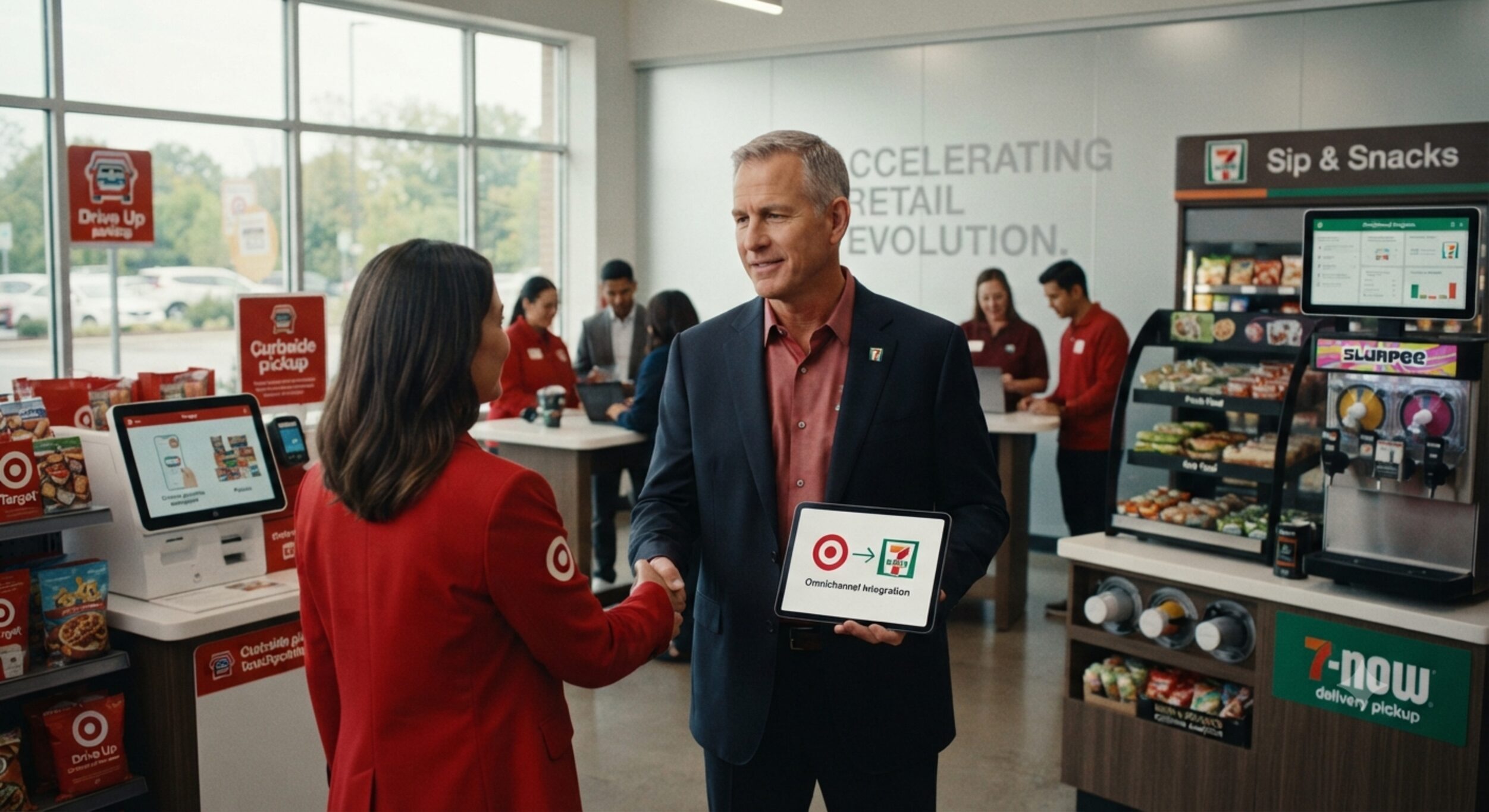

Target Corp. has appointed Joe DePinto, the former president and CEO of 7-Eleven Inc., to its board of directors—a strategic move signaling the retailer’s determination to compete harder on food, digital commerce, and convenience positioning as it executes a new growth agenda under CEO Michael Fiddelke.
DePinto’s 7-Eleven Legacy: Omnichannel Pioneer in Convenience
DePinto brings three decades of retail leadership experience, having steered 7-Eleven through a transformational period that redefined how the world’s largest convenience retailer competes. During his tenure at 7-Eleven, DePinto accelerated investments in omnichannel capabilities, loyalty programs, and fresh food offerings while expanding the store footprint and strengthening the chain’s market position against both traditional grocery and emerging delivery-native competitors.
The 7-Eleven appointment is particularly relevant to Target’s current strategy: convenience retailers have successfully blurred the line between impulse purchases and planned shopping, and they’ve become dominant players in fresh food and prepared meals—categories where traditional big-box retailers have historically underperformed. DePinto’s success in managing that balance makes him a valuable advisor as Target attempts to capture market share in these higher-margin categories.
At 7-Eleven, DePinto navigated the company through explosive growth in digital ordering, mobile payments, and loyalty program adoption. He also oversaw expansion of fresh food offerings (sushi, salads, prepared sandwiches) that transformed the convenience retailer from a pure impulse-buy destination into a quasi-grocery competitor. That experience directly addresses one of Target’s stated strategic priorities: elevating the guest experience through better merchandising and food offerings.
Target’s Strategic Pivot: Merchandising, Technology, and Food
CEO Michael Fiddelke’s statement reveals Target’s explicit focus on four areas: merchandising authority, guest experience elevation, technology acceleration, and team/community strengthening. DePinto’s appointment isn’t coincidental—it signals that Target is serious about competing in two categories where it has historically trailed Amazon and specialty retailers: food/fresh offerings and seamless omnichannel execution.
Target’s own data shows that guest traffic and basket size have faced pressure from e-commerce and discount competitors (Walmart, Costco, Amazon Fresh). By adding a convenience retail expert to the board, Target is essentially saying: “We’re going to steal market share from quick-trip grocery and convenience shopping, not just from other big-box retailers.”
This is a bet on “occasion-based” retail strategy—the idea that customers will shop Target not just for weekly grocery runs or seasonal clothing, but for daily fresh meals, snacks, and quick consumables. It’s a strategy that has worked brilliantly for Walmart (through Walmart+ and digital grocery) and that 7-Eleven perfected in the convenience format. Target is trying to adapt that model to its 1,900+ store footprint and higher-margin merchandise mix.
The Omnichannel Implication: Food Delivery, In-Store Technology, Loyalty
DePinto’s experience at 7-Eleven directly translates to three competitive battlegrounds where Target is actively investing:
Food and Fresh Merchandise: 7-Eleven’s success in fresh food (sushi, prepared meals, salads) proved that convenience retailers could compete against grocery chains on quality and variety, not just on price and impulse appeal. Target has been expanding its market pantry and fresh offerings but has lagged competitors in speed and innovation. DePinto’s perspective should accelerate this.
Digital and Omnichannel Integration: 7-Eleven pioneered seamless mobile ordering, in-app loyalty rewards, and pick-up/delivery integration across thousands of locations. Target’s omnichannel strategy (order online/pickup in-store, same-day delivery) exists but lags Amazon’s precision and Walmart’s execution. DePinto’s hands-on experience managing complex omnichannel operations at scale is invaluable.
Loyalty Program Optimization: 7-Eleven’s loyalty program (7Rewards) became a critical competitive weapon by driving repeat visits and capturing customer data. Target’s RedCard and loyalty offerings are well-established but have room to deepen engagement, especially around fresh food and consumables categories where 7-Eleven generated disproportionate loyalty.
Target’s Growth Challenges: Why Food and Convenience Matter Now
Target faces a specific strategic problem: its core merchandise categories (apparel, home goods, seasonal) are mature and face intense competition from e-commerce, department stores, and specialty retailers. Meanwhile, food and quick consumables represent the only category where retailers can compete on convenience, impulse, and frequency—three variables that drive loyalty and traffic.
Grocery and convenience retailers win on frequency: consumers shop for food 1–2 times per week minimum, versus 4–6 times per year for clothing or home goods. If Target can convert even 10% of its weekly food-shopping trips into dual-purpose visits (buy groceries + grab clothing/home items), it dramatically increases wallet share per customer.
DePinto’s board seat suggests Target is serious about this bet. Adding a retail board member is unusual—most Target board members bring financial, legal, or investor expertise. Appointing an operational retail executive signals that board-level strategy discussions now include “how do we win in food and convenience?” as a core priority, not a peripheral initiative.
Competitive Implications for Food, Grocery, and Retail
This appointment matters beyond Target because it validates a strategic trend: traditional big-box retailers are copying convenience retailer playbooks to compete against e-commerce and discount competitors.
Walmart has done this most aggressively (Walmart+ membership, grocery delivery, fresh offerings). Target is now following suit. Costco, Sam’s Club, and regional grocery chains will likely accelerate similar moves.
The winners from DePinto’s appointment:
- Target shareholders: If the company successfully pivots to food/convenience, it unlocks new traffic and loyalty drivers that traditional merchandise categories cannot provide.
- Convenience retailers: Target’s focus on convenience doesn’t hurt 7-Eleven or other c-stores; it actually validates the convenience format’s competitive advantage and may drive category-level growth.
- Customers: Competition between Target and convenience retailers on food quality, freshness, and loyalty rewards will drive product innovation and value for consumers.
The losers:
- Traditional grocery chains: Target’s expansion into fresh food and consumables represents direct competition for share in higher-frequency shopping occasions. Kroger, Albertsons, and regional grocers will face margin pressure as big-box retailers encroach on their core categories.
- Smaller specialty retailers: As Target increases focus on fresh food and convenience, it may squeeze out independent natural food stores, prepared-meal providers, and specialty grocers in suburban markets.
Procurement and Supply Chain Implications
For food suppliers, particularly fresh, prepared food, and quick-service meal providers, Target’s strategic pivot has major implications. The retailer will likely increase demand for:
- Fresh, locally-sourced products (to compete with Whole Foods and specialty grocers)
- Pre-prepared and shelf-stable quick-meal options (to compete with convenience retailers)
- Private label fresh and prepared foods (to improve margins and differentiation)
- Innovative snack and beverage formats (to capture impulse purchasing similar to 7-Eleven)
Suppliers should expect Target to demand faster inventory turns, higher quality standards, and omnichannel-ready packaging (products that work equally well in stores and delivered to home). DePinto’s appointment suggests Target will demand operational excellence from suppliers—a characteristic he prioritized at 7-Eleven.
Related
Frequently Asked Questions
Will Target become a convenience store competitor?
Not exactly. Target’s model is different from 7-Eleven’s—it’s built on higher-margin merchandise, seasonal promotions, and apparel/home goods. But Target is clearly adopting convenience-like tactics: more frequent shopping trips, fresh food emphasis, and seamless omnichannel operations. Think of it as “convenience DNA” applied to big-box retail, not a full format conversion.
What does this mean for 7-Eleven and other convenience retailers?
It validates their business model. If a $30B+ big-box retailer is adding a convenience expert to guide strategy, it’s because convenience retail fundamentals are sound. However, 7-Eleven and Circle K will face increased competition from Target on fresh food, loyalty, and omnichannel execution. The fight for convenience shopping occasions just got more intense.
How does this affect food suppliers and manufacturers?
Expect Target to demand faster product innovation, stricter quality standards, and omnichannel-ready packaging. DePinto’s operational focus will likely translate into higher expectations for supplier performance, on-time delivery, and data sharing. Suppliers who can move quickly and scale production across multiple channels (retail, delivery, foodservice) will win disproportionate share.
Sources
| Source | URL | Details |
|---|---|---|
| Target Corp. Press Release | https://www.target.com | Board appointment announcement; Michael Fiddelke CEO strategy statement; July 22, 2026 |
| 7-Eleven Inc. | https://www.7-eleven.com | DePinto tenure; omnichannel innovation; loyalty program; fresh food expansion |
| Retail Dive | https://www.retaildive.com | Target omnichannel strategy; food merchandising expansion; competitive positioning |
| Progressive Grocer | https://www.progressivegrocer.com | Big-box retailer food strategy trends; convenience format analysis |
| Supply Chain Dive | https://www.supplychaindive.com | Supplier implications; fresh food demand; omnichannel packaging requirements |
| Brinker International | https://www.brinker.com |