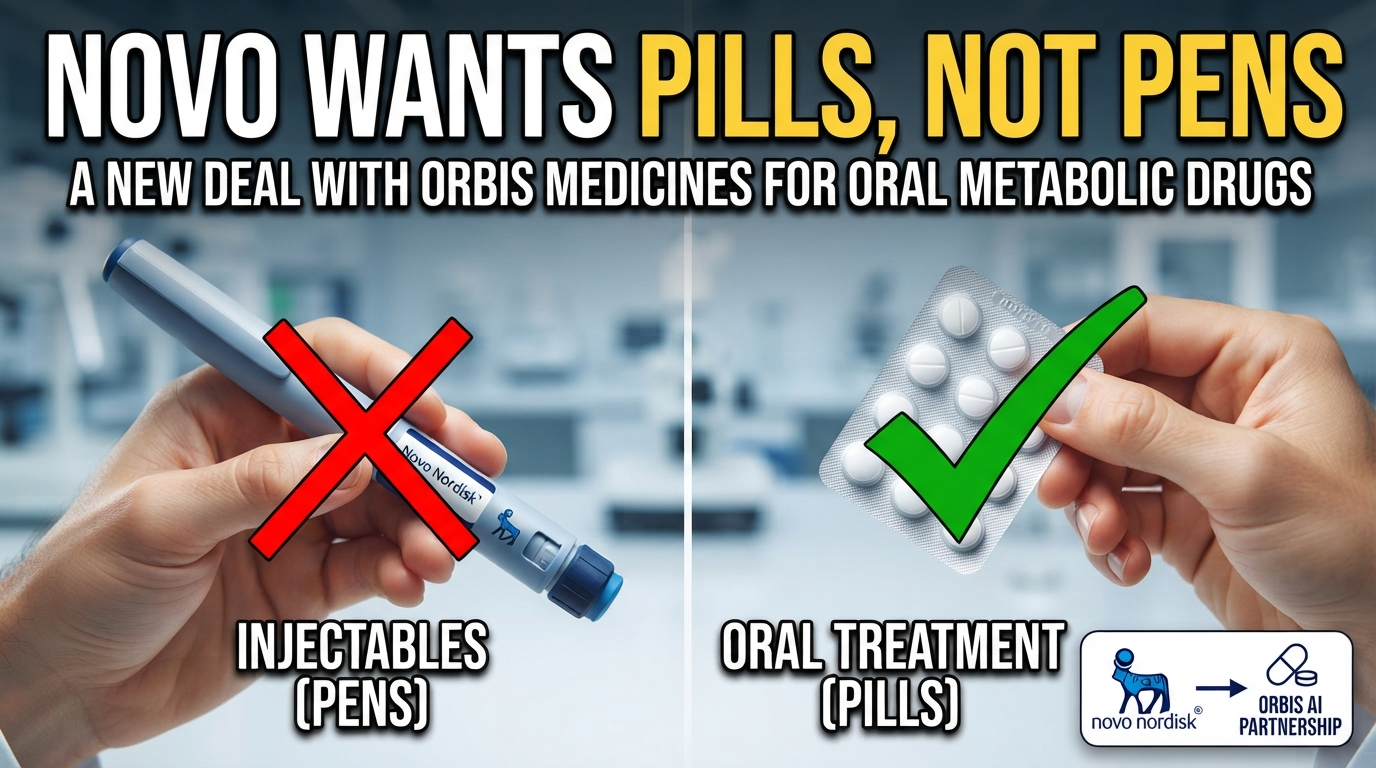

Novo Nordisk has signed a drug discovery deal worth up to $1.4bn with Denmark’s Orbis Medicines to develop oral treatments for cardiometabolic diseases.
The partnership will use Orbis’s AI-driven platform to design macrocycles, a class of molecules that the companies say has the potential to replace injectable medicines. Orbis could receive up to about $1.4bn in upfront and later payments, plus royalties on sales.
The deal at a glance
- Partner: Orbis Medicines, Denmark
- Value: Up to about $1.4bn in upfront and downstream payments, plus royalties
- Focus: Cardiometabolic diseases
- Technology: Macrocycles designed with Orbis’s AI platform, nGen
- Targets: Not disclosed
Who is Orbis?
Orbis Medicines is a young Danish biotech that launched in January 2025 with $93m in funding. It uses artificial intelligence to model and design molecules that can be taken by mouth rather than injected.
Why macrocycles matter
Many of today’s most effective metabolic drugs, including GLP-1 treatments, are peptides that are usually injected. Macrocycles are larger than conventional small-molecule drugs but can be designed to survive digestion and be absorbed in the gut. If that works at scale, patients could swap injections for tablets.
Why it matters
- Oral is the next battleground. Novo has made several moves in recent weeks towards oral and longer-acting obesity and metabolic treatments. This deal adds an early-stage discovery platform to that effort.
- AI in drug design. Large drugmakers are increasingly paying for AI-led discovery capabilities, not just finished drug candidates.
- Early and uncertain. No targets or candidates have been named. Most of the deal’s value depends on future milestones.
What it means for the supply chain
A shift from injectables to tablets would change how metabolic medicines are made and delivered. Tablets need solid-dose manufacturing and standard pharmacy distribution rather than pens, cartridges and sterile fill-finish. Injectable supply has been one of the biggest constraints in the obesity market, so oral alternatives could ease pressure on device and fill-finish capacity in the long run.
The bottom line
Novo’s Orbis deal is an early bet on replacing injections with pills. It is years from the market, but it shows where the leader in metabolic medicines expects the category to go.
Frequently Asked Questions
What did Novo Nordisk sign with Orbis Medicines? A multi-target drug discovery partnership to develop oral cardiometabolic treatments, worth up to about $1.4bn plus royalties.
What are macrocycles? A class of molecules that can be designed to be taken orally, with the potential to replace some injectable medicines.
Which diseases are targeted? Cardiometabolic diseases. The specific targets have not been disclosed.
Who is Orbis Medicines? A Danish biotech that launched in January 2025 with $93m and uses an AI-driven design platform.
Sources
| Source | Used for |
|---|---|
| BioPharma Dive | Deal value, technology, Orbis background and therapy focus |
| Labiotech | Deal summary |
| Pharmaceutical Executive | Deal coverage |
Additional Resources
| Resource | What you’ll find |
|---|---|
| Novo Nordisk investor relations | Obesity and cardiometabolic pipeline updates |
| Orbis Medicines | Company and platform information |
| World Health Organization (WHO) | Global data on cardiovascular disease, obesity and diabetes |
| ClinicalTrials.gov | Registered trials for oral metabolic therapies |
Data note: The upfront payment, number of targets and named diseases were not disclosed, so they are not stated.