
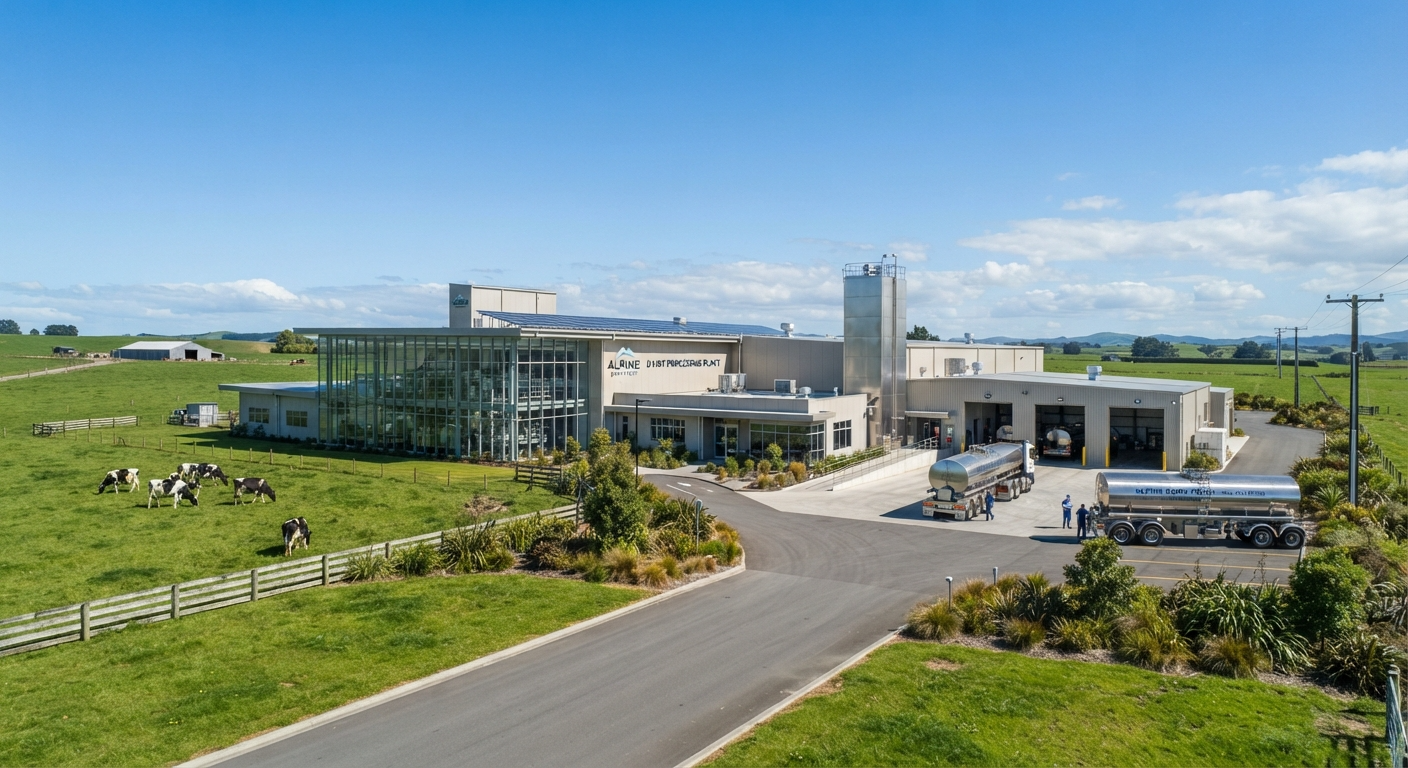
The U.S. dairy industry is experiencing an unprecedented $13 billion processing expansion wave that’s reshaping regional milk flows and supply chain economics.
The Largest Dairy Processing Buildout in Global Agriculture History Is Happening Right Now
The United States dairy industry is undergoing a transformation that occurs once per generation. Over the past year alone, $13 billion in capital expenditure has been deployed into new dairy processing infrastructure across the country—the largest capacity expansion wave in the history of global agriculture, according to Gregg Doud, President and CEO of the National Milk Producers Federation (NMPF). This unprecedented investment cycle isn’t scattered across marginal operations. It’s concentrated in state-of-the-art facilities engineered with advanced automation and filtration technologies, positioned to fundamentally reshape how American milk flows from farm to consumer.
The scale of this processing buildout reveals something critical about where major dairy companies believe consumer demand is heading. Chobani, fairlife, Hilmar Cheese Company, and other dairy processors aren’t making $13 billion in bets on commodity milk markets. They’re betting aggressively on high-protein dairy products, specialized ingredients, and value-added categories that command premium pricing. For dairy farmers, this means unprecedented off-take capacity and opportunity. For supply chain managers and logistics providers, it means navigating a newly restructured competitive landscape where regional milk allocation and transportation economics will make or break profitability.
Chobani and fairlife Lead the Yogurt and Ultra-Filtered Milk Revolution
The centerpiece of this $13 billion expansion wave is massive capacity additions in high-value dairy categories. Chobani, the dominant U.S. yogurt manufacturer, is expanding cultured dairy and yogurt production with major plant buildouts in New York and Idaho. These expansions represent Chobani’s conviction that Greek yogurt and cultured dairy products will continue commanding premium positioning in American supermarkets and foodservice channels—and that production capacity is the constraint limiting growth.
fairlife, the ultra-filtered milk brand, is simultaneously investing heavily in ultra-filtered milk production capacity. Ultra-filtered milk—processed to remove lactose while concentrating protein—represents one of the fastest-growing segments in the U.S. dairy category. By deploying capital into dedicated ultra-filtered production facilities, fairlife is securing long-term supply capacity for a product category where demand has consistently outpaced production availability.
These aren’t marginal capacity additions. Chobani’s New York and Idaho projects represent comprehensive facility expansions engineered to triple or quadruple regional production volumes. fairlife’s ultra-filtered investments position the company to serve growing consumer demand for high-protein dairy beverages and ingredients. Together, Chobani and fairlife represent just a portion of the broader $13 billion expansion wave—but they illustrate exactly where the dairy industry believes the profit margins and consumer demand are concentrated.
Hilmar Cheese and Regional Expansion: Cheese Manufacturing Goes Big
Beyond yogurt and ultra-filtered categories, cheese manufacturing represents another critical focal point for the $13 billion investment wave. Hilmar Cheese Company, one of the nation’s largest cheese processors, is constructing large-scale cheese manufacturing complexes in southwest Kansas and Texas. These new cheese facilities represent strategic geographic positioning to capture milk supplies across the Southern Plains and access export channels serving global cheese demand.
Cheese manufacturing capacity is particularly strategic because it requires specialized infrastructure and long-term commitment. Unlike fluid milk or yogurt, which can shift production relatively quickly, cheese production requires dedicated facilities engineered for specific moisture management, aging conditions, and quality control. Hilmar’s multi-facility strategy across Kansas and Texas signals that the company is positioning for decade-long dominance in regional cheese supply—betting that global cheese demand will remain robust and that geographic diversification of cheese production reduces supply-chain vulnerability.
What This Expansion Means for Raw Milk Producers
From the perspective of dairy farmers, the $13 billion processing expansion creates unprecedented off-take capacity. With advanced automation and filtration technologies deployed across new facilities, processors can now handle significantly higher volumes of raw milk than existing infrastructure previously allowed. This capacity expansion is directly stimulating milk demand across major dairy regions.
Moreover, the new processing capacity is specifically engineered to maximize component yields. American dairy cows currently produce milk with historically high concentrations of butterfat and milk protein—the exact components that command premium prices in yogurt, ultra-filtered, and cheese markets. New-generation processing facilities are engineered with technologies specifically designed to extract and concentrate these high-value components, generating better milk check prices for farmers supplying component-rich milk.
However, higher milk demand comes with a critical caveat: regional coordination. The $13 billion processing expansion is geographically dispersed—Chobani in New York and Idaho, fairlife across multiple regions, Hilmar in Kansas and Texas. Dairy farmers and milk cooperatives now face new complexity in supplying the right milk to the right facility. A farmer in Wisconsin who historically shipped milk to a cooperative facility may now need to redirect supplies to newly expanded capacity in a different region to access better component premiums or cooperate with processor efficiency requirements.
The Hidden Challenge: Regional Milk Allocation and Supply Chain Restructuring
The $13 billion expansion wave introduces a critical supply-chain complexity that the industry is only beginning to fully appreciate. Gregg Doud emphasized that the industry now faces significant long-term questions regarding regional milk allocation. With new processing capacity distributed across multiple states and regions, processors and dairy cooperatives must work to shift and coordinate raw milk movements across state lines to efficiently feed newly commissioned facilities without creating localized supply imbalances.
This coordination challenge is non-trivial. Moving raw milk across state lines requires specialized tanker trucks, dedicated logistics networks, and coordination across multiple dairy cooperatives and independent producers. A facility in Texas that requires 500,000 pounds of milk daily must develop supply relationships spanning dairy farms in Oklahoma, New Mexico, or Kansas. This restructuring of milk supply chains creates opportunities for efficient logistics providers but introduces risk for farmers and cooperatives that fail to adapt quickly to new regional milk movement patterns.
The milk allocation challenge is compounded by another reality: not all dairy regions produce milk with identical component profiles. Farms in some regions produce higher-butterfat milk; others produce higher-protein milk. Processors like Chobani and fairlife, with facilities engineered for specific component extraction, will increasingly source milk from regions optimized for their production requirements. This means dairy farmers in suboptimal regions may face longer milk hauling distances or lower component premiums—a structural shift that rewards strategic farm positioning and penalizes geographic isolation.
Transportation Economics: Freight Rates and Diesel Volatility Are Critical Success Factors
Successful operation of the $13 billion in new processing capacity depends critically on efficient milk transportation. Gregg Doud highlighted that elevated freight rates and prolonged volatility in diesel fuel prices will significantly impact hauling costs across the new processing infrastructure. The economic viability of routing milk across state lines—which may be necessary to supply newly expanded regional facilities—depends on stabilizing transportation costs.
Current freight rate volatility introduces operational unpredictability. A processing facility engineered to source milk from three states faces variable hauling costs depending on diesel prices and truck availability in any given week. Route planning becomes critical. Efficient logistics coordinators will develop supply chain solutions that minimize hauling distance, reduce empty backhauls, and optimize delivery timing to balance processor demand variation with farm milk production patterns.
For dairy farmers, this means transportation economics have become a first-order business consideration. A farmer whose milk is now being hauled 200+ miles to a regional processing facility faces material hauling costs that didn’t exist when closest-proximity cooperative facilities handled milk supply. The component premium gained by supplying ultra-filtered or yogurt production must exceed the incremental hauling costs, or the milk supply arrangement becomes economically irrational.
What This $13B Investment Wave Means for U.S. Dairy Markets Through 2027
The $13 billion processing expansion fundamentally reshapes dairy market structure and competition:
Processing Capacity Becomes Less Constraining: With new Chobani, fairlife, and Hilmar facilities coming online, processor capacity no longer constrains milk supply. Dairy farmers can expect stronger negotiating positions when cooperatives bid for their milk. However, localized supply imbalances may emerge as milk migration toward regional processing hubs creates temporary shortages in some areas.
Component Premiums Become Geographic: Ultra-filtered milk facilities will pay premiums for high-protein milk. Cheese facilities will reward high-butterfat milk. Geographic variation in component prices will incentivize farmers to adjust herd nutrition and breeding strategies to optimize for facility-specific requirements. This represents a material shift toward value-based milk procurement.
Supply Chain Efficiency Becomes Competitive Advantage: Dairy processors and logistics providers who master multi-state milk coordination will operate with lower average costs than competitors still managing single-region supply chains. Efficiency gains translate to lower input costs and better margins for value-added products.
Consolidation Pressure Accelerates: Smaller dairy cooperatives lacking capital to invest in modern infrastructure face consolidation pressure as larger cooperatives and processors capture scale advantages from the new capacity.
FAQ: Your Questions About the $13B Dairy Processing Investment Wave
Q: How much capital is being invested in new U.S. dairy processing facilities? A: The National Milk Producers Federation reports $13 billion in capital expenditure over the past year into new dairy processing infrastructure. This represents the largest capacity expansion in the history of global agriculture, according to NMPF CEO Gregg Doud.
Q: Which companies are leading the dairy processing expansion? A: Major projects include Chobani cultured dairy and yogurt plant expansions in New York and Idaho; fairlife ultra-filtered milk investments across multiple regions; and Hilmar Cheese Company large-scale cheese manufacturing complexes in southwest Kansas and Texas.
Q: Why are processors investing so heavily in yogurt and ultra-filtered milk? A: These high-value categories command premium pricing compared to commodity milk. Chobani and fairlife are betting that consumer demand for high-protein dairy products will remain robust, justifying massive capacity investments. Advanced processing technologies allow these facilities to maximize component yields and capture premium market segments.
Q: What does the processing expansion mean for dairy farmers? A: The new capacity provides unprecedented off-take capacity, stimulating milk demand and supporting stronger milk check prices. However, farmers must now navigate regional milk allocation challenges and may need to adjust milk supply routes to access newly expanded processing capacity in different regions.
Q: What supply chain challenges does the expansion create? A: The industry now faces critical questions about regional milk allocation. Processors and cooperatives must coordinate raw milk movements across state lines to feed newly commissioned facilities without creating localized supply imbalances. This requires sophisticated logistics coordination.
Q: How do freight rates and diesel prices affect the new processing facilities? A: Elevated freight rates and diesel volatility significantly impact milk hauling costs across the new infrastructure. Farmers sourcing milk to facilities across state lines face variable transportation costs that must be offset by component premiums. Efficient route planning and localized milk procurement are vital to profitability.
Q: Will the processing expansion benefit dairy farmers in all regions equally? A: No. Geographic variation in component prices will emerge as facilities specialize in high-protein or high-butterfat milk. Farmers in regions optimized for facility-specific requirements will command better premiums. Farmers facing longer hauling distances may face lower net milk prices.
Q: What happens to dairy cooperatives that don’t invest in modern infrastructure? A: Smaller cooperatives lacking capital to invest in modern processing facilities face consolidation pressure as larger cooperatives and integrated processors capture scale advantages from the $13 billion in new capacity.
Source Materials:
- National Milk Producers Federation Statement on $13 Billion Processing Investment Wave (August 2026)
- Gregg Doud, NMPF CEO, Comments on Historic Dairy Processing Expansion
- Chobani Expansion Projects (New York and Idaho yogurt and cultured dairy facilities)
- fairlife Ultra-Filtered Milk Capacity Investments (Multi-region deployment)
- Hilmar Cheese Company Southwest Kansas and Texas Facility Announcements
- U.S. Dairy Processing and Supply Chain Analysis (2026)

