

The Comprehensive History of Tyson Foods: From Humble Beginnings to Global Meat Empire – Timeline, Growth Strategies, Acquisitions, and Major Scandals
Tyson Foods, one of the world’s largest meat processors, has a storied history rooted in American entrepreneurship. Founded during the Great Depression, the company has grown from a small family operation in Arkansas to a multinational corporation dominating the poultry, beef, and pork industries. This in-depth article explores the history of Tyson Foods, its timeline of key milestones, how it achieved massive scale through strategic growth and acquisitions, and the scandals and controversies that have plagued its reputation. Whether you’re researching Tyson Foods scandals, curious about its expansion, or interested in its family legacy, this guide provides a detailed, chronological overview optimized for those seeking comprehensive insights into this food industry giant.
Founding and Early Years: The Roots of Tyson Foods (1930s–1950s)
The story of Tyson Foods begins in the midst of economic hardship. In 1931, John W. Tyson, a farmer from Missouri, relocated his family to Springdale, Arkansas, seeking better opportunities amid the Great Depression. Initially, Tyson hauled fruits, vegetables, and hay, but he soon pivoted to poultry. By 1935, he formally incorporated Tyson Feed and Hatchery, focusing on selling baby chicks, feed, and providing hatching services. This vertical integration—controlling multiple stages of production—became a cornerstone of the company’s success.
In the early days, Tyson innovated by trucking live chickens to markets in Chicago, reducing losses from rail transport. By the 1940s, the company expanded into broiler production, raising chickens for meat. John W. Tyson’s son, Don Tyson, joined the business in the 1950s, bringing fresh ideas that propelled growth. The company’s first processing plant opened in 1958, marking its entry into full-scale meat production.

Hall of Famer: John W. Tyson 1905 – 1967
This era laid the foundation for Tyson Foods’ growth, emphasizing efficiency and supply chain control, which would later fuel its expansion into a massive company.
Timeline of Tyson Foods’ Key Milestones: Building a Poultry Powerhouse (1960s–1990s)
Tyson Foods’ transformation into a global leader involved strategic expansions, innovations, and market adaptations. Here’s a detailed Tyson Foods timeline highlighting pivotal moments:
- 1960s: Going Public and Diversification – In 1963, Tyson Foods went public, raising capital for expansion. The company acquired its first competitor, Garrett Poultry, in 1966. Tragically, John W. Tyson died in a train accident in 1967, but Don Tyson took over, steering the company toward further growth.
- 1970s: Vertical Integration and National Reach – Tyson pioneered contract farming, partnering with independent growers to scale production. By 1977, sales topped $100 million. The company introduced branded products like Rock Cornish Game Hens, differentiating itself in supermarkets.
- 1980s: Acquisitions and International Forays – Revenue soared to $1 billion by 1989. Key acquisitions included Valmac Industries (1982) and Holly Farms (1989), the latter a $1.5 billion deal that made Tyson the U.S. leader in poultry. Exports began to Mexico and Asia, signaling global ambitions.
- 1990s: Diversification into Beef and Pork – Tyson expanded beyond chicken with the acquisition of BeefAmerica (1995) and Hudson Foods (1998) amid a salmonella scandal at the latter. By the end of the decade, Tyson was a top player in multiple protein segments.
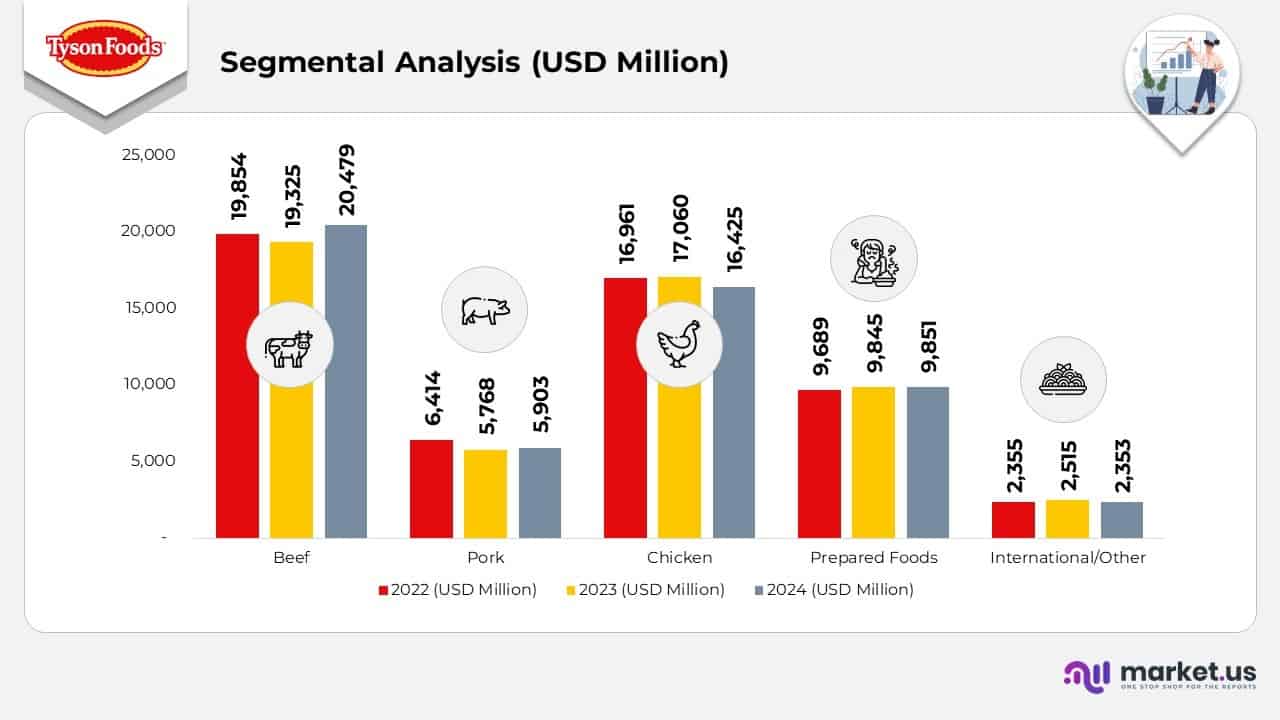
Tyson Foods Statistics and Facts by Foreign Operations, History
This timeline illustrates how Tyson Foods became massive through relentless innovation and market consolidation, evolving from a regional player to a national powerhouse.
Growth Strategies and Major Acquisitions: Scaling to a Multibillion-Dollar Empire (2000s–Present)
Tyson Foods’ ascent to industry dominance relied on aggressive acquisitions, technological advancements, and international expansions. By integrating operations from farm to table, Tyson minimized costs and maximized efficiency, a model that propelled it to over $50 billion in annual revenue today.
- 2001: Landmark IBP Acquisition – In a $3.2 billion deal, Tyson acquired IBP, Inc., the world’s largest beef and pork processor. This merger created Tyson Fresh Meats and catapulted the company to the top of the global meat industry.
- 2010s: Focus on Value-Added Products and Sustainability – Acquisitions like Hillshire Brands (2014) for $8.5 billion added prepared foods like Jimmy Dean sausages. In 2018, Tyson bought Keystone Foods for $2.16 billion, enhancing its fast-food supply chain (e.g., McDonald’s chicken nuggets).
- 2020s: Global Expansions and Investments – Recent moves include a $23.5 million upgrade to its Kentucky facility (2025) and partnerships like the 2023 equity stake in Protix for insect-based proteins. International growth involves new plants in China, Thailand, and the Netherlands.
Additionally, Tyson has pursued cold storage expansions through sales to partners like Lineage (2025, $247 million deal) and invested in alternative proteins to adapt to consumer trends.
Headquartered in Springdale, Arkansas, Tyson’s growth strategies have made it a staple in global food supply chains, employing over 140,000 people worldwide.
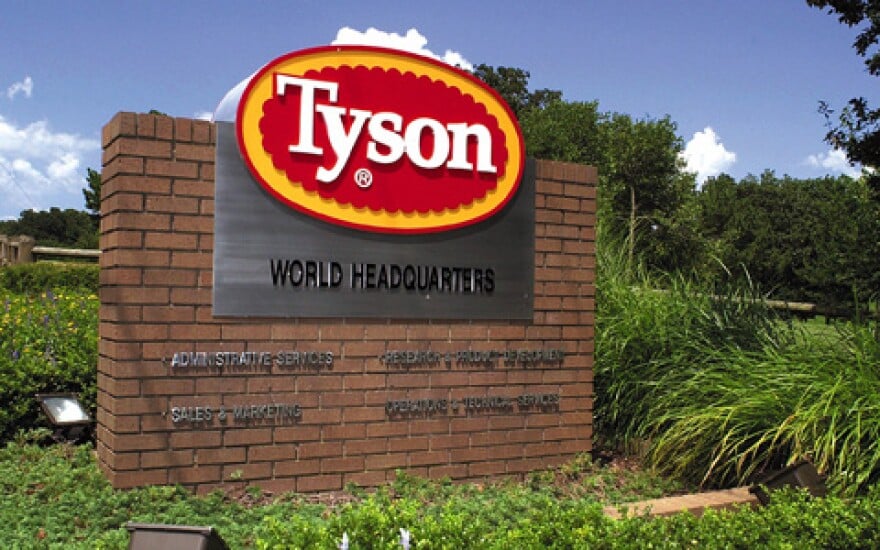
Scandals and Controversies: Challenges Amid Success
Despite its achievements, Tyson Foods has faced numerous scandals that highlight issues in labor, environment, and ethics. These controversies have led to lawsuits, fines, and public backlash, underscoring the darker side of its rapid expansion.
- Labor and Worker Safety Issues – During the COVID-19 pandemic (2020), Tyson was accused of inadequate worker protections, leading to outbreaks and deaths at plants. Employees claimed the company prioritized production over safety. In 2025, whistleblowers alleged child labor violations, prompting investigations by the U.S. Department of Labor. Wage violations have resulted in settlements, including a 2016 case.
- Antitrust and Price-Fixing Allegations – Tyson has been embroiled in price-fixing scandals. In 2025, it agreed to an $85 million settlement for conspiring to inflate pork prices from 2009–2018. Similar antitrust probes continue, including USDA investigations in 2024.
- Environmental and Sustainability Controversies – In 2024, the Animal Legal Defense Fund sued Tyson over “net-zero” and “climate-smart beef” claims, calling them deceptive greenwashing amid high greenhouse gas emissions. Past issues include water pollution fines (2003) and environmental scandals tied to factory farming.
- Bribery and Political Ties – A 2011 Foreign Corrupt Practices Act violation involved bribes to Mexican officials, costing $5.2 million in penalties. Ties to politicians, including the Clintons and Arkansas governors, have sparked influence-peddling accusations.
- Farmer and Community Impacts – In 2024, Tyson cut contracts with Missouri farmers, leading to lawsuits alleging collusion to prevent plant resales. Animal welfare scandals, including undercover videos of cruelty, have drawn criticism from groups like PETA.
Recent social media discussions highlight ongoing concerns, such as poor hygiene practices and corporate influence on policy. Tyson has managed these through settlements, policy changes, and PR efforts, but scrutiny persists.
Current Status and Future Outlook: Navigating Challenges in a Changing Market
As of 2025, Tyson Foods reports strong EBITDA growth (20% in fiscal 2025), driven by chicken segment profits. Still family-controlled by John H. Tyson (grandson of the founder), the company focuses on sustainability and innovation amid softening demand. However, ongoing scandals underscore the need for ethical reforms.
In conclusion, Tyson Foods’ history is a testament to American business ingenuity, marked by a clear timeline of growth from a Depression-era startup to a global behemoth. Yet, its path includes significant scandals that raise questions about corporate responsibility. For those searching “Tyson Foods controversies” or “how Tyson became massive,” this overview reveals a complex legacy. Stay informed as the company evolves in an era of heightened consumer awareness.
Frequently Asked Questions (FAQ) about Tyson Foods
When was Tyson Foods founded?
Tyson Foods was founded in 1935 by John W. Tyson in Springdale, Arkansas, during the Great Depression. It started as a small poultry business focused on feed and hatchery services.
How did Tyson Foods become a massive company?
Tyson Foods grew through vertical integration, strategic acquisitions, and diversification into beef, pork, and prepared foods. Key milestones include going public in 1963, acquiring Holly Farms in 1989, and the $3.2 billion IBP merger in 2001, which expanded its global reach.
What are some major scandals involving Tyson Foods?
Tyson Foods has faced controversies including child labor allegations (2025 whistleblower claims), price-fixing settlements ($85 million for pork in 2025), COVID-19 worker safety issues (2020), environmental greenwashing lawsuits (2024), and Foreign Corrupt Practices Act violations (2011).
Who owns Tyson Foods?
Tyson Foods is a publicly traded company (NYSE: TSN) but remains family-influenced, with John H. Tyson, grandson of the founder, serving as chairman. It’s not owned by a single entity but has institutional investors.
What products does Tyson Foods produce?
Tyson Foods produces poultry, beef, pork, and prepared foods under brands like Tyson, Jimmy Dean, Hillshire Farm, and Ball Park. It supplies major chains like McDonald’s and focuses on value-added and sustainable proteins.
Has Tyson Foods been involved in political controversies?
Yes, including ties to politicians like the Clintons in the 1990s, lobbying efforts, and recent hiring practices amid immigration debates. In 2025, it faced scrutiny over asylum seeker hires and plant closures in Iowa.
References and Sources
For transparency, here are the key sources used in this article on Tyson Foods’ history, timeline, growth, and scandals. These include official company pages, encyclopedias, news articles, and social media discussions for a balanced view.
- Our History | Tyson Foods, Inc. – https://www.tysonfoods.com/who-we-are/our-story/where-we-came-from/our-history
- Tyson Foods, Inc. – Encyclopedia of Arkansas – https://encyclopediaofarkansas.net/entries/tyson-foods-inc-2101/
- Our Story – Tyson Foods – https://www.tyson.com/our-story
- Tyson Foods – Wikipedia – https://en.wikipedia.org/wiki/Tyson_Foods
- What is Brief History of Tyson Foods Company? – https://portersfiveforce.com/blogs/brief-history/tysonfoods
- Tyson Foods History: Founding, Timeline, and Milestones – Zippia – https://www.zippia.com/tyson-foods-careers-11930/history/
- Tyson Foods, Inc. (TSN): history, ownership, mission, how it works – https://dcfmodeling.com/blogs/history/tsn-history-mission-ownership
- History of Tyson Foods: A Journey in the Chicken Industry – YouTube – https://www.youtube.com/watch?v=i1rBGZw5GbQ
- Tyson Foods, Inc. – Company-Histories.com – https://www.company-histories.com/Tyson-Foods-Inc-Company-History.html
- IBP Timeline Post Archives – Tyson Fresh Meats – https://tysonbeefandpork.com/category/ibp-timeline-post
- The controversy over Tyson Foods’ hiring of asylum seekers – NPR – https://www.npr.org/2025/02/26/1233894748/tyson-perry-iowa-waterloo-tennessee
- tyson-foods | Violation Tracker – https://violationtracker.goodjobsfirst.org/parent/tyson-foods
- Tyson Foods is being investigated by the USDA – https://investigatemidwest.org/2024/08/16/tyson-foods-is-being-investigated-by-the-usda/
- Tyson Foods Sued Over Deceptive ‘Net-Zero’ and ‘Climate-Smart Beef’ Claims – https://aldf.org/article/tyson-foods-sued-over-deceptive-net-zero-and-climate-smart-beef-claims/
- 4 Ways Tyson Foods Made 2020 Worse – https://blog.ucs.org/karen-perry-stillerman/4-ways-tyson-foods-made-2020-worse/
- Tyson Foods – Wikipedia (Scandals Section) – https://en.wikipedia.org/wiki/Tyson_Foods
- Tyson Foods Agrees to Pay $85M in Pork Price-Fixing Settlement – YouTube – https://www.youtube.com/watch?v=EtjZbAU72D4
- Hawley: Labor Dept. Investigate Tyson Foods After Whistleblower – https://www.hawley.senate.gov/hawley-calls-on-labor-department-to-investigate-tyson-foods-after-whistleblower-comes-forward/
- Tyson Foods to pay $85 million to settle pork price fixing scheme – Facebook – https://www.facebook.com/KING5News/videos/tyson-foods-to-pay-85-million-to-settle-pork-price-fixing-scheme/1840081963568662/
- Humane World Action Fund Post on Tyson Pork Scandal – https://x.com/humaneactfund/status/1983978154344468563
- Humane World for Animals Post on Tyson Price-Fixing – https://x.com/humaneworldorg/status/1983953455506190781
For more details, explore these sources directly. This list ensures credibility and helps with further research on “Tyson Foods history,” “Tyson Foods scandals,” and related topics.
Related Searches for More on Tyson Foods
- Tyson Foods stock history and performance
- Tyson Foods sustainability initiatives
- Careers at Tyson Foods
- Tyson Foods vs. competitors like JBS or Cargill
- Latest Tyson Foods news and updates
Similar Posts: https://essfeed.com/tyson-foods-a-comprehensive-overview-of-history-growth-strategy-and-challenges/ & https://essfeed.com/tyson-foods-implements-changes-in-executive-leadership/
Related Analysis: View Previous Industry Report
