
Nigeria, Africa’s largest economy, is steadily growing its wheat production capacity despite challenges like climate conditions and infrastructure limitations. With government support and private sector investments, the country is focusing on reducing wheat import dependency and achieving self-sufficiency. This article highlights Nigeria’s largest wheat-producing companies, their contributions, and their impact on the agricultural landscape.
1. Flour Mills of Nigeria (FMN)
Flour Mills of Nigeria is the largest and most integrated wheat processing company in the country.
Key Highlights:
- Operations: Sources wheat locally and processes it into flour and wheat-based products.
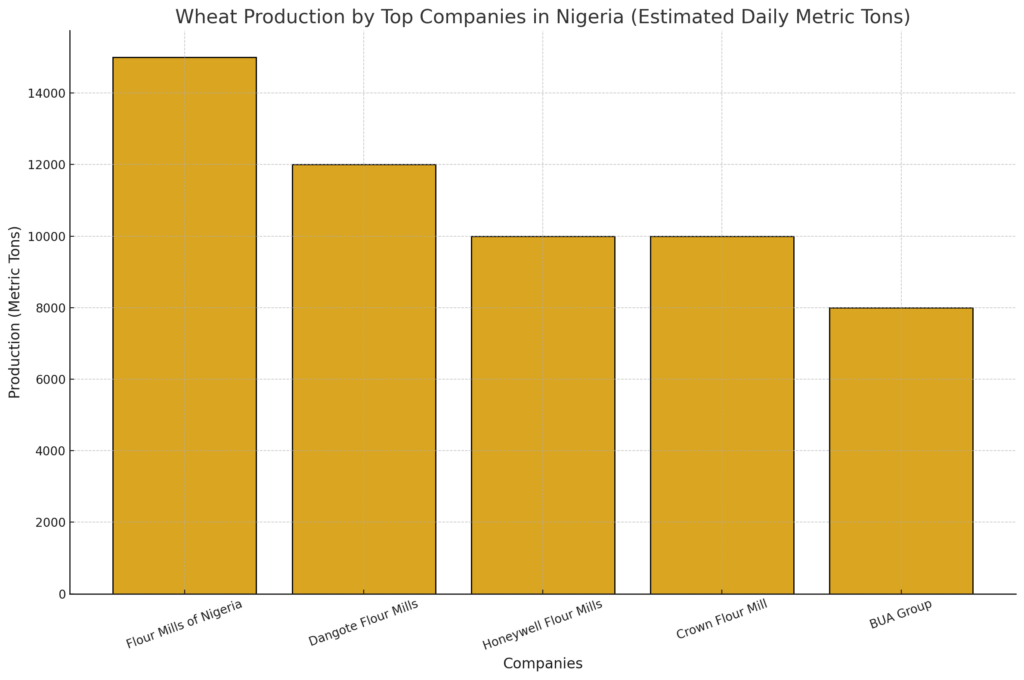
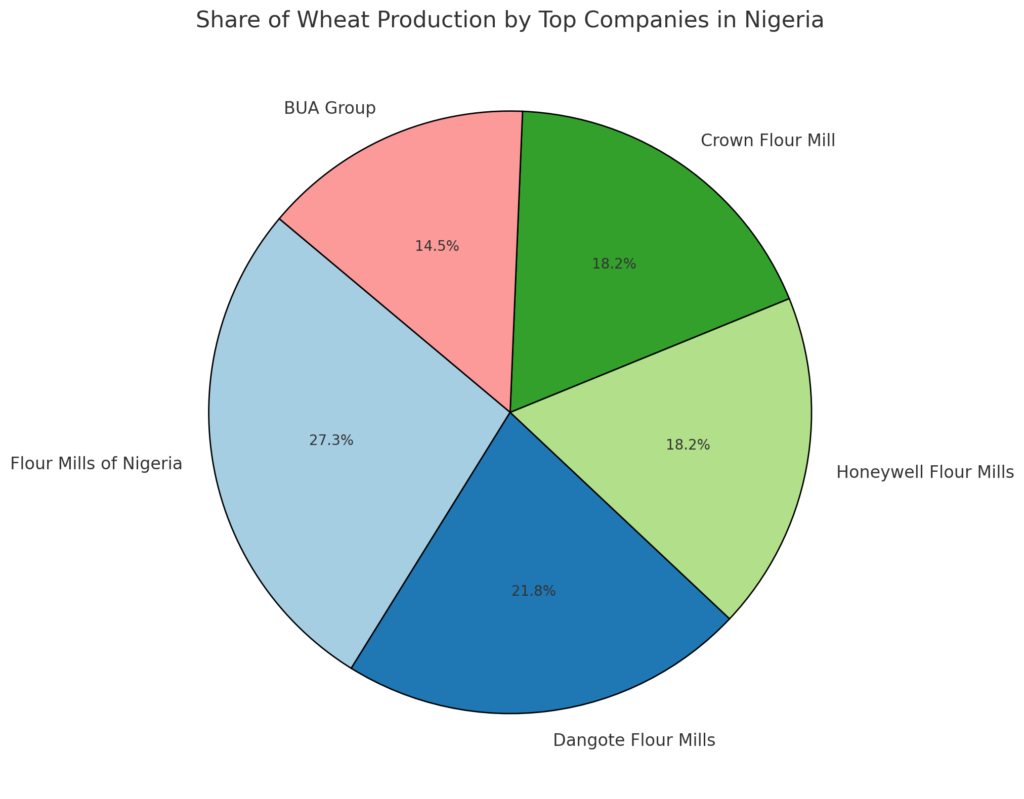
- Production Capacity: Operates multiple milling facilities with a combined capacity of over 15,000 metric tons daily.
- Brands: Produces Golden Penny, a leading consumer brand for flour and pasta.
- Contribution: Invests in wheat farming projects to support local farmers and reduce reliance on imports.
FMN’s integrated operations make it a cornerstone of Nigeria’s wheat production and processing industry.
2. Dangote Flour Mills
Dangote Flour Mills, now part of Crown Flour Mills under the Olam Group, is a significant player in Nigeria’s wheat industry.
Key Highlights:
- Market Influence: Processes large volumes of wheat for domestic markets.
- Farming Initiatives: Supports local wheat farming projects through partnerships with smallholder farmers.
- Processing Capacity: Operates state-of-the-art milling facilities across the country.
- Export Potential: Focuses on meeting domestic demand while exploring regional markets.
Dangote Flour Mills’ investments in local wheat production contribute to Nigeria’s agricultural growth.
3. Honeywell Flour Mills
Honeywell Flour Mills, a subsidiary of Flour Mills of Nigeria, plays a critical role in Nigeria’s wheat production ecosystem.
Key Highlights:
- Operations: Processes both locally sourced and imported wheat.
- Product Range: Offers high-quality flour for bread, pastries, and noodles.
- Innovation: Incorporates advanced milling technologies to enhance efficiency.
- Farmer Support: Provides training and resources to smallholder farmers to improve yields.
Honeywell’s focus on quality and farmer support strengthens its position in Nigeria’s wheat industry.
4. Crown Flour Mill (CFM)
Crown Flour Mill, part of the Olam Group, is a leading player in Nigeria’s wheat processing sector.
Key Highlights:
- Production Capacity: Operates large-scale milling facilities with a daily capacity exceeding 10,000 metric tons.
- Sustainability: Implements eco-friendly practices to minimize environmental impact.
- Farmer Partnerships: Works with local farmers to increase domestic wheat production.
- Market Reach: Supplies wheat-based products to both local and regional markets.
CFM’s focus on sustainability and farmer engagement enhances Nigeria’s wheat value chain.
5. BUA Group
The BUA Group has diversified into wheat production and milling, becoming a notable player in Nigeria’s agricultural sector.
Key Highlights:
- Processing Facilities: Operates advanced milling plants to produce high-quality flour.
- Market Role: Supplies wheat-based products to bakeries and food manufacturers.
- Investment Focus: Plans to expand wheat farming initiatives to boost local production.
- Community Impact: Supports rural economies by partnering with small-scale farmers.
BUA Group’s growing investments in wheat production highlight its commitment to Nigeria’s agricultural development.
Key Factors Supporting Wheat Production in Nigeria
- Government Support: Policies such as the Anchor Borrowers’ Programme encourage wheat farming.
- Private Sector Investments: Companies like FMN and CFM are investing heavily in local wheat production.
- Technological Integration: Adoption of improved wheat varieties and mechanized farming techniques.
Challenges Facing the Wheat Industry
- Climate Conditions: Nigeria’s semi-arid regions limit large-scale wheat cultivation.
- Infrastructure Deficiencies: Lack of irrigation and storage facilities affects productivity.
- High Production Costs: Fertilizers and mechanized equipment remain expensive for small-scale farmers.
Opportunities for Growth
- Irrigation Expansion: Developing irrigation systems to enable year-round wheat farming.
- Research and Development: Investing in drought-resistant and high-yield wheat varieties.
- Public-Private Partnerships: Strengthening collaboration between the government and agribusinesses.
Conclusion
The largest wheat-producing companies in Nigeria, including Flour Mills of Nigeria, Dangote Flour Mills, Honeywell Flour Mills, Crown Flour Mill, and BUA Group, are vital to the country’s quest for self-sufficiency. By investing in technology, sustainability, and farmer partnerships, these companies are driving the growth of Nigeria’s wheat industry and ensuring food security.
Related Analysis: View Previous Industry Report
