Table of Contents
- Indian Corn Industry Overview
- Top 10 Corn Producing Companies in India
- Company Profiles and Production Capacity
- Processing and Value Addition
- Market Trends and Government Policies
- Challenges and Opportunities
- FAQ
Indian Corn Industry Overview
India has established itself as the seventh-largest corn producer globally with an annual production of 33-35 million metric tons valued at approximately ₹90,000 crore ($11 billion). The corn industry supports over 15 million farmers across various states and serves as a critical input for multiple downstream industries including poultry feed, starch, ethanol, and food processing.
The Indian corn market has experienced consistent 5-7% annual growth driven by increasing demand from the livestock sector, industrial applications, and growing export opportunities. The industry is characterized by a mix of large corporate players, cooperative structures, and small-scale processors, with significant regional concentration in states like Madhya Pradesh, Karnataka, Maharashtra, and Rajasthan.
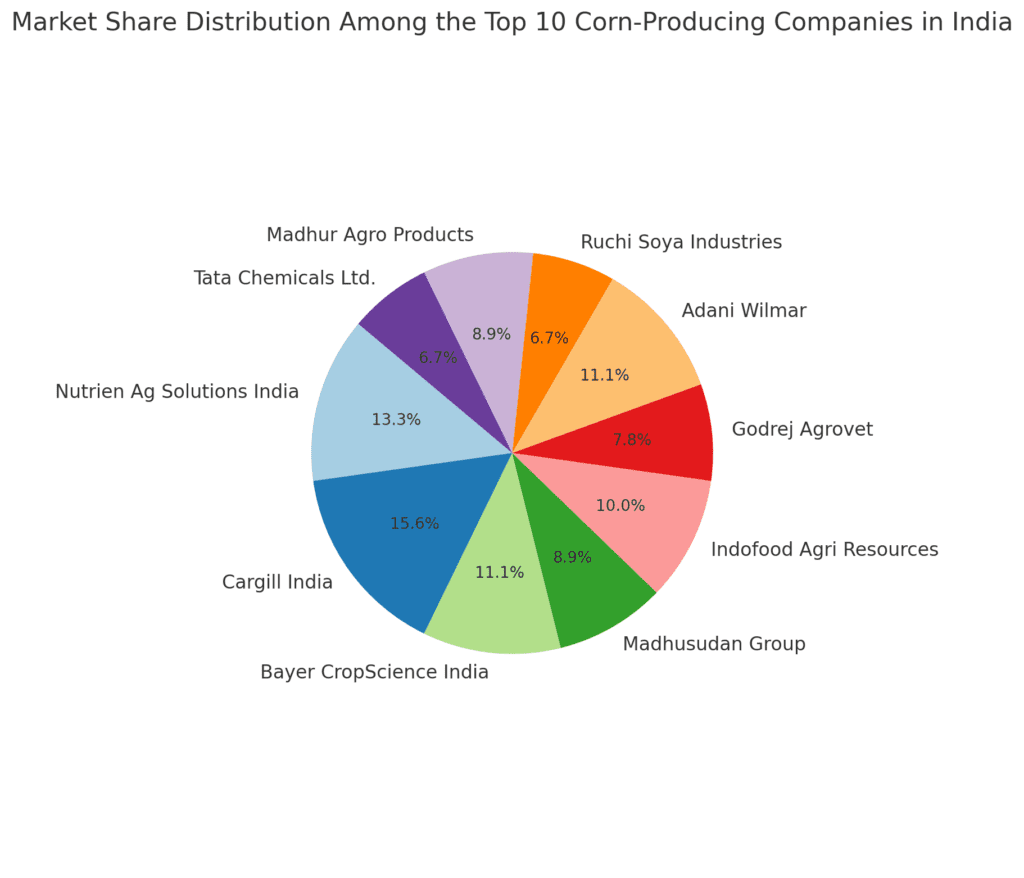
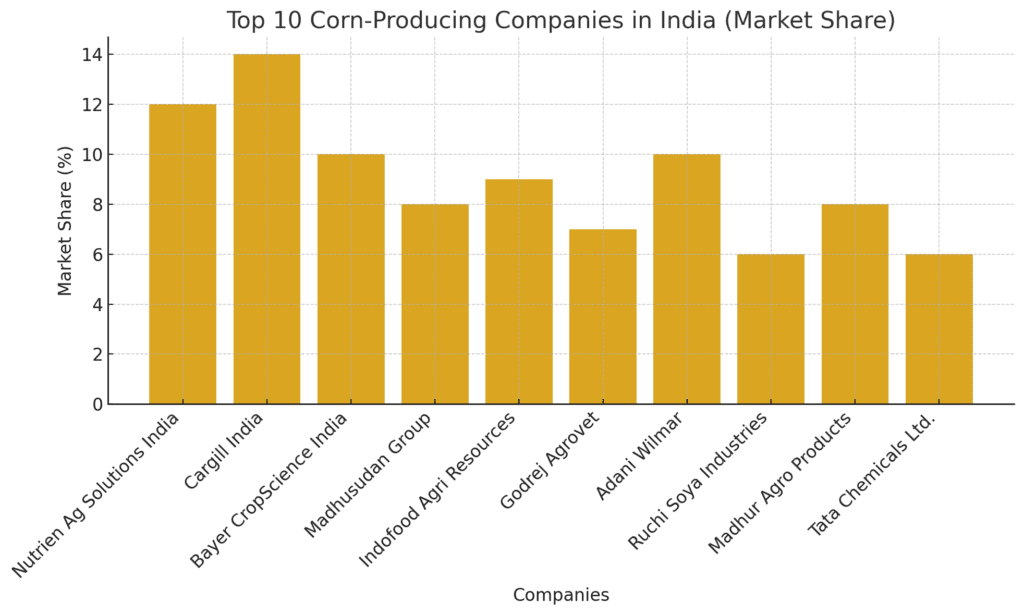
Top 10 Corn Producing Companies in India
Based on processing capacity, market share, and industry influence for 2024-2025.
| Rank | Company | Headquarters | Annual Processing Capacity | Primary Market Segments |
|---|---|---|---|---|
| 1 | Anil Products | Ahmedabad, Gujarat | 1.2 million tons | Starch, Animal Feed |
| 2 | Sahyadri Starch | Pune, Maharashtra | 950,000 tons | Starch, Derivatives |
| 3 | Gayatri Bioorganics | Hyderabad, Telangana | 850,000 tons | Sweeteners, Ethanol |
| 4 | Sukhjit Starch | Phagwara, Punjab | 750,000 tons | Starch, Glucose |
| 5 | Riddhi Siddhi Starch | Udaipur, Rajasthan | 700,000 tons | Industrial Starch |
| 6 | Kasyap Sweetners | Nizamabad, Telangana | 650,000 tons | Sweeteners, Feed |
| 7 | Saraswati Starch | Kolkata, West Bengal | 550,000 tons | Starch, Byproducts |
| 8 | Pioneer Industries | Mumbai, Maharashtra | 500,000 tons | Animal Nutrition |
| 9 | Amrit Feeds | Kolkata, West Bengal | 450,000 tons | Animal Feed |
| 10 | Vimal Oil & Foods | Mumbai, Maharashtra | 400,000 tons | Food Processing |
Company Profiles and Production Capacity
1. Anil Products Limited
Market Leadership: India’s largest corn processor with diversified product portfolio
Processing Facilities: Six manufacturing units across Gujarat and Maharashtra
Product Range: Corn starch, liquid glucose, dextrose, sorbitol, and animal feed
Export Markets: Products exported to 35+ countries including Middle East, Africa, and Southeast Asia
Recent Expansion: ₹250 crore investment in new ethanol production facility
Quality Certifications: ISO 9001, ISO 22000, FSSAI, and multiple export certifications
2. Sahyadri Starch & Industries
Regional Powerhouse: Dominant player in Western India with strong farmer relationships
Integrated Operations: Complete value chain from corn procurement to specialty starches
Innovation Focus: Development of modified starches for pharmaceutical and textile industries
Sustainability Initiatives: Zero liquid discharge plants and biomass energy generation
Market Position: Preferred supplier for demanding industrial applications requiring consistent quality
3. Gayatri Bioorganics
Specialization Leader: Focus on high-value corn derivatives and bio-products
Technology Edge: Advanced enzymatic conversion technology for sweetener production
Ethanol Production: Significant capacity for ethanol from corn under National Biofuel Policy
R&D Investment: Strong research focus on value-added products and process optimization
Export Orientation: 40% of production exported to quality-conscious international markets
4. Sukhjit Starch & Chemicals
Heritage Player: Established 1943 with multi-generational expertise in corn processing
Product Diversity: Wide range including maize starch, liquid glucose, dextrose, and gluten
Quality Reputation: Known for consistent quality meeting international standards
Customer Base: Serves pharmaceutical, food, textile, and paper industries
Geographic Reach: Strong presence across Northern and Eastern India
5. Riddhi Siddhi Starch
Industrial Focus: Specialist in industrial-grade starches and derivatives
Scale Advantage: Large-scale operations enabling competitive pricing
Byproduct Utilization: Complete utilization of corn components minimizing waste
Market Adaptation: Flexible production able to serve multiple industry segments
Infrastructure: Modern plants with advanced automation and quality control
Processing and Value Addition
Primary Processing Streams
- Wet Milling: Separation of corn into starch, germ, fiber, and gluten
- Dry Milling: Production of corn meal, grits, and flour for food applications
- Fractionation: Isolation of specific components for specialized applications
- Fermentation: Conversion to ethanol, organic acids, and enzymes
Value-Added Products
- Modified Starches: Customized for specific industrial applications
- Sweeteners: High fructose corn syrup, dextrose, and maltodextrin
- Ethanol: Fuel ethanol and industrial alcohol
- Animal Nutrition: Corn gluten meal and other feed ingredients
- Food Products: Corn flakes, snacks, and convenience foods
Byproduct Utilization
- Corn Oil: Extracted from germ for edible oil applications
- Animal Feed: Gluten meal and fiber used in balanced animal feed
- Bioenergy: Biomass from processing used for power generation
- Fertilizers: Nutrient-rich byproducts used in agriculture
Market Trends and Government Policies
Production and Consumption Patterns
- Poultry Feed: 60% of corn consumption for animal feed industry
- Starch Industry: 20% for industrial starch and sweeteners
- Food Processing: 12% for direct human consumption and processed foods
- Ethanol: 5% growing rapidly under ethanol blending program
- Exports: 3% primarily to Bangladesh, Vietnam, and Malaysia
Government Initiatives
- National Biofuel Policy: Target of 20% ethanol blending driving corn demand
- Minimum Support Price: MSP for corn ensuring farmer price security
- Production Linked Incentives: Support for starch and sweetener manufacturing
- Export Promotion: Assistance for international market development
- Research Support: ICAR programs for high-yield hybrid varieties
Price Trends and Market Dynamics
- Minimum Support Price: ₹2,090 per quintal for 2024-25 season
- Market Prices: Range from ₹2,200-₹2,800 per quintal based on quality and season
- Seasonal Variations: Prices typically lowest during main harvest season (October-December)
- Quality Premiums: Food-grade corn commands 15-20% premium over feed-grade
- Export Parity: International prices influencing domestic market trends
Challenges and Opportunities
Key Challenges
- Climate Vulnerability: Dependent on monsoon patterns and weather conditions
- Storage Infrastructure: Inadequate storage leading to post-harvest losses
- Quality Consistency: Variability in quality affecting processing efficiency
- Input Costs: Rising costs of seeds, fertilizers, and labor
- Market Access: Limited direct market access for small farmers
Growth Opportunities
- Ethanol Demand: Significant growth potential under ethanol blending program
- Export Expansion: Growing demand from Asian markets for Indian corn
- Value Addition: Opportunities in specialty starches and modified products
- Technology Adoption: Precision agriculture and digital supply chain management
- Sustainable Practices: Organic and non-GMO corn for premium markets
Future Outlook
- Production Growth: Projected to reach 45 million tons by 2030
- Processing Capacity: Expected to increase by 40% over next five years
- Export Potential: Position as reliable supplier to Asian markets
- Value Addition: Shift from commodity to specialized products
- Sustainability Focus: Increasing emphasis on environmental compliance
FAQ
Who is the largest corn processing company in India?
Anil Products Limited is India’s largest corn processing company with annual processing capacity of 1.2 million tons across multiple facilities. The company has diversified operations spanning starch, sweeteners, and animal feed products with significant export presence.
What are the main uses of corn in India?
Primary uses include:
- Poultry Feed: Largest segment consuming 60% of production
- Starch Industry: Industrial applications in food, paper, and textiles
- Human Consumption: Direct consumption and processed food products
- Ethanol Production: Growing segment under biofuel policy
- Industrial Applications: Pharmaceuticals, brewing, and other industries
How has the ethanol policy affected corn demand?
The National Biofuel Policy has:
- Increased Demand: Created new demand segment for ethanol production
- Price Support: Provided additional market for corn farmers
- Investment Drive: Stimulated investment in corn-based ethanol plants
- Crop Diversification: Encouraged corn cultivation in new regions
- Import Substitution: Reduced dependence on imported petroleum
What quality parameters are important for industrial corn?
Key quality parameters include:
- Moisture Content: Maximum 14% for safe storage and processing
- Test Weight: Minimum 65 kg/hectoliter indicating grain density
- Broken Kernels: Less than 5% for efficient processing
- Foreign Matter: Maximum 2% impurities
- Mycotoxin Levels: Below regulatory limits for food safety
Are Indian corn processors exporting internationally?
Yes, major export products include:
- Corn Starch: To Middle East, Africa, and Southeast Asia
- Animal Feed: To neighboring countries including Bangladesh and Sri Lanka
- Sweeteners: To quality-conscious markets in Europe and Americas
- Ethanol: Limited exports but growing potential
- Processed Foods: Corn-based snacks and breakfast cereals
What is the future outlook for corn production in India?
The outlook is positive with:
- Production Growth: Projected to reach 45 million tons by 2030
- Yield Improvement: Potential for significant yield increases through technology
- Demand Growth: Strong demand from feed, food, and industrial sectors
- Export Expansion: Opportunities in Asian and Middle Eastern markets
- Value Addition: Shift toward higher-value processed products
Sources:
- Ministry of Agriculture & Farmers Welfare – Maize Production Data
- Food Safety and Standards Authority of India (FSSAI)
- Agricultural and Processed Food Products Export Development Authority (APEDA)
- Indian Council of Agricultural Research (ICAR) – Maize Research
- National Commodity & Derivatives Exchange (NCDEX) Price Data
- Company Annual Reports and Investor Presentations
- USDA Foreign Agricultural Service – India Grain Reports
- Indian Starch Manufacturers Association
Related Analysis: View Previous Industry Report