
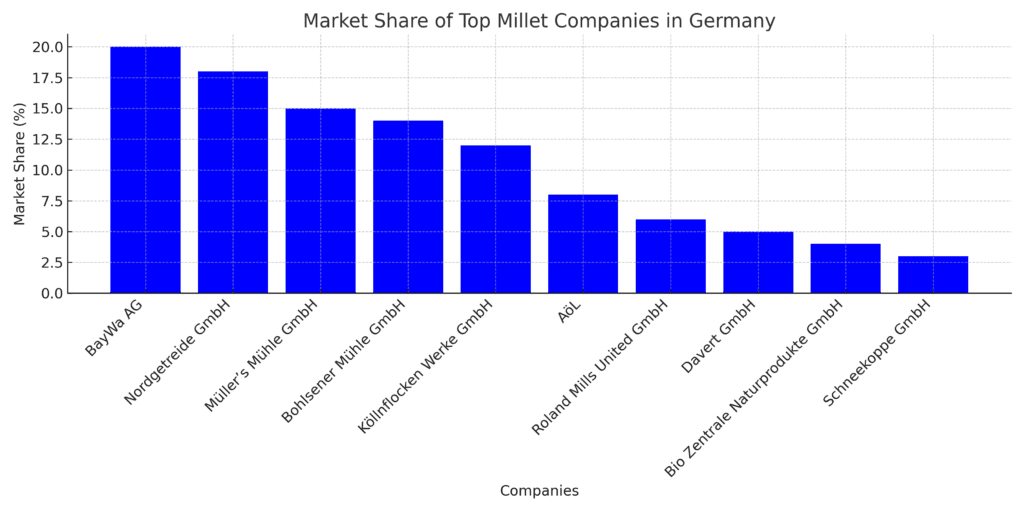
Millet, a highly nutritious and versatile grain, has been steadily gaining popularity in Germany, fueled by growing consumer demand for gluten-free and health-conscious food options. As the demand rises, Germany has become a key player in millet production, processing, and distribution within Europe. This report explores the top 10 largest millet companies in Germany and their contributions to the industry.
1. BayWa AG
BayWa AG is one of Germany’s largest agricultural companies, dealing with a variety of grains, including millet. The company plays a significant role in millet sourcing, processing, and distribution across Germany and Europe.
Key Strengths:
- Advanced grain storage and logistics facilities.
- Strong presence in domestic and international markets.
- Investment in sustainable farming practices.
Website: BayWa.com
2. Nordgetreide GmbH & Co. KG
Nordgetreide specializes in producing high-quality cereal grains, including millet. The company is known for its advanced milling and processing technologies, catering to the health food market.
Key Strengths:
- Expertise in grain milling and processing.
- Focus on gluten-free and organic millet products.
- Strong distribution channels across Europe.
Website: Nordgetreide.de
3. Müller’s Mühle GmbH
Müller’s Mühle is a household name in Germany, known for producing pulses and specialty grains, including millet. The company offers a variety of millet products for retail and industrial use.
Key Strengths:
- High-quality millet products for retail and foodservice.
- Strong focus on consumer branding.
- Leadership in the German gluten-free grain market.
Website: Muellers-Muehle.de
4. Bohlsener Mühle GmbH & Co. KG
Bohlsener Mühle is a pioneer in organic farming and grain processing, with millet being a significant part of its product range. The company emphasizes sustainability and high-quality standards.
Key Strengths:
- Commitment to organic farming and eco-friendly practices.
- Wide range of millet-based products.
- Strong reputation in health food markets.
Website: Bohlsener-Muehle.de
5. Köllnflocken Werke GmbH
Köllnflocken Werke is a leading producer of grains and cereals in Germany, with millet playing a key role in its gluten-free product offerings. The company caters to both domestic and international markets.
Key Strengths:
- Strong presence in the health and wellness sector.
- Focus on high-quality, gluten-free millet products.
- Extensive retail network across Europe.
Website: Koelln.de
6. AöL (Association of Organic Processors, Wholesalers, and Retailers)
Although not a single company, AöL is an association representing several organic millet producers and processors in Germany. The organization promotes sustainable practices and supports the organic millet industry.
Key Strengths:
- Advocacy for organic millet production.
- Collaboration among millet producers and processors.
- Promotion of sustainability and fair trade.
Website: Aoel.org
7. Roland Mills United GmbH & Co. KG
Roland Mills United is a major grain milling company in Germany, specializing in the processing of grains, including millet. The company supplies millet to food manufacturers and retailers across the country.
Key Strengths:
- Advanced grain milling technology.
- Reliable supply chain for food manufacturers.
- Focus on product quality and consistency.
Website: Roland-Mills.de
8. Davert GmbH
Davert is a well-known organic food brand in Germany, offering a variety of millet-based products, such as flakes and flour. The company emphasizes sustainable farming and eco-friendly packaging.
Key Strengths:
- Focus on organic and sustainable millet products.
- Strong branding in health and wellness markets.
- Innovative packaging solutions.
Website: Davert.de
9. Bio Zentrale Naturprodukte GmbH
Bio Zentrale is a leading producer of organic food products in Germany, with millet as a key component of its grain offerings. The company focuses on high-quality, organic millet for health-conscious consumers.
Key Strengths:
- Strong focus on organic farming and products.
- Wide range of millet-based offerings.
- Popular brand in German supermarkets and organic stores.
Website: BioZentrale.de
10. Schneekoppe GmbH
Schneekoppe is a popular health food brand in Germany, specializing in grains and cereals, including millet. The company targets health-conscious consumers with its gluten-free and nutrient-rich millet products.
Key Strengths:
- Expertise in gluten-free grain products.
- Strong branding in health food markets.
- Focus on innovation and consumer satisfaction.
Website: Schneekoppe.de
Why Millet Matters in Germany
Millet is increasingly important in Germany’s agricultural and food sectors for the following reasons:
- Health Benefits: Millet is gluten-free, high in fiber, and packed with essential nutrients, making it a popular choice for health-conscious consumers.
- Sustainability: Millet’s ability to grow in less-than-ideal conditions makes it an eco-friendly crop.
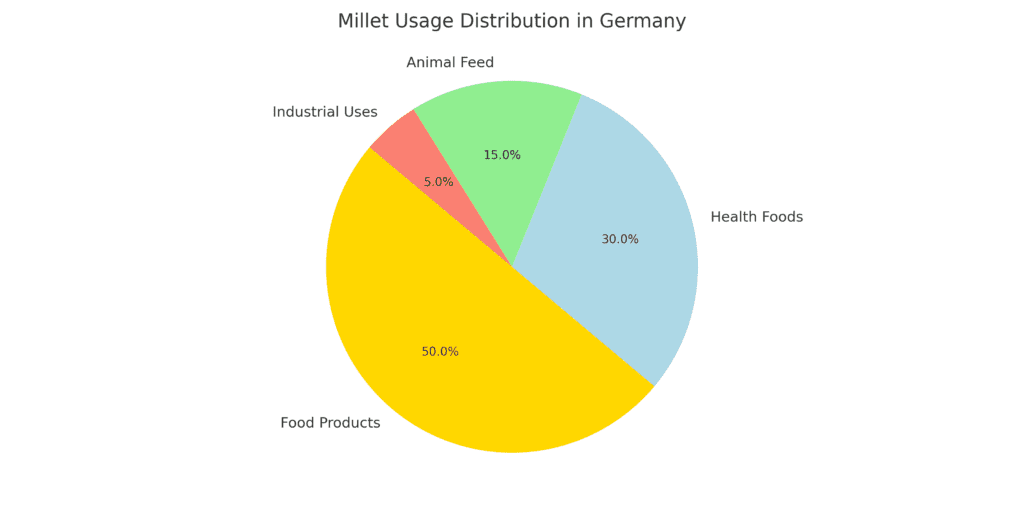
- Diverse Applications: Millet is used in various products, including cereals, snacks, flour, and animal feed.
Challenges and Opportunities in Germany’s Millet Industry
Challenges:
- Competition: Millet competes with more established grains like wheat and oats in the German market.
- Consumer Awareness: Many consumers are still unfamiliar with millet and its benefits.
- Climate Change: Changing weather patterns could impact millet yields.
Opportunities:
- Health Food Demand: Rising interest in gluten-free and plant-based diets offers a significant market opportunity.
- Export Growth: Germany can capitalize on the growing global demand for millet by increasing exports.
- Innovation: Developing new millet-based products can attract a broader audience.
Conclusion
This report highlights the top 10 millet companies in Germany and their pivotal role in the millet industry. By focusing on innovation, sustainability, and meeting consumer demand, these companies are driving the growth of millet production and processing in Germany. With its expanding applications in health foods, livestock feed, and more, millet is set to remain a key grain in Germany’s agricultural landscape.
Related Analysis: View Previous Industry Report
