

New Research Adds Pressure on Meat Processors to Innovate
The processed meat industry is once again facing heightened scrutiny following the publication of new findings from the European Prospective Investigation into Cancer and Nutrition (EPIC), one of the world’s largest long-term nutrition and cancer research programs.
The study, which tracked more than 450,000 Europeans over an average period of 14 years, found that even relatively modest increases in processed meat consumption were associated with elevated risks of stomach cancer and esophageal adenocarcinoma. The findings add to a growing body of evidence linking processed meat consumption to adverse health outcomes and are likely to intensify calls for product reformulation, cleaner labels, and healthier protein alternatives across the food and beverage sector.
For manufacturers, retailers, foodservice operators, ingredient suppliers, and regulators, the research represents both a challenge and an opportunity. While consumer concerns around processed foods continue to grow, companies that proactively address nutritional concerns may strengthen brand trust and capture demand from increasingly health-conscious shoppers.
Key Findings from the EPIC Study
Researchers monitored 450,112 participants across multiple European countries, including 131,426 men and 318,686 women.
During the study period:
- 876 participants developed stomach cancer
- 215 participants developed esophageal adenocarcinoma
- Researchers evaluated associations between meat consumption and cancer incidence while adjusting for multiple lifestyle variables
The most significant findings included:
Processed Meat
For every additional 30 grams of processed meat consumed daily—approximately one slice of deli ham—participants experienced:
- A 9% increase in stomach cancer risk
- A 13% increase in esophageal adenocarcinoma risk
White Meat
Researchers also identified associations involving poultry consumption.
For every additional 20 grams of white meat consumed daily:
- Risk of cancer in the main body of the stomach increased by 12%
Gender Differences
The study found notable differences between male and female participants:
- In men, processed meat showed the clearest statistically significant association with stomach cancer risk.
- In women, both processed meat and white meat consumption were associated with elevated stomach cancer risks.
While the research demonstrates associations rather than direct causation, the findings reinforce existing concerns regarding processed meat consumption and cancer development.
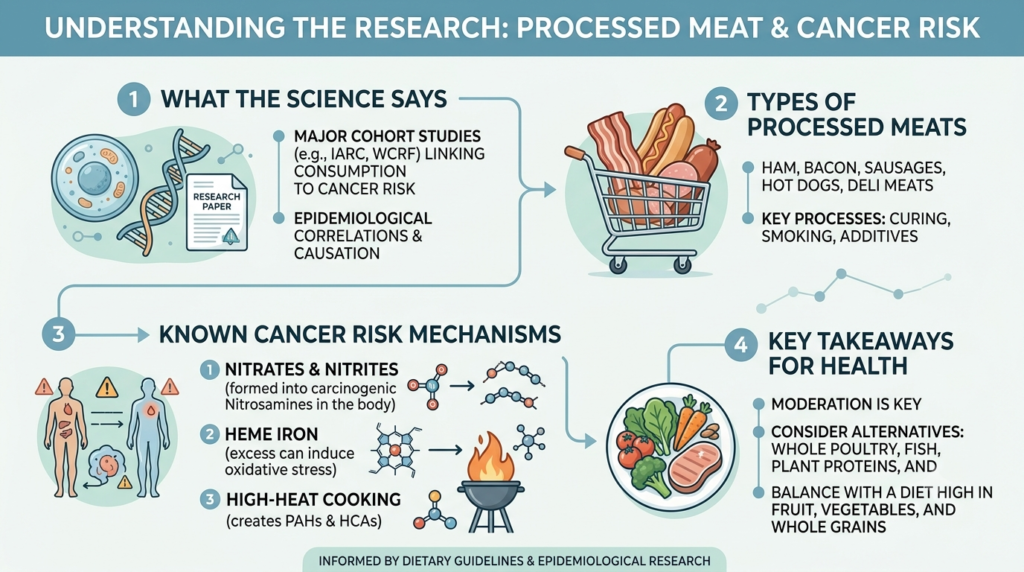
Why Processed Meat Remains a Public Health Concern
The latest study builds upon years of scientific investigation into processed meat products.
In 2015, the World Health Organization and its cancer research arm, the International Agency for Research on Cancer classified processed meat as carcinogenic to humans based primarily on evidence linking it to colorectal cancer.
Processed meats typically include:
- Ham
- Bacon
- Sausages
- Hot dogs
- Salami
- Pepperoni
- Deli meats
- Cured and smoked products
The concern largely centers around processing methods and ingredients rather than meat itself.
Potential contributors include:
Nitrites and Nitrates
Commonly used curing agents can form nitrosamines during processing, cooking, or digestion. Certain nitrosamines have been associated with increased cancer risk.
High Sodium Levels
Many processed meats contain sodium concentrations several times higher than fresh meat products. Excessive sodium intake has been linked to stomach irritation and gastric cancer risk.
Smoking and High-Temperature Processing
Smoking and thermal processing can generate potentially harmful compounds such as:
- Polycyclic aromatic hydrocarbons (PAHs)
- Heterocyclic amines (HCAs)
Oxidative Stress
Processed products often contain oxidized fats and proteins, which may contribute to inflammation and cellular damage.
Consumer Perceptions Are Already Shifting
The processed meat category has faced years of declining health perceptions.
Today’s consumers increasingly seek:
- Clean-label foods
- Reduced sodium products
- Nitrate-free options
- Natural ingredients
- High-protein functional foods
- Minimally processed products
Market research consistently shows that younger consumers, particularly Millennials and Generation Z, are more likely to scrutinize ingredient labels and health claims than previous generations.
For many shoppers, processed meat remains desirable for convenience and taste, but concerns around long-term health effects continue to influence purchasing decisions.
What the Industry Can Do to Address the Challenge
Rather than viewing studies like EPIC as threats, industry leaders can treat them as catalysts for innovation.
Several practical strategies are already emerging.
1. Reduce Sodium Without Sacrificing Safety
Excess sodium remains one of the largest nutritional concerns in processed meat.
Manufacturers can pursue:
- Gradual sodium reduction programs
- Potassium-based salt replacements
- Flavor-enhancing yeast extracts
- Fermentation-derived flavor systems
- Umami-rich natural ingredients
Studies have shown consumers often fail to detect modest sodium reductions when implemented gradually.
2. Minimize Synthetic Nitrites and Nitrates
Many companies have already introduced:
- Uncured products
- Naturally cured meats
- Vegetable-derived nitrate systems
- Fermentation-assisted preservation technologies
Future innovations may include:
- Precision fermentation preservatives
- Natural antimicrobial cultures
- Protective bacterial cultures
- Plant-derived antioxidant systems
Reducing reliance on synthetic curing agents could improve consumer confidence while maintaining food safety.
3. Incorporate Antioxidant Ingredients
Oxidative reactions contribute to product degradation and potentially harmful compound formation.
Manufacturers are increasingly exploring:
- Rosemary extract
- Green tea extract
- Acerola cherry extract
- Citrus extracts
- Polyphenol-rich botanical ingredients
These ingredients may improve shelf life while supporting cleaner labels.
4. Develop Hybrid Protein Products
One of the most promising innovation areas involves combining meat with plant-based ingredients.
Hybrid products can deliver:
- Lower saturated fat
- Reduced calorie density
- Higher fiber content
- Lower environmental impact
- Improved nutritional profiles
Examples include:
- Beef-mushroom burgers
- Chicken-legume sausages
- Pork-oat breakfast patties
- Meat products fortified with vegetables
Consumers often accept hybrid products more readily than fully plant-based alternatives.
5. Increase Protein Quality While Reducing Processing Intensity
Manufacturers can shift toward:
- Whole-muscle products
- Lightly processed meats
- Air-dried products
- Fermented meats with fewer additives
- Premium minimally processed offerings
Products that emphasize simplicity and transparency may resonate strongly with health-conscious consumers.
6. Fortify Products With Beneficial Nutrients
Future processed meat products may include:
- Dietary fiber
- Omega-3 fatty acids
- Prebiotics
- Probiotics
- Vitamins and minerals
This approach moves products from being perceived solely as convenient proteins toward functional nutrition platforms.
7. Improve Consumer Education
Many consumers remain confused about the differences between:
- Fresh meat
- Processed meat
- Cured meat
- Naturally cured products
- Nitrate-free products
Clear communication and transparent labeling can help build trust and support informed consumption decisions.
Opportunities for Ingredient Suppliers
The study also presents significant opportunities for ingredient manufacturers.
Demand is likely to accelerate for:
- Natural preservatives
- Fermentation technologies
- Functional fibers
- Salt-reduction systems
- Antioxidant ingredients
- Clean-label curing solutions
- Plant-protein inclusion systems
Companies capable of delivering measurable health improvements without compromising taste, safety, or affordability will be well-positioned for growth.
The Future of Processed Meat May Be Health-Focused
The latest EPIC findings do not suggest that consumers will abandon processed meat altogether. Rather, they reinforce a broader trend already reshaping the global protein industry: consumers increasingly expect products that balance convenience, affordability, taste, and health.
For processors, the challenge is no longer simply producing safe and flavorful products. The next generation of processed meat innovation will likely focus on reducing potentially harmful compounds, lowering sodium, incorporating functional ingredients, and adopting cleaner processing methods.
Companies that embrace these changes proactively may transform a growing public health concern into a powerful opportunity for product differentiation, consumer trust, and long-term category growth.
As scientific evidence continues to evolve, the most successful manufacturers will be those that position themselves not merely as producers of processed meat, but as providers of healthier protein solutions that align with modern consumer expectations.

