

The definition of “convenience” in the consumer foodservice sector is undergoing a profound transformation. Driven by lingering economic pressures and shifting consumer confidence, the decisions surrounding dining out, takeaway, and home cooking have become increasingly deliberate. For foodservice operators, understanding these nuanced generational behaviors is essential for tailoring value propositions and operational strategies in the current landscape.
Generational Drivers of Convenience
Euromonitor’s 2026 Lifestyles Survey reveals a clear divergence in how different age cohorts balance efficiency, social experience, and budget constraints.
Gen Z: Efficiency Meets Socialization
For Gen Z, convenience is synonymous with flexibility and casual, social experiences.
- High-Frequency Usage: 78% of Gen Z consumers purchase takeaway food, and 68% utilize home delivery at least once a week.
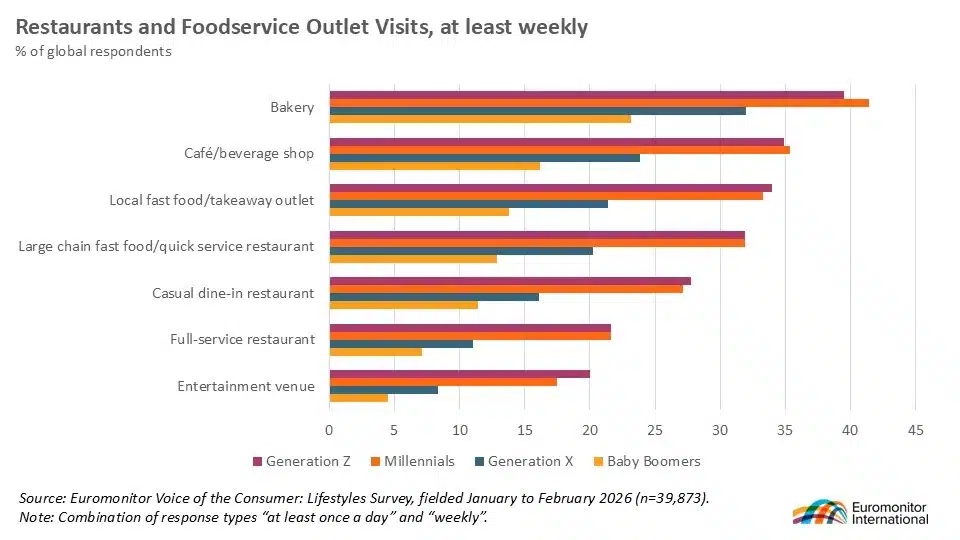
- “Affordable Treats”: This demographic frequent fast-casual outlets, convenience stores, and cafés that offer high-value, efficient dining options.
- Optimistic Growth: Gen Z remains the most bullish on restaurant visits, with 29% intending to increase their dining-out frequency in 2026, significantly higher than the 21% global average.
Millennials: The Hybrid Demand
Millennials continue to prioritize time-saving solutions, positioning them as the primary users of hybrid selling models that integrate home delivery and takeaway channels.
- Health and Wellness: As health-consciousness rises, there is a clear opportunity for operators to provide quick, healthier alternatives—specifically focusing on low-sugar, protein-rich, and portion-controlled meals.
- Intentional Dining: Despite household budget limitations, 61% of millennials report that their casual dine-in visits have remained steady, viewing these as intentional, meaningful occasions rather than impulsive spending.
Gen X and Baby Boomers: The Value of Tradition
Older cohorts are redefining convenience through home-centric habits and meaningful dining experiences.
- Home Cooking Priority: Home preparation remains dominant; 38% of baby boomers and 35% of Gen X report cooking or baking almost every day.
- Outlet Preferences: Bakeries stand out as the most visited foodservice outlet for these generations.
- Experience Over Frequency: While their frequency of visiting dine-in restaurants is lower than younger cohorts, these groups place a premium on dining experiences that are tied to specific, meaningful occasions.
Strategic Takeaways for Foodservice Operators
To succeed in 2026, operators must align their service models with these generational preferences:
- Invest in Hybrid Models: As millennials and Gen Z continue to demand seamless integration between delivery and takeaway, operators must prioritize omnichannel digital infrastructure.
- Product Innovation: Operators targeting the millennial segment should leverage the trend toward “healthier convenience” by reformulating quick-service menus to include functional, portion-conscious options.
- Experience-Led Dining: For older demographics, marketing efforts should focus on “the occasion.” Emphasizing quality, atmosphere, and service can capture the value-driven dining occasions that Gen X and baby boomers prioritize.
Frequently Asked Questions (FAQ)
1. How do Gen Z and millennials differ in their foodservice usage? While both prioritize convenience, Gen Z focuses on social, fast-casual “affordable treats” and is the most likely cohort to increase restaurant visits. Millennials are the top users of hybrid delivery/takeaway formats and prioritize healthier, functional ingredients.
2. Is home cooking declining in 2026? Not across all demographics. Gen X and baby boomers show a strong commitment to daily home cooking, identifying it as a preferred form of convenience.
3. What role does “value” play in foodservice decisions this year? Economic pressure has made spending more deliberate. Consumers across all generations are reassessing discretionary income, leading them to choose foodservice options that provide either high-utility convenience or meaningful, high-quality experiences.
Sources & References
- Analysis: Chart of the Month: Re-defining Convenience in Consumer Foodservice (Ferolla, 2026).
- Industry Briefing: In Real Life: The Unique Lure of Physical Experience (Euromonitor International).
- Consumer Insights: World Cup Effects on Consumer Foodservice in Mexico and the US (Euromonitor International).

