

On January 7, 2026, U.S. Health and Human Services Secretary Robert F. Kennedy Jr. unveiled a dramatic overhaul of the country’s national nutrition advice — including the reintroduction of a revised food pyramid as part of the 2025–2030 Dietary Guidelines for Americans. This new model departs sharply from decades of dietary recommendations and aims to reshape what Americans should eat for better health.
What Is the New Food Pyramid?
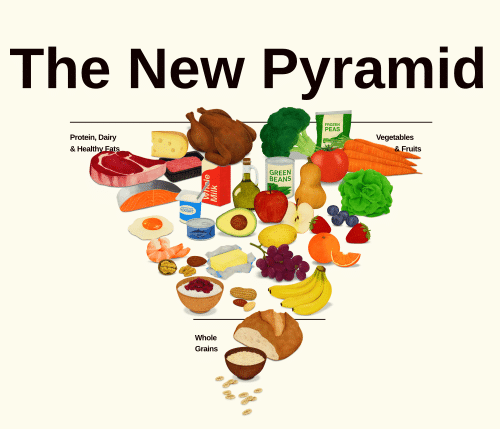
The revised food pyramid — described by Kennedy and other officials as an “upside-down” food pyramid — emphasizes real, whole foods and reorganizes food groups based on what the administration now considers optimal for health:
- Top Priority:
- High-quality protein: red meat, poultry, eggs, seafood
- Full-fat dairy: whole milk, cheese, yogurt
- Vegetables and fruits
- Healthy fats: olive oil, nuts, seeds
- Lower Priority:
- Whole grains (placed at the bottom)
- Highly processed foods, refined carbohydrates, and added sugars (strongly discouraged)
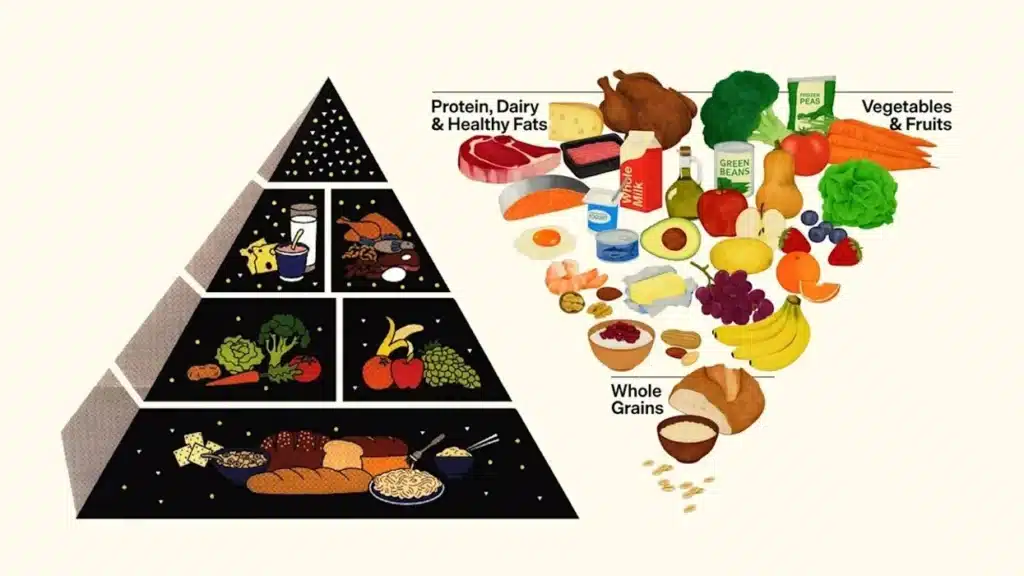
This design literally flips the traditional pyramid on its head compared with earlier government guidance that once placed grains and carbohydrates at the base.
Secretary Kennedy said the guidance reflects a focus on eating “real food” and reducing the nation’s reliance on ultra-processed products tied to obesity and chronic diseases.
Key Elements of the New Guidelines
1. Protein and Healthy Fats Take Center Stage
The new pyramid gives greater weight to animal-based proteins and healthy fats. Unlike past guidelines that recommended low-fat or fat-free dairy, the 2025–2030 version promotes full-fat dairy and fats like butter and beef tallow as acceptable options.
2. Reduced Sugars and Processed Foods
One of the most notable shifts is the strong stance against added sugars and ultra-processed foods. The document suggests that no amount of added sugar is considered part of a healthy diet, urging Americans to eliminate sugary drinks and snacks.
3. Carbohydrates Recast
Whole grains are still recommended but are positioned at the bottom of the pyramid — a stark contrast to their former base position in older models. Refined carbohydrates and processed grain products are discouraged.
4. Protein Recommendations Increased
The guidelines recommend a higher daily protein intake compared with previous standards, suggesting between 1.2 to 1.6 grams of protein per kilogram of body weight — signaling an emphasis on protein-rich meals.
Why This Matters to Americans
These federal dietary guidelines influence a wide range of programs and policies, including:
- School meals and nutrition standards
- Federal food assistance programs
- Public health advice used by clinicians and dietitians
As such, the revised pyramid could reshape what millions of Americans eat daily and how public nutrition programs are structured.
Reactions from Experts and Critics
The new guidelines and inverted pyramid have generated mixed reactions:
Supporters Say:
- Emphasizing “real food” and whole foods can reduce dependence on processed products.
- Recognizing protein and healthy fats aligns with some modern nutrition research.
Critics Warn:
- Some nutrition scientists argue that prioritizing red meat and saturated fats contradicts longstanding evidence linking these foods to cardiovascular disease.
- Others believe parts of the pyramid — especially the positioning of meat and full-fat dairy — could increase health risks if not balanced with plant-based options.
- The inverted design has also drawn criticism for oversimplifying complex nutrition science.
Conclusion: A New Chapter in American Nutrition
Robert F. Kennedy Jr.’s introduction of an upside-down food pyramid represents one of the most significant shifts in U.S. dietary guidance in decades. By flipping long-held nutritional ideas — especially around protein, fats, and processed foods — the new pyramid is likely to remain a focal point of debate among health professionals, policymakers, and the public alike.
Whether it will improve Americans’ health outcomes remains to be seen, but one thing is clear: the nation’s approach to nutrition has entered a bold and controversial new chapter.
Additional References for Further Reading
- Harvard T.H. Chan School of Public Health – Nutrition Source
https://www.hsph.harvard.edu/nutritionsource/ - American Heart Association – Dietary Fats & Cardiovascular Health
https://www.heart.org/en/healthy-living/healthy-eating - World Health Organization – Healthy Diet Factsheet
https://www.who.int/news-room/fact-sheets/detail/healthy-diet - National Institutes of Health (NIH) – Dietary Patterns Research
https://www.nhlbi.nih.gov/health-topics/dash-eating-plan
FAQ: RFK Jr.’s New American Food Pyramid
What is different about the new American food pyramid?
The new pyramid reverses traditional guidance by prioritizing protein, healthy fats, fruits, and vegetables, while placing grains—especially refined carbohydrates—at the bottom.
Does the new food pyramid eliminate carbohydrates?
No. Whole grains are still included, but they are de-emphasized compared with earlier dietary models. Refined carbohydrates and added sugars are strongly discouraged.
Why does the pyramid emphasize protein and full-fat dairy?
The guidelines argue that higher protein intake supports metabolic health, muscle preservation, and satiety, while full-fat dairy is considered less processed and more nutritionally complete.
Is red meat encouraged under the new guidelines?
Red meat is permitted and positioned higher than before, but officials stress moderation and quality sourcing rather than unlimited consumption.
Are nutrition experts supportive of the changes?
Opinions are divided. Some welcome the move away from ultra-processed foods, while others caution that higher saturated fat intake may raise long-term cardiovascular risks.
Will this affect school lunches and federal food programs?
Yes. U.S. dietary guidelines directly influence school meal standards, military food programs, and federal nutrition assistance policies.
Related Analysis: View Previous Industry Report
