

Tyson Foods is one of the most powerful and controversial companies in the global food system. What began as a small, Depression-era poultry operation in rural Arkansas has grown into one of the world’s largest meat producers, supplying chicken, beef, pork, and prepared foods to supermarkets, restaurants, and institutions across more than 100 countries.
The history of Tyson Foods is not just a business success story. It is a window into how industrial agriculture evolved, how food became cheaper and more abundant, and how consolidation reshaped the global meat industry. It is also a story marked by recurring scandals, labor disputes, environmental concerns, and growing public scrutiny.
This is the complete story of Tyson Foods — its origins, expansion, acquisitions, controversies, brands, and what the future may hold as the company enters the mid-2020s under intense pressure from regulators, activists, workers, and consumers.
Tyson Foods: A Chronological History of Growth, Power, and Controversy…
1935
Founded in Arkansas
John W. Tyson starts hauling chickens during the Great Depression, laying the foundation for what would become Tyson Foods.
1940s–1950s
Expansion Into Poultry Processing
Tyson moves beyond transportation into poultry processing, feed mills, and hatcheries, beginning early vertical integration.
1963
Tyson Foods Goes Public
The company’s IPO provides capital for nationwide expansion and modern processing facilities.
1970s
Contract Farming Model Takes Hold
Tyson pioneers large-scale poultry contract farming, allowing rapid growth while shifting production risk to independent farmers.
1980s–1990s
Global Expansion and Export Growth
Tyson becomes a dominant U.S. poultry producer and expands exports to international markets.
2001
IBP Acquisition Transforms Tyson
Tyson acquires IBP (Iowa Beef Processors), instantly becoming a major beef and pork processor and a multi-protein giant.
2014
Hillshire Brands Deal
Tyson acquires Hillshire Brands, expanding into prepared foods and well-known consumer brands.
2016–2019
Shift Toward Value-Added Foods
The company focuses on branded, prepared foods to reduce exposure to volatile commodity markets.
2020
COVID-19 Plant Outbreaks & Controversy
Tyson faces lawsuits, investigations, and public backlash over worker safety during widespread COVID-19 outbreaks in meatpacking plants.
2021
Internal Scandals Surface
Reports emerge alleging managers at a Tyson plant ran betting pools on COVID infection rates among workers.
2022–2023
Child Labor Investigations
Federal investigations reveal underage workers employed through third-party contractors at meat processing facilities, intensifying scrutiny of oversight practices.
2023–2024
Environmental & Greenwashing Lawsuits
Tyson faces legal challenges related to pollution, wastewater, and climate-related marketing claims, forcing changes to sustainability messaging.
2024
Plant Closures and Capacity Cuts
Tyson shuts down or idles several processing plants to manage costs amid market volatility and labor challenges.
2025
Tyson Foods Today
Tyson reports stronger performance in chicken and prepared foods, ongoing pressure in beef, and continued scrutiny over labor, environmental, and regulatory issues.
The Origins of Tyson Foods: From Chicken Hauler to Processor
Tyson Foods was founded in 1935 by John W. Tyson in Springdale, Arkansas. During the Great Depression, Tyson began hauling chickens for local farmers, transporting live birds to markets in nearby cities. At the time, poultry was a fragmented, small-scale business dominated by independent farmers and traders.
Recognizing the inefficiencies in the supply chain, Tyson gradually expanded beyond transportation. By the 1940s and 1950s, the company began investing in processing facilities, feed mills, and hatcheries. This move laid the foundation for what would later become one of Tyson’s defining strengths: vertical integration.
By the mid-20th century, Tyson was no longer simply moving chickens — it was increasingly controlling how they were bred, fed, processed, and distributed.
Going Public and Scaling Up (1960s–1970s)
In 1963, Tyson Foods went public, providing the capital needed to expand processing capacity and modernize operations. The company grew rapidly during a period when Americans were consuming more meat and poultry than ever before, driven by population growth, rising incomes, and the expansion of supermarkets and fast-food chains.
During the 1970s, Tyson helped pioneer the contract farming system that would come to dominate the poultry industry. Under this model, independent farmers raise chickens owned by Tyson under strict contractual terms. Tyson supplies chicks, feed, and veterinary guidelines, while farmers provide housing, labor, and utilities.
This system allowed Tyson to expand production without owning farms outright, while shifting much of the financial risk to growers. It also enabled massive scaling — a crucial advantage as demand for cheap protein surged.
Expansion Beyond Chicken: The Protein Giant Emerges (1980s–1990s)
For decades, Tyson was best known as a poultry company. But by the late 20th century, management recognized the risks of relying too heavily on one protein category. Volatile feed costs, disease outbreaks, and changing consumer preferences made diversification essential.
During the 1980s and 1990s, Tyson invested heavily in exports and international markets while laying the groundwork for expansion into beef and pork. By the end of the 1990s, Tyson was a dominant force in U.S. chicken production — but its most transformative move was still to come.
The IBP Acquisition: A Turning Point in Tyson Foods History
In 2001, Tyson Foods acquired IBP (Iowa Beef Processors), one of the largest beef and pork processors in the world. The deal fundamentally reshaped the company.
With IBP, Tyson instantly became a major player in beef and pork, transforming from a poultry-focused firm into a multi-protein powerhouse. The acquisition also gave Tyson enormous leverage over the U.S. meat supply, placing it alongside rivals such as JBS and Cargill at the top of the industry.
This move marked a new era in Tyson Foods history — one defined by scale, consolidation, and global influence.
Prepared Foods and Brand Power: The Hillshire Deal
In 2014, Tyson made another strategic leap by acquiring Hillshire Brands. The deal brought well-known consumer brands into Tyson’s portfolio and significantly expanded its prepared foods business.
Prepared foods offered higher margins than raw meat processing and reduced exposure to commodity price swings. Instead of selling undifferentiated protein, Tyson could now sell branded meals, snacks, and packaged products directly to consumers.
This shift signaled Tyson’s ambition to evolve from a commodity processor into a branded food company — a transition that continues today.
How Tyson Foods Makes Money
Tyson Foods operates across multiple segments of the meat and food supply chain:
- Chicken: The company’s historical core, spanning fresh, frozen, and value-added products.
- Beef: One of the largest beef-processing operations in the United States, though highly sensitive to cattle supply and pricing cycles.
- Pork: A smaller but strategically important segment.
- Prepared Foods: Branded and value-added products that generate higher margins and brand loyalty.
Tyson’s vertical integration allows it to control costs, logistics, and quality across much of the supply chain. However, this same structure has drawn criticism for concentrating power and limiting transparency.
Tyson Foods Processing Plants and Workforce
Tyson operates dozens of processing plants across the United States and abroad. These facilities process millions of animals each week, supplying retailers, restaurants, and foodservice operators.
The workforce behind this scale has long been a point of contention. Meatpacking is physically demanding, dangerous, and historically underpaid. Over the years, Tyson has faced repeated allegations related to workplace safety, labor conditions, and worker treatment.
The COVID-19 pandemic brought these issues into sharp focus.
COVID-19 and Worker Safety Controversies
In 2020, Tyson Foods became a focal point of controversy during the COVID-19 pandemic. Meatpacking plants experienced widespread outbreaks as workers labored in close quarters.
Tyson executives warned publicly that food shortages were possible if plants shut down, while critics accused the company of prioritizing production over worker safety. Lawsuits, investigations, and damning reports followed, including allegations that managers organized betting pools on infection rates at certain facilities.
Although Tyson implemented safety measures and paid settlements, the episode significantly damaged public trust and remains one of the most searched aspects of the company’s recent history.
Child Labor Allegations and Contractor Oversight
In the 2020s, Tyson again faced scrutiny after investigations revealed that underage workers had been employed at some processing facilities through third-party contractors. While Tyson stated that it did not knowingly employ child labor and blamed contractors, the revelations raised serious questions about oversight in its supply chain.
The controversy reinforced concerns about how outsourcing and contracting can obscure accountability in large industrial operations.
Environmental Impact and Sustainability Claims
Meat production is resource-intensive, and Tyson Foods has been repeatedly criticized for its environmental footprint. Investigations and environmental groups have accused the company of contributing to water pollution through wastewater discharges and agricultural runoff linked to livestock production.
At the same time, Tyson has publicly committed to sustainability goals, including emissions reductions and improved environmental practices. Some of these claims have been challenged in court, leading to accusations of greenwashing and forcing the company to modify its messaging.
The tension between sustainability promises and industrial-scale meat production remains a defining challenge for Tyson’s future.
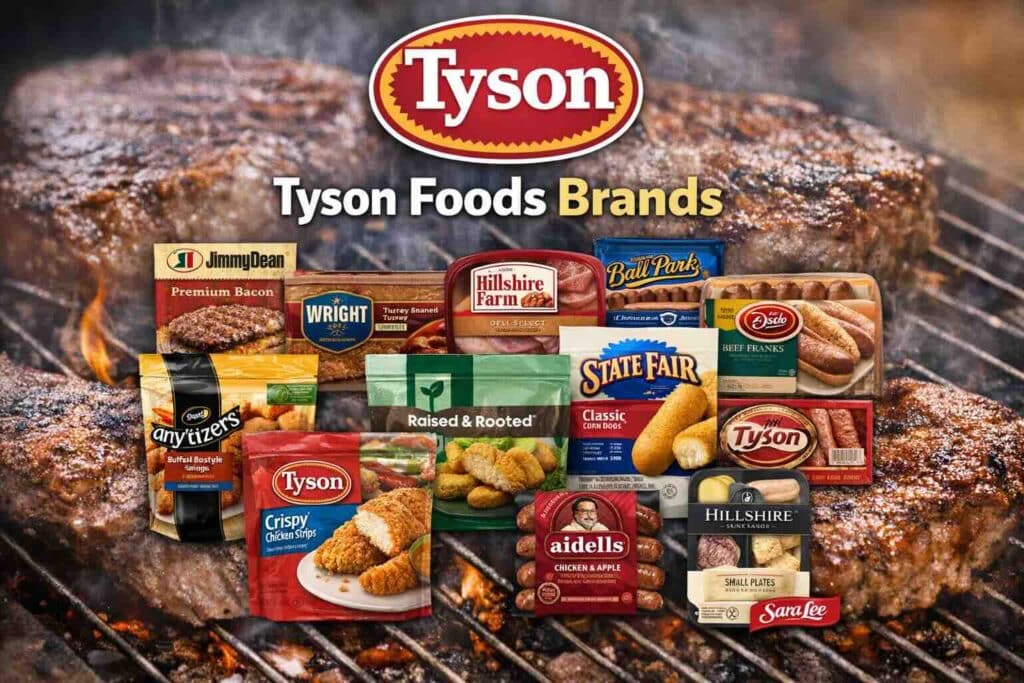
Tyson Foods Brands and Consumer Products
Today, Tyson Foods owns and markets a wide range of brands across retail and foodservice channels. These include fresh meat, frozen foods, ready-to-eat meals, and snacks.
The company’s branded products have helped it remain visible to consumers even as many shoppers become increasingly concerned about food sourcing, animal welfare, and corporate ethics.
Search interest in terms like “Tyson chicken review” and “Tyson beef” reflects ongoing consumer curiosity — and skepticism — about product quality and safety.
Financial Performance and Tyson Foods in 2025
As of 2025, Tyson Foods remains profitable but faces uneven performance across its segments. Chicken and prepared foods have shown relative strength, while beef has struggled due to cattle shortages and high input costs.
The company continues to close or idle certain processing plants to manage capacity, a move that often sparks local controversy and political backlash. These shutdowns highlight the social and economic influence Tyson wields in rural communities dependent on meat processing jobs.
Investors and analysts remain focused on whether Tyson can successfully pivot further toward value-added foods while managing legal, regulatory, and reputational risks.
Challenges Facing Tyson Foods
Tyson’s size is both its greatest strength and its greatest vulnerability. Key challenges include:
- Regulatory scrutiny over labor, competition, and environmental practices
- Reputational damage from recurring scandals
- Volatility in livestock and feed markets
- Changing consumer attitudes toward meat consumption
- Pressure to deliver credible sustainability outcomes
As plant-based alternatives, lab-grown proteins, and dietary shifts gain attention, Tyson must adapt without undermining its core business.
The Future of Tyson Foods
The future of Tyson Foods will likely be defined by balance: balancing scale with accountability, efficiency with ethics, and profitability with sustainability.
The company is investing in automation, data analytics, and alternative proteins while continuing to defend its core meat operations. Whether these efforts will be enough to satisfy regulators, consumers, and communities remains uncertain.
What is clear is that Tyson Foods will continue to shape how the world eats — and how the global food system is debated — for years to come.
Tyson Foods history is ultimately the history of modern industrial meat production itself: powerful, efficient, deeply controversial, and impossible to ignore.
Related: Tyson Foods Under Fire: Labor, Environmental, and Corporate Controversies Explained
Tyson Foods: A Chronological History of Growth, Power, and Controversy…
When was Tyson Foods founded?
Tyson Foods was founded in 1935 by John W. Tyson in Arkansas, beginning as a small poultry hauler.
What major companies has Tyson acquired?
Tyson’s major moves include the acquisition of IBP (early 2000s) to enter beef and the Hillshire Brands merger (2014) which expanded its consumer brands and prepared foods.
Has Tyson been involved in scandals?
Yes — the company has faced controversies including COVID-19 workplace issues, child-labor related investigations tied to contractors, environmental pollution reporting, and legal challenges over marketing claims.
What is Tyson’s outlook for 2025?
In 2025 Tyson showed modest sales growth in chicken and prepared foods while beef remains a challenge. Official FY2025 results and guidance indicate modest revenue growth alongside margin pressure in specific segments.
Sources Table
| Topic | Source | Publisher | URL |
|---|---|---|---|
| Company founding & history | Tyson Foods – Our History | Tyson Foods (Official) | https://www.tysonfoods.com/who-we-are/history |
| Early poultry industry & Arkansas roots | Tyson Foods background | Encyclopedia Britannica | https://www.britannica.com/topic/Tyson-Foods |
| Going public & early expansion | Company profile | Bloomberg | https://www.bloomberg.com/profile/company/TSN:US |
| IBP acquisition (2001) | Tyson completes IBP acquisition | New York Times | https://www.nytimes.com/2001/02/02/business/company-news-tyson-foods-completes-ibp-acquisition.html |
| IBP deal impact | Tyson–IBP merger analysis | Washington Post | https://www.washingtonpost.com/archive/business/2001/01/03/tyson-ibp-meat-merger/ |
| Hillshire Brands acquisition (2014) | Tyson to buy Hillshire Brands | Reuters | https://www.reuters.com/article/us-hillshire-tyson-idUSKBN0F11KQ |
| Shift to prepared foods | Tyson Foods strategic shift | Harvard Business Review | https://hbr.org/2016/05/why-tyson-is-buying-hillshire |
| Contract farming model | Poultry contract farming explained | USDA | https://www.usda.gov/sites/default/files/documents/contract-farming.pdf |
| Farmer power imbalance | Chicken contract farming risks | The Guardian | https://www.theguardian.com/environment/2019/jul/19/chicken-farming-tyson-perdue |
| Tyson processing plants overview | Tyson Foods operations | Tyson Foods | https://www.tysonfoods.com/our-business |
| COVID-19 meat plant outbreaks | Meatpacking COVID outbreaks | CDC | https://www.cdc.gov/niosh/topics/covid19/food-processing.html |
| COVID lawsuits & safety failures | Tyson COVID worker safety | Reuters | https://www.reuters.com/article/us-health-coronavirus-tyson-idUSKBN23F2Z4 |
| Betting pool scandal | Tyson managers betting scandal | Washington Post | https://www.washingtonpost.com/business/2021/11/19/tyson-betting-covid-lawsuit/ |
| Child labor allegations | Child labor in meat plants | New York Times | https://www.nytimes.com/2023/02/25/us/child-labor-meatpacking.html |
| Child labor DOJ investigation | Child labor enforcement | U.S. Department of Labor | https://www.dol.gov/newsroom/releases/whd/whd20230217 |
| Environmental pollution reports | Tyson pollution investigation | Environmental Working Group | https://www.ewg.org/news-insights/news/tyson-foods-pollution |
| Water pollution impacts | Meatpacking wastewater | ProPublica | https://www.propublica.org/article/meatpacking-pollution |
| Greenwashing lawsuit | Tyson climate claims challenged | Reuters | https://www.reuters.com/world/us/tyson-foods-agrees-drop-climate-friendly-claims-2024-01-18/ |
| Antitrust & price fixing | Meat industry price fixing | U.S. Department of Justice | https://www.justice.gov/opa/pr |
| Tyson Foods financials | Annual & quarterly reports | Tyson Foods Investor Relations | https://investors.tysonfoods.com |
| Tyson Foods 2025 outlook | Earnings & guidance | Reuters | https://www.reuters.com/companies/TSN.N |
| Beef supply & cattle shortages | U.S. beef supply trends | USDA ERS | https://www.ers.usda.gov/topics/animal-products/cattle-beef/ |
| Plant closures & shutdowns | Tyson plant closures | CNBC | https://www.cnbc.com/tyson-foods/ |
| Lexington, Nebraska plant | Tyson Lexington operations | Local reporting (AP News) | https://apnews.com/article/tyson-foods-nebraska |
| Consumer product safety | USDA meat safety | USDA FSIS | https://www.fsis.usda.gov/food-safety |
| Industry concentration | Big Meat consolidation | Open Markets Institute | https://openmarketsinstitute.org/ |
Additional Resources & References
For readers who want to explore Tyson Foods and the global meat industry in greater depth, the following resources provide primary data, investigative reporting, regulatory insights, and historical context:
- Tyson Foods – Official Company History & Investor Reports
https://www.tysonfoods.com
https://investors.tysonfoods.com - Reuters Coverage of Tyson Foods (earnings, lawsuits, labor, sustainability)
https://www.reuters.com/companies/TSN.N - U.S. Department of Labor – Child Labor Enforcement
https://www.dol.gov/agencies/whd/child-labor - U.S. Department of Agriculture (USDA) – Poultry, beef, and contract farming analysis
https://www.usda.gov
https://www.ers.usda.gov - Centers for Disease Control and Prevention (CDC) – COVID-19 meatpacking investigations
https://www.cdc.gov/niosh - Environmental Working Group (EWG) – Industrial agriculture pollution reports
https://www.ewg.org - ProPublica Investigations – Meatpacking labor and environmental accountability
https://www.propublica.org - The New York Times – Long-form investigations into labor, child labor, and food safety
https://www.nytimes.com - Washington Post – Corporate accountability and meat industry reporting
https://www.washingtonpost.com - Harvard Business Review – Strategy analysis of Tyson’s acquisitions and business model
https://hbr.org - Open Markets Institute – Research on meat industry consolidation and antitrust
https://openmarketsinstitute.org
Editorial Note
This article draws on publicly available reporting, regulatory filings, investigative journalism, and company disclosures to provide a comprehensive overview of Tyson Foods’ history, operations, controversies, and outlook. All sources are cited for transparency and further reading.
Related Analysis: View Previous Industry Report

