

The global food and beverage industry is undergoing a seismic shift as Artificial Intelligence (AI) and Precision Wellness move from experimental concepts to everyday household realities. As we enter 2026, the convergence of volatile trade policies and a surge in “conscious consumerism” is forcing a total reinvention of how food is produced, priced, and perceived. Having tracked global trade shifts and agricultural technology for over 15 years, I’ve seen many “fads” come and go, but the current structural transformation of the supply chain is unlike anything since the industrialization of the mid-20th century.
Insights
- Hyper-Personalization is the New Standard: Consumers are ditching “one-size-fits-all” diets for functional foods tailored to gut health and metabolic data.
- Why it matters: This shift is moving the industry away from mass production toward high-margin, specialized product lines.
- The Rise of “Resilient Sourcing”: To combat new 10-25% tariffs and climate disruptions, brands are abandoning global-only supply chains in favor of localized, “diversified” networks.
- Why it matters: This could lead to higher short-term prices but ensures long-term food security and lower Scope 3 emissions.
- AI-Enabled Transparency: 36% of consumers now use AI assistants to scan labels for “clean” ingredients and ethical sourcing.
- Why it matters: Brands without verifiable, digital-first transparency will lose the “Trust Economy” almost instantly.
Deep Dive Analysis: The Shift Toward Precision and Resilience
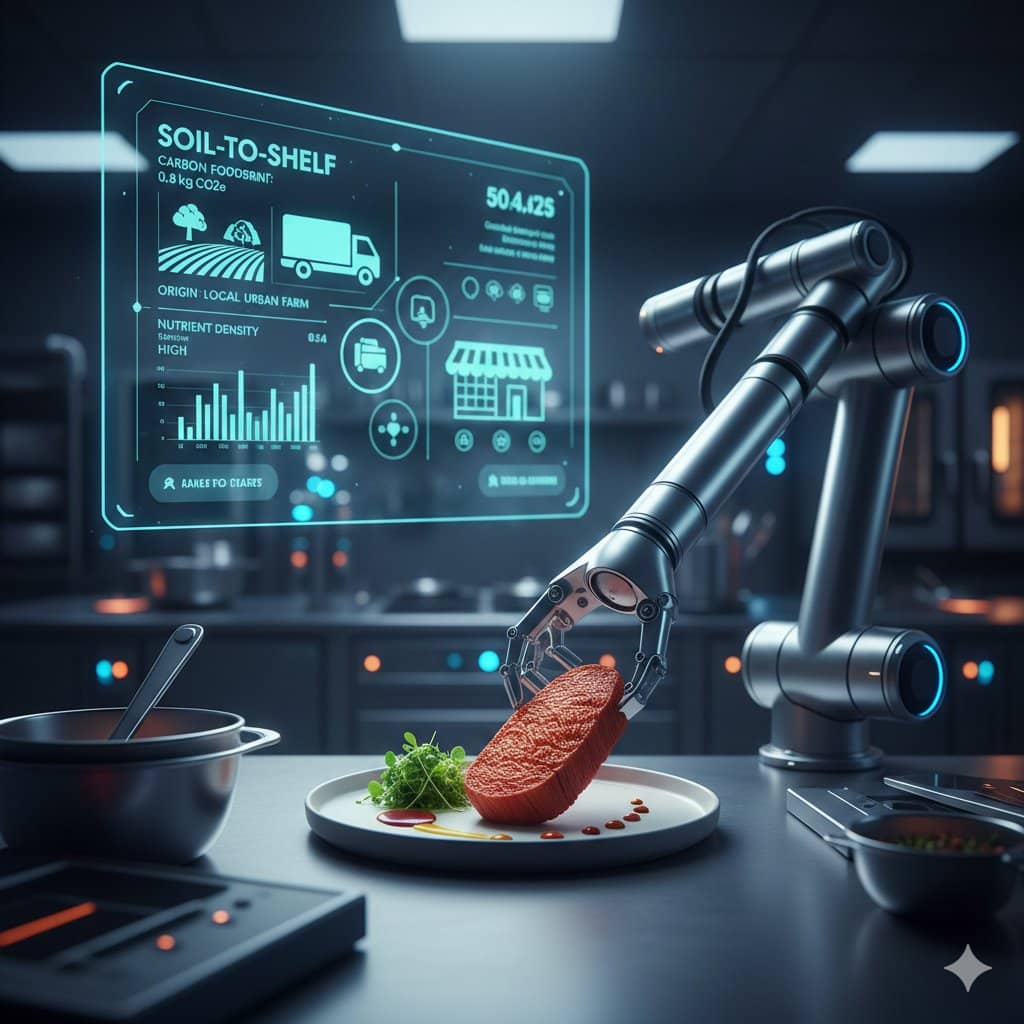
The industry is currently navigating a period of Digital Transformation that prioritizes efficiency over mere scale. We are seeing a historic move away from traditional animal proteins toward Cellular Agriculture and Molecular Farming, driven by a plant-based market projected to hit $77.9 billion this year. Unlike the “Veggie Burger” boom of years past, today’s innovation is powered by 3D Food Printing and Biotechnology, which mirror the sensory experience of meat with surgical precision.
Simultaneously, the “cost of living” crisis has evolved into a “value-per-nutrient” mindset. With global inflation stabilizing but food prices remaining sensitive to Geographic Trade Network rigidities, the industry is witnessing a “Private Label Premium” trend. Retailers are no longer just offering cheap alternatives; they are using Predictive Analytics to launch high-quality, private-label functional foods that compete directly with legacy brands on both health benefits and price.
The 2025 Industry Impact Map
| Trend Category | 2024 State (Legacy) | 2025 State (Future) | Economic Impact |
| Protein Source | Plant-based mimics | Lab-grown & Hybrid | 15% increase in R&D spend |
| Supply Chain | Just-in-Time (Global) | Regional Diversification | Higher resilience; 5-10% price volatility |
| Health Focus | Generic “Low Fat/Sugar” | Gut Health & GLP-1 Support | Surge in “Precision Wellness” apps |
| Operations | Manual Labor Heavy | AI & Robotics Integration | 38% reduction in operational waste |
What This Means For You (H3)
For the average consumer, the most immediate change is the “Digital Nutritionist” in your pocket. Expect to see more products featuring Smart Labels that you can scan to see the exact farm of origin and the carbon cost of that specific item. If you are budget-conscious, look for Functional Staples—fortified grains and pulses—which are becoming the new battleground for value. Finally, don’t be surprised if your favorite local cafe starts offering “Bio-Individual” drinks like Matcha lattes boosted with adaptogens tailored to your reported stress levels.
What to Watch Next: The 6-Month Forecast
- GLP-1 “Companion” Foods: Expect a flood of new products specifically formulated to support people on weight-loss medications, focusing on muscle retention and digestive comfort.
- The “Tariff Pivot”: By mid-2026, many US and EU-based manufacturers will have completed their “near-shoring” efforts, potentially leading to a “Made Locally” marketing war.
- Automated Micro-Fulfillment: Watch for the rise of robotic kiosks in grocery stores that prepare fresh, customized meal kits on-demand, reducing packaging waste and labor costs simultaneously.
Expert Insights & Verified Data
- The Price Paradox: According to the World Bank’s October 2025 Commodity Markets Outlook, global food prices are projected to drop by 7% in 2025, yet consumer-facing prices remain high due to localized labor costs and the “Tariff Engineering” shifts mentioned above.
- Production Records: The FAO (Food and Agriculture Organization) recently confirmed that global cereal stocks are set to reach a record 925.5 million tons in the 2025/26 season, providing a much-needed buffer against climate-driven shortages.
- The AI Efficiency Gap: Recent data from Gartner suggests that while 95% of supply chains must react to change quickly, only 7% can execute decisions in real-time. This “Execution Gap” is where the industry leaders of 2026 will be defined.
Frequently Asked Questions (H2)
Will food prices go down in 2026?
While raw commodity prices are forecast to decline by 7% globally, the cost at the checkout may stay flat. This is due to increased investments in Regenerative Agriculture and the cost of restructuring supply chains to avoid new 2025 trade tariffs.
What is “Precision Wellness” in the food industry?
Precision Wellness refers to food and beverages designed for a “segment of one.” Using AI and microbiome data, companies are creating functional products that target specific health needs, such as GLP-1 support, gut health, and cognitive focus (e.g., the 2025 Matcha surge).
How is AI actually used in food production?
Beyond the hype, AI is now used for Predictive Demand Sensing (reducing waste by 35%) and Molecular Discovery, where algorithms find new plant-based proteins that mimic the exact texture of animal fats.
References & Further Reading
- FAO (2025). “Food Outlook: Biannual Report on Global Food Markets.”
- Gartner (2025). “Supply Chain 2025: From Pilots to Scaled AI Solutions.”
- World Bank Group (2025). “Commodity Markets Outlook: October Edition.”
- Innova Market Insights (2025). “Top Ten Food & Beverage Trends for 2026.”
Related Analysis: View Previous Industry Report

