
France is the largest wheat producer in the European Union, renowned for its high-quality wheat used in bread, pastries, and pasta. The country’s diverse climate, fertile soils, and advanced agricultural practices make it a global leader in wheat production. This article explores the largest wheat-producing regions in France, their contributions, and the innovations driving their success.
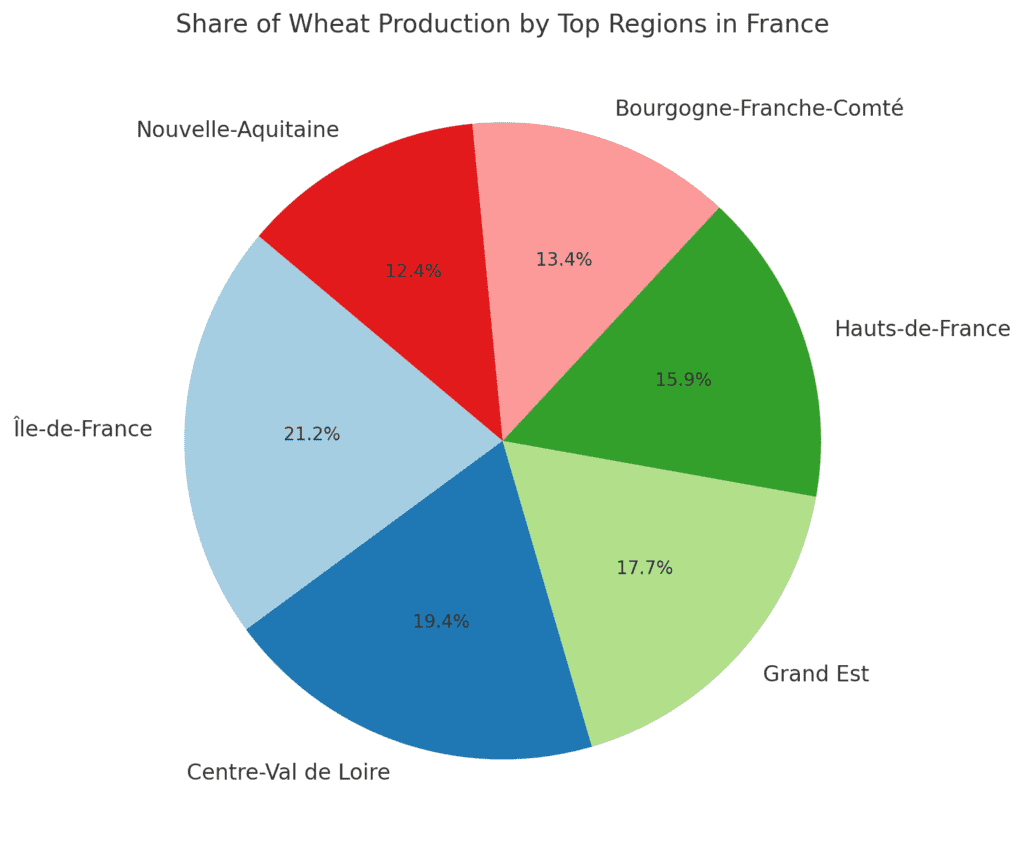
1. Île-de-France: A Breadbasket for France
Île-de-France is one of the top wheat-producing regions, benefiting from fertile soils and a mild climate.
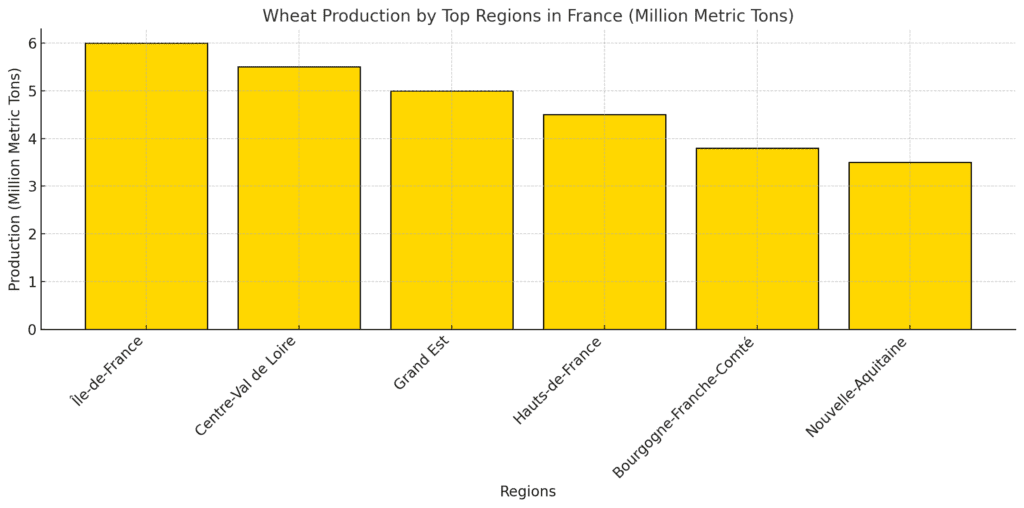
- Annual Production: Approximately 6 million metric tons.
- Key Characteristics: Rich loamy soils and advanced farming technologies.
- Innovations: Precision agriculture and environmentally friendly farming practices.
- Significance: Supplies high-quality wheat for bread and pastry production, catering to both domestic and international markets.
2. Centre-Val de Loire: A Leading Agricultural Region
Centre-Val de Loire is a major wheat-producing area, known for its extensive farmlands.
- Annual Production: Around 5.5 million metric tons.
- Key Characteristics: Fertile plains and optimal rainfall levels.
- Innovations: Adoption of crop rotation and high-yield wheat varieties.
- Significance: A crucial supplier for France’s flour mills and bakeries.
3. Grand Est: A Key Player in Wheat Exports
Grand Est is a prominent region for wheat production, with a strong focus on exports.
- Annual Production: Approximately 5 million metric tons.
- Key Characteristics: Favorable climate and proximity to export markets.
- Innovations: Modern storage facilities and advanced irrigation systems.
- Significance: A vital contributor to France’s wheat export capacity, particularly to Germany and Italy.
4. Hauts-de-France: A Northern Agricultural Powerhouse
Hauts-de-France is another leading region in wheat production, known for its advanced agricultural practices.
- Annual Production: Around 4.5 million metric tons.
- Key Characteristics: Fertile black soils and access to modern farming equipment.
- Innovations: Emphasis on sustainable farming and precision technology.
- Significance: Supplies wheat for domestic consumption and European markets.
5. Bourgogne-Franche-Comté: A Growing Agricultural Region
Bourgogne-Franche-Comté is a significant wheat-producing region, benefiting from its fertile soils.
- Annual Production: Approximately 3.8 million metric tons.
- Key Characteristics: Well-suited for winter wheat cultivation.
- Innovations: Focuses on organic farming and soil health improvement.
- Significance: Supports local grain processing industries.
6. Nouvelle-Aquitaine: A Versatile Agricultural Hub
Nouvelle-Aquitaine is a versatile region with growing wheat production alongside other crops.
- Annual Production: Around 3.5 million metric tons.
- Key Characteristics: Warm climate and diverse farming practices.
- Innovations: Integrates irrigation management and high-yield seed varieties.
- Significance: Contributes to France’s domestic food supply.
Innovations Driving Wheat Production in France
France’s wheat-producing regions have embraced various technological and sustainable practices to maintain high yields:
- Precision Agriculture: GPS and satellite monitoring for optimal planting and harvesting.
- Sustainable Practices: Crop rotation, organic farming, and reduced pesticide use.
- Modern Equipment: Use of automated harvesting and advanced irrigation systems.
- Storage Solutions: Development of modern silos to reduce post-harvest losses.
Challenges in France’s Wheat Industry
Despite its success, France’s wheat industry faces several challenges:
- Climate Change: Unpredictable weather patterns affect yields.
- Pest Infestations: Rising cases of pests due to milder winters.
- Global Competition: Increasing production in countries like Russia and Ukraine.
Conclusion
The largest wheat-producing regions in France, including Île-de-France, Centre-Val de Loire, and Grand Est, form the backbone of the nation’s agricultural success. With a focus on innovation and sustainability, these regions ensure France remains a leader in global wheat production.
Related Analysis: View Previous Industry Report
