
Millet, a nutrient-dense and climate-resilient grain, is gaining significant attention in the global agricultural trade. Known for its adaptability to harsh climates and diverse culinary uses, millet has become a staple in many countries. As the demand for millet surges, it’s essential to explore the countries leading in its importation. This report delves into the top 10 largest millet importing countries, analyzing market trends, demand drivers, and their role in global millet trade.
1. United States
The United States is a major importer of millet, driven by rising consumer awareness of healthy and gluten-free diets. The grain is widely used in health foods, snacks, and pet feed. With increasing demand from health-conscious consumers and the burgeoning pet food industry, the U.S. imports significant volumes of millet from India, Ukraine, and Russia.
- Key Trend: Growing interest in gluten-free and organic millet products.
- Top Sources: India, Ukraine, Russia.
2. Germany
Germany is Europe’s largest importer of millet, thanks to its strong organic food market. Millet is used in health foods, breakfast cereals, and vegan products, aligning with Germany’s environmentally conscious consumer base.
- Key Trend: High demand for organic millet due to sustainability concerns.
- Top Sources: Ukraine, India, Poland.
3. United Kingdom
The U.K. has seen a steady rise in millet imports, driven by its popularity in gluten-free products and birdseed. Millet’s versatility has made it a favored choice among health food manufacturers and pet food producers.
- Key Trend: Increased use in gluten-free baking and pet food.
- Top Sources: India, Ukraine, Netherlands.
4. Netherlands
As a key European trade hub, the Netherlands imports and re-exports large quantities of millet. The country benefits from its strategic position and advanced logistics infrastructure, serving markets across Europe.
- Key Trend: Re-exportation to other European countries.
- Top Sources: Ukraine, India, Germany.
5. Belgium
Belgium’s thriving food processing industry drives its millet imports. The grain is used in a wide range of processed foods and beverages. Additionally, Belgium plays a role in re-exporting millet within Europe.
- Key Trend: Demand for processed millet products in health foods.
- Top Sources: France, India, Ukraine.
6. China
China’s millet imports are largely driven by its growing middle-class population and increasing interest in healthy grains. Millet is used in traditional Chinese dishes, snacks, and beverages. While China produces a significant quantity of millet domestically, imports supplement local production to meet rising demand.
- Key Trend: Growing use of millet in traditional and modern foods.
- Top Sources: Kazakhstan, Russia, India.
7. Japan
Japan imports millet to cater to its health-conscious population and growing gluten-free market. Millet is a popular ingredient in traditional dishes, snacks, and alcoholic beverages such as millet-based sake.
- Key Trend: Millet’s growing popularity in health and traditional products.
- Top Sources: India, Ukraine, U.S.
8. South Korea
South Korea is a notable importer of millet, driven by rising health awareness and the popularity of traditional foods like millet porridge. The country also incorporates millet into snacks and baby food products.
- Key Trend: Demand for millet in functional and baby foods.
- Top Sources: China, India, Ukraine.
9. Italy
Italy, known for its Mediterranean diet, has embraced millet as a gluten-free alternative in pasta, bread, and other traditional foods. The country imports millet to meet its domestic and export-oriented food production needs.
- Key Trend: Use of millet in gluten-free Italian cuisine.
- Top Sources: France, India, Ukraine.
10. Saudi Arabia
Saudi Arabia imports millet primarily for animal feed and human consumption. As a country with limited agricultural production, it relies heavily on imports to meet demand. Millet is particularly valued for its resilience and nutritional benefits.
- Key Trend: Millet’s use in animal feed and traditional dishes.
- Top Sources: India, Sudan, Ukraine.
Millet Market Trends and Insights
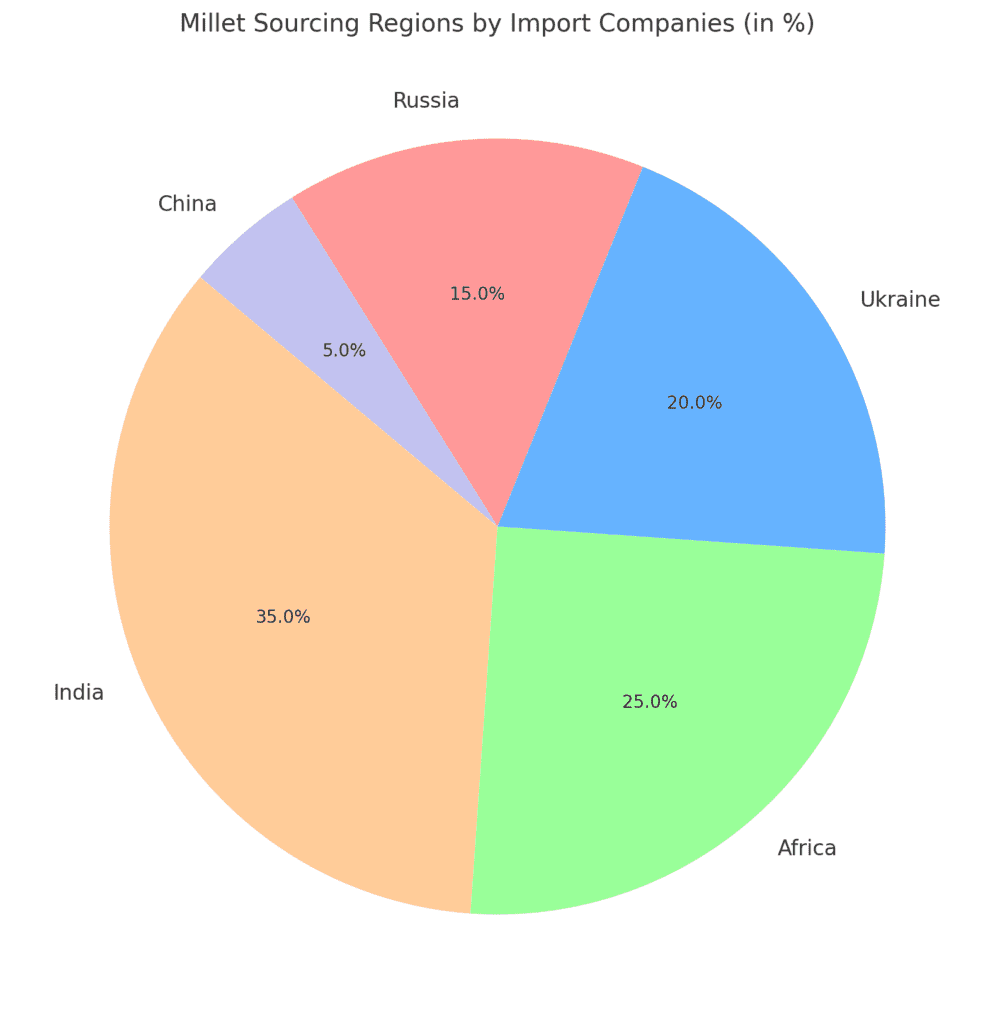
The growing popularity of millet is fueled by multiple factors, including health-conscious consumer trends, demand for gluten-free products, and millet’s sustainability. Countries such as India and Ukraine dominate millet exports due to their favorable climates and robust production capacities. Importing countries focus on using millet in diverse applications such as health foods, animal feed, and traditional cuisines.
The Role of Millet in Sustainability
Millet’s ability to thrive in arid and semi-arid conditions makes it a vital crop for food security. Importing countries are increasingly recognizing its role in promoting sustainable agriculture, as it requires less water and can grow in poor soils compared to other grains.
Conclusion
Millet’s global popularity is on the rise, and the top 10 importing countries are playing a pivotal role in shaping the millet trade. With increasing consumer awareness and demand for sustainable, healthy, and versatile grains, millet is set to remain a key player in global agricultural markets.
Related Analysis: View Previous Industry Report
