
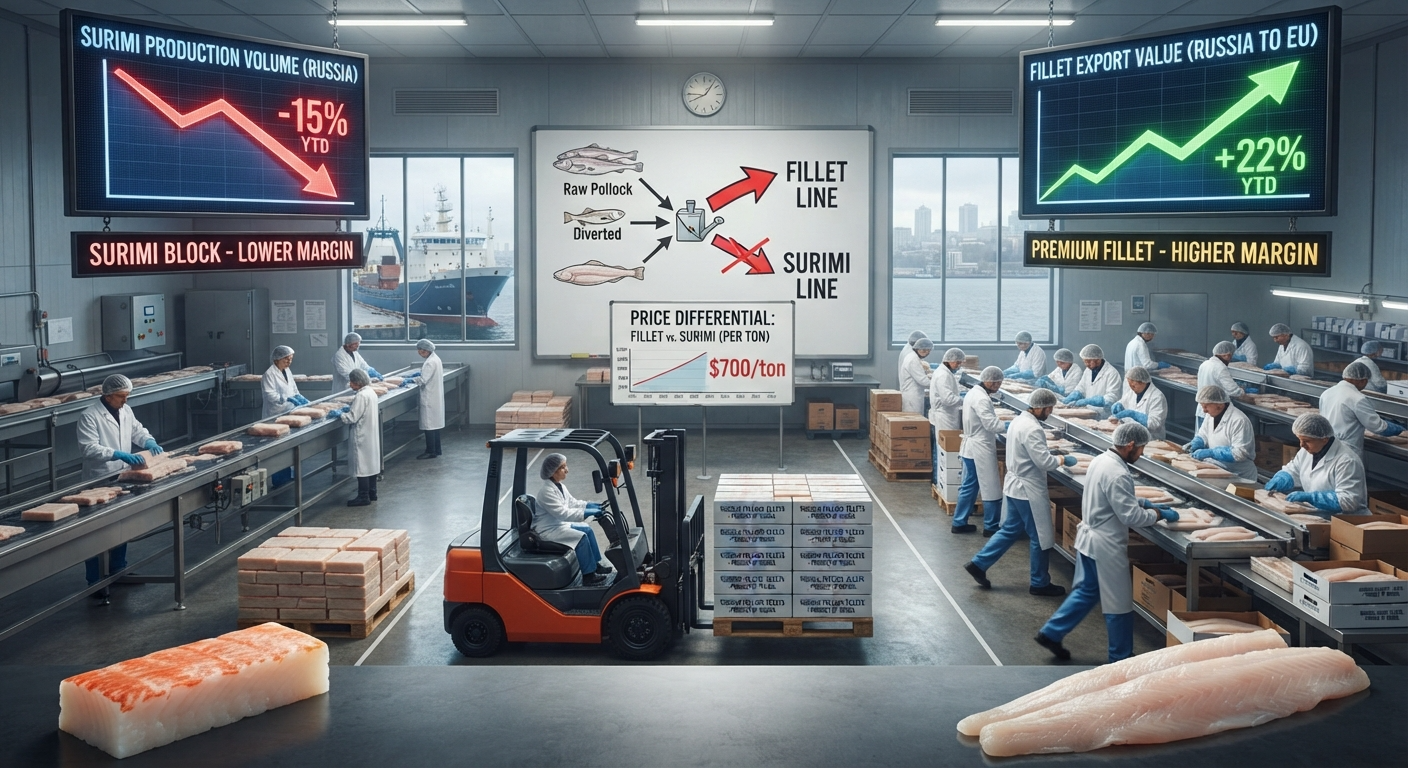

Russian pollock surimi production is undergoing a strategic pivot: producers are deliberately reallocating raw pollock away from lower-margin surimi toward higher-value fillet production. This is the first production slowdown after years of aggressive surimi expansion, and global surimi supply is tightening as a result.
Why Russia is shifting — the margin story:
Boneless Alaska pollock fillets exported to Europe are priced nearly $700/ton higher than first-grade surimi, despite a 13.7% EU tariff on Russian fillets. Both products rely on the same raw material (Alaska pollock), but fillets command significantly stronger returns. Strong European demand for fillets—partly driven by supply shortages and elevated prices of traditional whitefish species such as cod—makes fillet production more attractive than surimi.
Domestic demand reshaping supply flow:
Russia’s domestic seafood market is transforming. Rising incomes and changing consumption habits are driving demand for convenient, ready-to-eat fish fillets. High-quality raw material is being systematically diverted from export-oriented surimi production into domestic fillet market. This represents a structural shift, not a temporary supply blip.
Market implications — surimi supply now constrained:
- Surimi supply tightening globally: Buyers in Japan, Korea, and China (major implication for crab stick/value-added seafood markets) face tightening surimi availability and rising prices. Russian production has fallen faster than catches as China and South Korea move early, raising risks for slower-moving Japanese buyers.
- Competitive dynamics shift: US pollock surimi producers may see improved pricing power as Russian supply reallocation reduces global commodity availability. However, US export logistics remain challenged (see Canada tariff impact above).
- Aquafeed cost escalation: Surimi is a key input for value-added aquafeed products. Tightening surimi supply compounds the feed cost pressure already driven by fishmeal scarcity (Peru emergency). Farmed fish producers face compounding margin squeeze.
Buyer positioning — urgent:
Lock surimi supply contracts immediately. Q4 2026 pricing likely to move sharply higher as consolidation accelerates and Russian supply remains redirected. Consider alternative sources (US Pacific Northwest, China processing) but plan for 15-25% price escalation through year-end.